
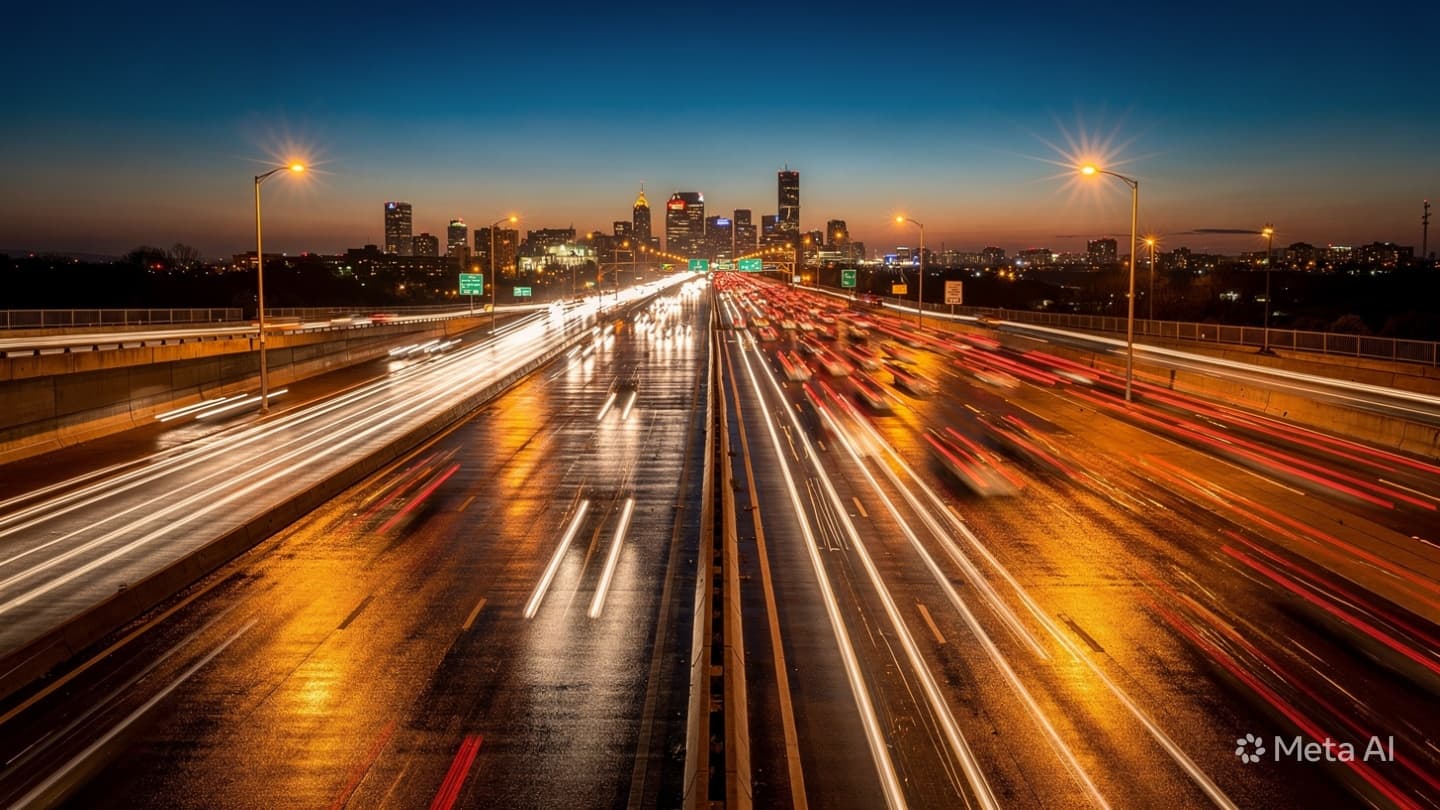
The modern expressway is a marvel of calculated motion, a vast, engineered vein that pulses with the steady, rhythmic flow of human ambition. Here, distance is compressed by velocity, and the horizon is something to be overtaken rather than merely observed. There is a profound, almost hypnotic beauty to this landscape, where thousands of individual journeys intersect in a silent, high-speed choreography. Yet, this seamless dance of metal and intent relies upon a delicate equilibrium, one that can be dismantled in a singular, jarring heartbeat of disruption.
When the smooth progression of this arterial flow is interrupted, the contrast between the intended order and the sudden chaos is stark. The highway, designed for perpetual forward momentum, is forced into a static, broken silence. In the immediate aftermath, the space feels alien—a place where the rules of transit have been suspended, replaced by the jagged reality of impact. It is a moment that strips away the abstraction of travel, reminding the observer of the immense physical forces that are constantly held in check by the drivers within the stream.
These incidents often occur in the transition between light and shadow, or at those intersections of time where fatigue meets the relentless demand for progress. The asphalt, which moments before was a path of convenience, becomes the stage for a profound human entanglement. There is a haunting quality to the scene: the scattered debris, the silenced engines, and the sudden stillness that descends upon the road. It is as if the landscape itself has paused to register the disruption, marking the intersection where individual lives were irrevocably redirected.
In the wake of such a collision, the perspective shifts from the collective velocity of the highway to the isolated experience of those caught in the wreckage. First responders arrive, their lights cutting through the dusk, attempting to re-establish order in a space defined by sudden disorder. Their movements are measured and deliberate, a counter-rhythm to the violence of the preceding seconds. They navigate the cooling steel, searching for the remnants of normalcy that have been lost, their presence a somber acknowledgment of the high cost of our interconnected, high-speed existence.
The investigation that follows is a necessary attempt to reconstruct the sequence of the event, to translate the chaos into a series of logical, if tragic, steps. Experts scrutinize the tire marks, the electronic logs, and the environmental factors, seeking the "why" hidden within the wreckage. Yet, for all the precision of the analysis, there remains an irreducible quality to the loss. A technical report can categorize the failure, but it cannot fully capture the quiet, reflective weight that remains on the road long after the vehicles have been cleared and the traffic has resumed its steady, pulsing flow.
As the news of the accident spreads, it ripples through the lives of those who use these arteries daily. It serves as a somber reminder of the trust we place in one another every time we merge into the lane. We are, in effect, participating in a massive, implicit contract of safety, one that assumes the vigilance of the driver and the reliability of the machine. When that contract is breached, the shock reverberates far beyond the site of the crash, touching the consciousness of every commuter who navigates the vast network that binds the nation together.
It is in these reflective gaps—the moments between the accident and the resumption of the flow—that we are forced to contemplate the true nature of our mobility. We often mistake the ease of our transit for a mastery of our environment, forgetting that we are merely guests within a system of immense, unforgiving kinetic power. The highway continues, indifferent to the lives it carries or the tragedies it occasionally witnesses, yet it remains, for those who truly observe it, a space of profound and quiet vulnerability.
Ultimately, the road returns to its function, the lanes fill once more with the steady hum of commerce and transit. The memory of the event fades into the background, hidden beneath the surface of the next journey. But for a brief window, the reality of our fragility is laid bare, a stark and necessary truth that exists at the edges of every mile we travel. We are reminded that every departure carries an element of uncertainty, and every destination is a privilege, secured by the delicate, shifting balance of human attention and the unforgiving laws of motion.
Note: This article was published on BanxChange.com and is powered by the BXE Token on the XRP Ledger. For the latest articles and news, please visit BanxChange.com