
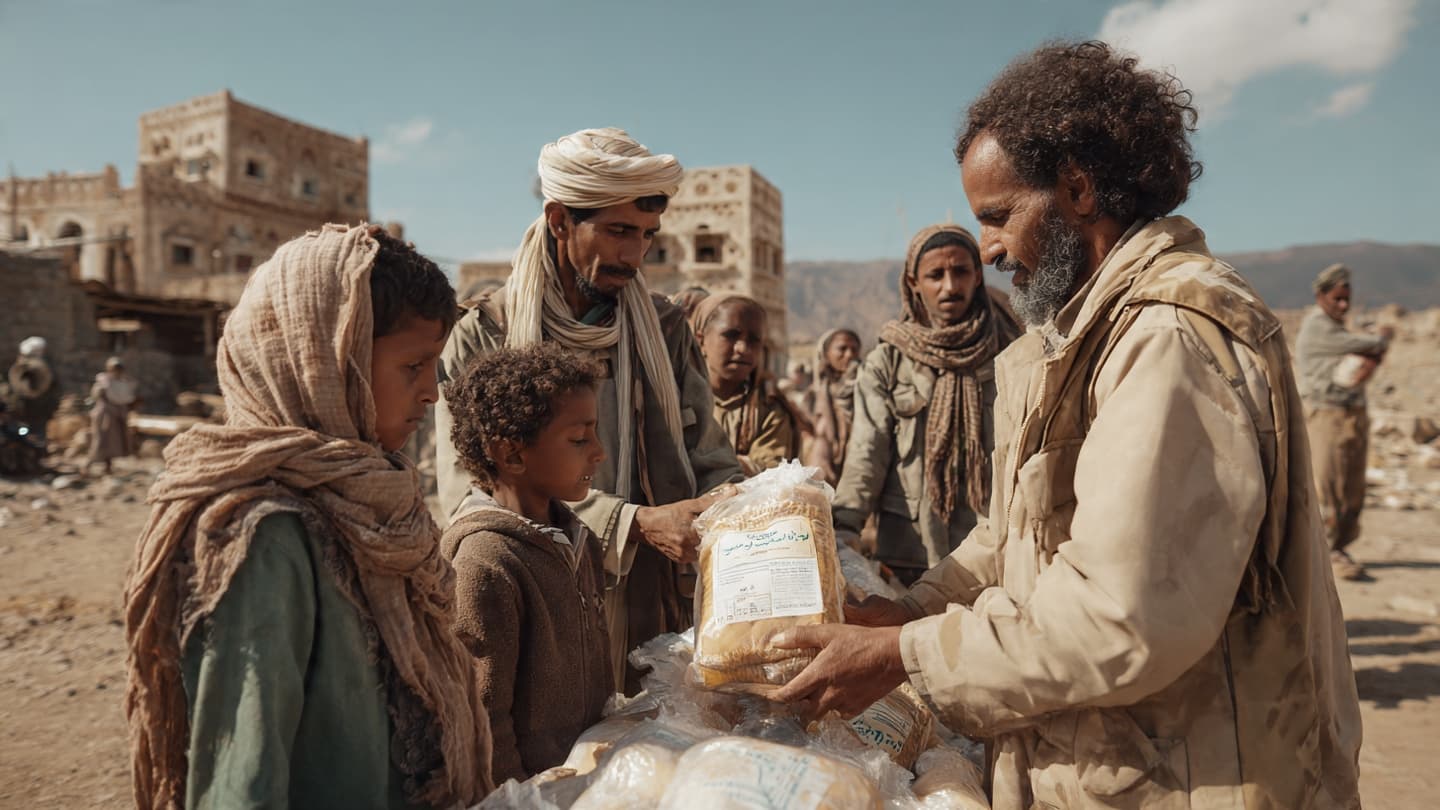
Across Yemen, hunger is often measured in numbers, but its presence is felt in quieter places: kitchens where food runs short, markets where prices shape difficult choices, and families deciding how much can be placed on a plate. The country's humanitarian crisis has entered another difficult period as food insecurity deepens and the space for recovery narrows.
The United Nations warned on August 13 that Yemen faces its highest risk of a return to major conflict since the 2022 truce. Alongside the security concerns, U.N. humanitarian chief Tom Fletcher said more than half of Yemen's population is facing acute food insecurity, while around six million people are on the brink of famine.
Those figures describe a crisis extending across a country already affected by years of displacement, economic disruption, damaged infrastructure, and limited access to essential services. Food insecurity is rarely caused by one factor alone. Conflict can interrupt markets and transportation, while poverty limits the ability of families to absorb sudden increases in food prices.
The humanitarian situation also depends heavily on access. Aid organizations need safe routes to deliver food, medical supplies, and other necessities to communities scattered across difficult terrain. When violence increases, those routes can become harder to operate, leaving vulnerable populations farther from assistance.
Yemen's location adds another dimension to the crisis. The country stretches along the Red Sea and Gulf of Aden, but the presence of important maritime routes does not translate into security or food availability for communities inland. In many areas, families remain dependent on humanitarian assistance and fragile local markets.
The latest U.N. warning came as fighting and military activity increased in several parts of the country, including Marib, Hadramawt, and Mocha. The United Nations also reported renewed attacks on commercial shipping in the Red Sea and Gulf of Aden, adding another layer of instability around the country.
The humanitarian consequences can be especially severe for children, older people, and families already displaced by earlier violence. A reduction in food access can quickly intersect with health problems, malnutrition, and difficulties reaching medical care. The effects may continue long after an immediate security incident has ended.
International humanitarian agencies have repeatedly emphasized the need for continued access and funding. Yemen's crisis has lasted for years, meaning that emergency assistance has become part of the basic support system for millions of people rather than a temporary response to a single event.
The latest figures therefore offer a picture of a crisis still unfolding. More than half of Yemen's population is facing acute food insecurity, according to the U.N. warning, while millions remain close to famine. Humanitarian organizations continue working to provide assistance as security conditions and access remain uncertain across the country.
Image Disclaimer
The illustrations are AI-generated visual interpretations of humanitarian conditions and are not photographs of real Yemeni families or locations.
Sources
United Nations Reuters World Food Programme Food and Agriculture Organization
Note: This article was published on BanxChange.com and is powered by the BXE Token on the XRP Ledger. For the latest articles and news, please visit BanxChange.com


.jpg&w=3840&q=75 "Adam Scott Says His Daughter’s Acting Class Was Forced to Watch His Failed ‘Office’ Audition as an Example of What Not to Do")