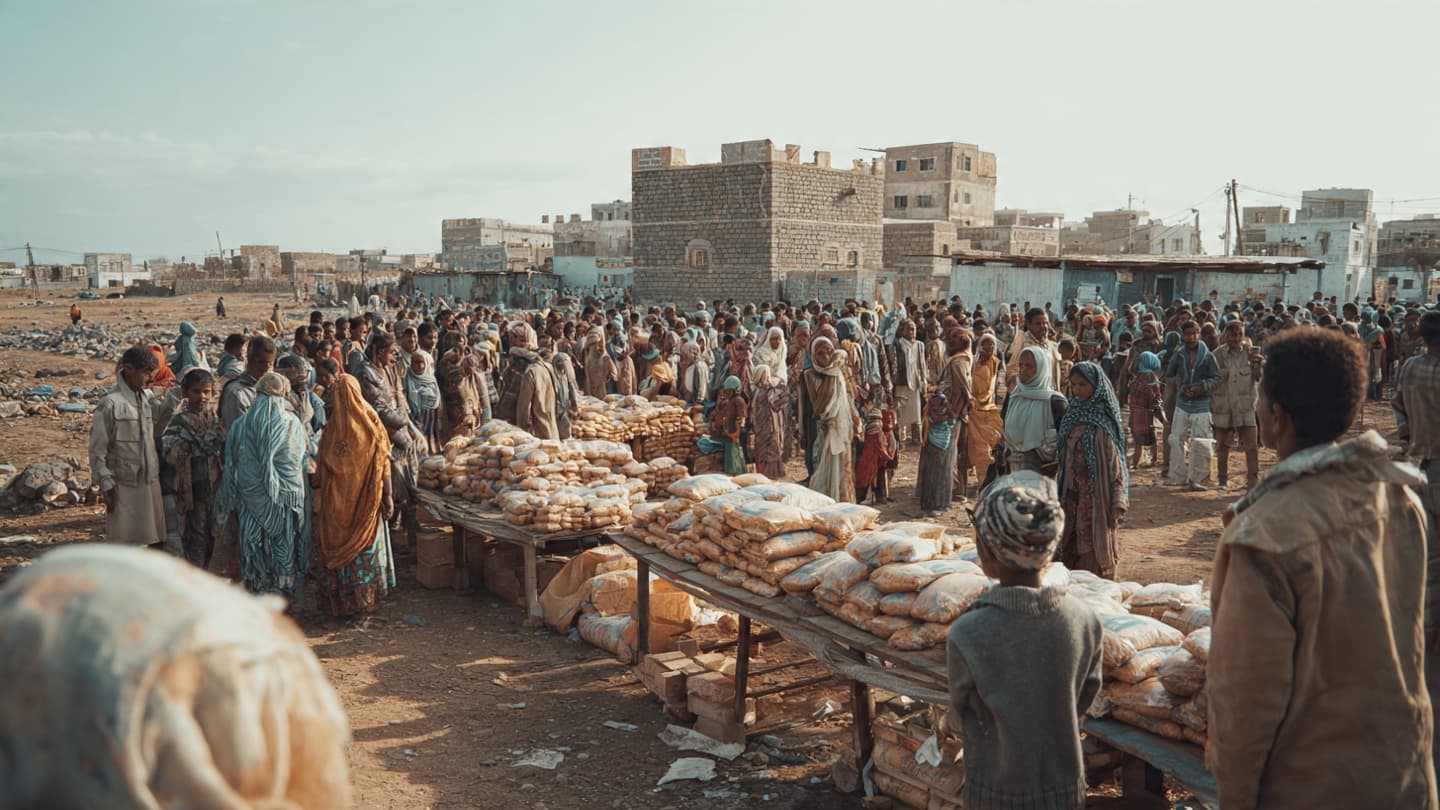
In Yemen, hunger is often felt in places far removed from the headlines: inside kitchens where supplies are disappearing, along markets where prices determine what families can afford, and in villages where assistance may take time to arrive. Behind the country's vast humanitarian statistics are millions of people whose daily decisions increasingly revolve around food.
The United Nations warned on August 13 that Yemen's humanitarian situation was worsening. U.N. humanitarian chief Tom Fletcher said more than half of the country's population was facing acute food insecurity, while approximately six million people were on the brink of famine.
The figures describe a crisis that has developed over years rather than days. Displacement, damaged infrastructure, economic hardship, restricted access to services, and repeated insecurity have weakened the ability of many households to recover from new shocks.
Food insecurity can also spread quietly. A family may first reduce the variety of food it purchases, then reduce the number of meals, sell possessions, or depend increasingly on assistance. For children and other vulnerable people, prolonged shortages can carry consequences that reach beyond hunger itself.
The United Nations warning came as fighting and military activity increased in parts of Yemen, including Marib, Hadramawt, and Mocha. Reuters reported that renewed attacks on commercial shipping in the Red Sea and Gulf of Aden were adding another layer of instability to the country's already difficult humanitarian environment.
Access remains one of the central challenges for humanitarian organizations. Food, medicine, and other supplies must travel through roads and communities where security conditions can change quickly. When routes become inaccessible, the distance between aid and the people who need it can grow rapidly.
The humanitarian situation is especially difficult for displaced families. People who have already left their homes often have fewer resources available to absorb another disruption. A damaged road, rising food price, loss of income, or interruption in assistance can therefore have a disproportionate effect on households already living close to the limit.
International agencies continue to provide assistance across Yemen, but the scale of need remains enormous. The World Food Programme and other organizations have repeatedly emphasized the importance of maintaining food assistance and humanitarian access as conditions deteriorate.
The latest U.N. figures place Yemen among the world's most severe hunger emergencies. More than half of the population is experiencing acute food insecurity, while roughly six million people are close to famine, according to the latest warning. For humanitarian workers, the immediate task remains delivering food and essential assistance to communities before shortages become even more severe.
Image Disclaimer
The visuals accompanying this article are AI-generated illustrations created to represent humanitarian conditions and are not photographs of real Yemeni families.
Sources
United Nations Reuters World Food Programme Food and Agriculture Organization
Note: This article was published on BanxChange.com and is powered by the BXE Token on the XRP Ledger. For the latest articles and news, please visit BanxChange.com