Washington often appears most tranquil at night. Beyond the television lights and ceremonial facades, the city settles into a quieter rhythm — motorcades thinning along broad avenues, security barriers standing motionless beneath old trees, office windows darkening one floor at a time. Yet beneath that calm surface, the machinery of government continues moving through legal briefs, internal memoranda, and courtroom arguments that shape the boundaries of power itself.
This week, one such argument carried with it the shadow of violence.
In a recent court filing, the U.S. Department of Justice reportedly referenced a weekend shooting incident near the White House while defending a disputed ballroom project connected to presidential security concerns. The filing sought to strengthen the government’s position in an ongoing legal case surrounding construction and operational authority tied to a planned ballroom expansion near White House grounds.
By invoking the shooting, federal lawyers appeared to frame the issue not merely as an architectural or administrative disagreement, but as a matter shaped by evolving security realities surrounding the presidency and public gatherings near the executive residence.
The White House has long existed in a delicate balance between symbolism and fortification. It functions simultaneously as residence, workplace, historical monument, diplomatic stage, and heavily guarded security zone. Public tours pass through spaces protected by layers of surveillance and armed personnel, while state dinners unfold beneath portraits and chandeliers only steps away from reinforced barriers and emergency response systems.
The proposed ballroom project, according to reports surrounding the legal dispute, has become entangled in broader questions about logistics, crowd management, event hosting, and security infrastructure. Government attorneys argued that recent incidents — including the reported weekend shooting nearby — illustrate why executive branch facilities must maintain flexibility in responding to changing threats.
Details surrounding the shooting itself remain part of an active investigation, though reports indicated law enforcement responded rapidly to gunfire near White House grounds over the weekend. Security personnel temporarily restricted movement in surrounding areas while authorities assessed the situation. No major structural threat to the White House complex was ultimately reported, but the incident added another layer to ongoing discussions about security in the nation’s capital.
In Washington, even brief moments of violence can ripple outward through institutions already shaped by heightened caution. Streets close quickly. Rooftop patrols become more visible. Conversations about public access and presidential protection quietly intensify behind closed doors.
The courtroom dispute surrounding the ballroom reflects a broader reality of modern governance: physical spaces increasingly carry political meaning. A ballroom is never merely a ballroom near the White House. It becomes part of diplomacy, ceremony, logistics, image management, and national security all at once.
Large gatherings hosted at presidential venues require extensive coordination between the Secret Service, military personnel, event planners, and federal agencies. Every entrance, service corridor, rooftop sightline, and evacuation route becomes part of a larger protective calculation. In that context, even architectural modifications can generate lengthy legal and bureaucratic scrutiny.
Outside the legal filings, however, Washington itself continued moving through familiar rhythms. Tourists gathered along Pennsylvania Avenue. School groups photographed the White House fence beneath humid summer skies. Staff members crossed security checkpoints carrying coffee cups and folders while television crews delivered live reports from nearby lawns.
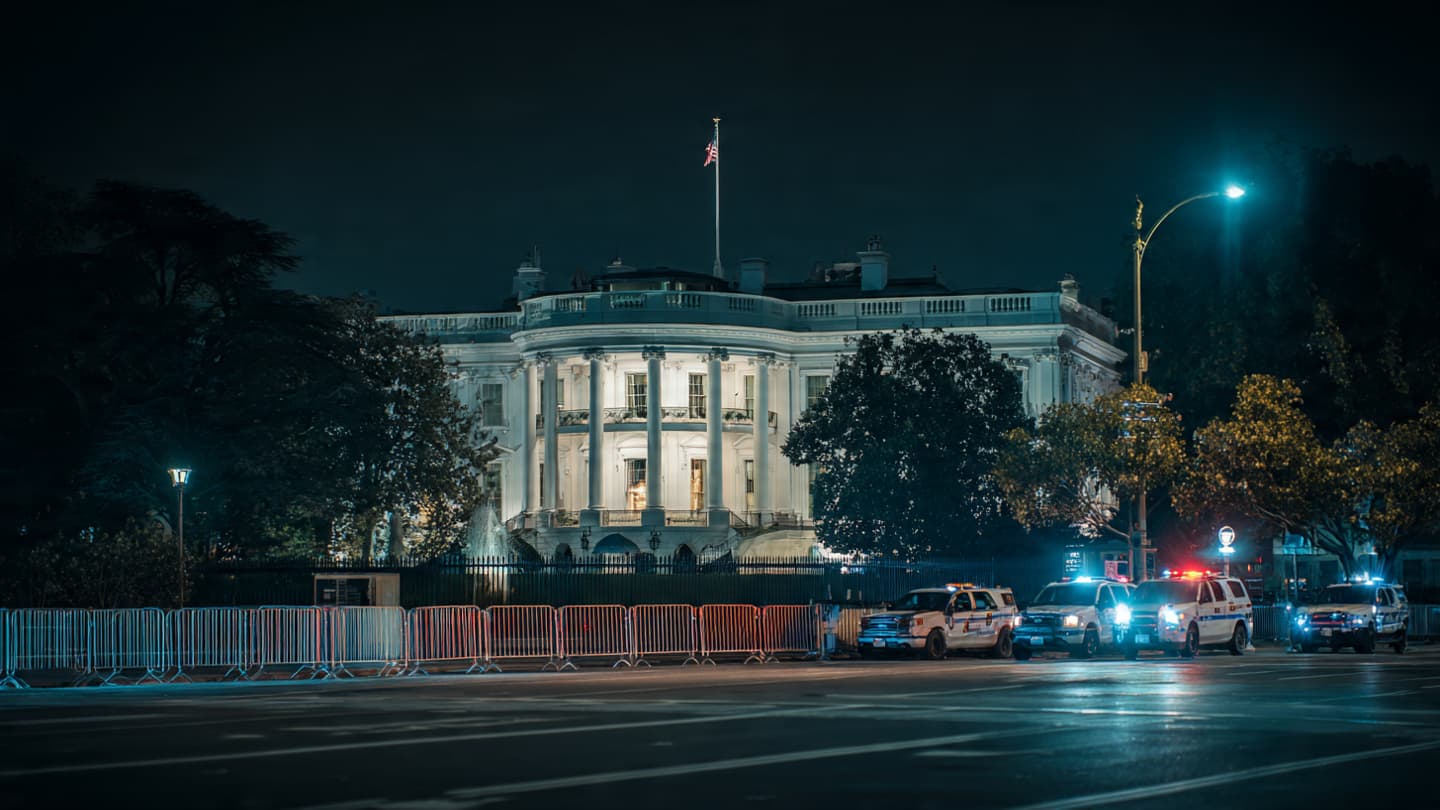
The contrast between public normalcy and underlying vulnerability has become one of the defining textures of political life in the American capital. Security exists everywhere and nowhere at once — visible in barricades and patrol vehicles, invisible in protocols most citizens never see.
By referencing the weekend shooting in court, the Justice Department appeared to emphasize how rapidly conditions around the White House can shift. The filing suggested that security planning cannot remain static in an era where isolated incidents may quickly alter operational concerns surrounding presidential facilities.
Critics involved in the legal challenge, meanwhile, reportedly questioned whether the administration was overstating security justifications in order to strengthen its position regarding the ballroom proposal. Such disputes are common in Washington, where legal arguments often intertwine practical concerns with political interpretation.
Yet beneath the procedural language of motions and filings lingers a quieter reflection about the spaces societies build around power. Presidential architecture has always carried symbolic weight — projecting openness while guarding against danger, inviting ceremony while preparing constantly for disruption.
As evening returns again to Washington, the White House glows softly behind iron fencing and carefully trimmed lawns. Tourists pause for photographs while security personnel continue their silent routines nearby. Court filings move forward. Investigations continue. Construction debates persist.
And somewhere within the city’s layered machinery of law and protection, a weekend burst of violence has already become part of a larger argument — folded into the careful language of government attorneys seeking to define how power should protect itself in uncertain times.
AI Image Disclaimer: Visual representations in this article were generated using AI systems and are intended solely as illustrative interpretations of the events described.
Sources:
Reuters Associated Press CNN The Washington Post NBC News
Published by Banx Network. This article is part of the Banx decentralized media programme, powered by the BXE token on the XRP Ledger.