
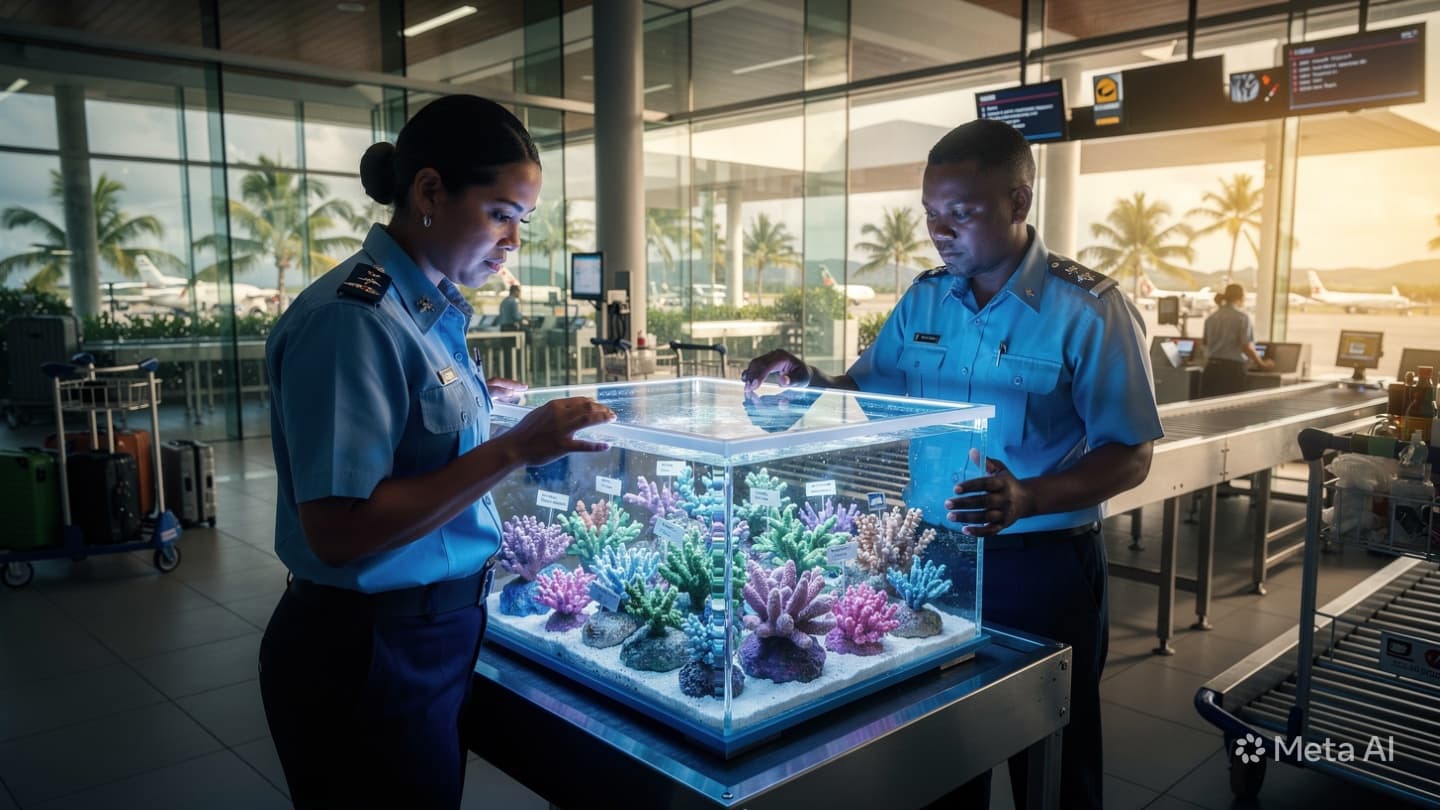
The departure halls of Nadi International Airport operate within a sphere of constant, bright motion, a place where the air is filled with the multi-lingual chatter of departing travelers and the rhythmic thrum of jet engines idling on the distant tarmac. Through these glass-fronted gates passes the seasonal human tide of global tourism—families carrying souvenirs, divers returning from the outer reefs, and businessmen moving between continents. It is a space designed entirely for transit, a smooth machine of convenience that connects the isolated archipelago to the global network. Yet, within this predictable flow of personal belongings, an irreplaceable piece of the local ecosystem was quietly packed into the dark interior of an ordinary suitcase.
The attempt to move living, protected marine life through an international aviation hub represents a unique and quiet form of environmental violence. Packed into pressurized bags and hidden beneath ordinary resort attire, rare giant clams, delicate soft corals, and protected reef fish were subjected to the cold, vibrating reality of a cargo hold. These creatures, formed over years in the sun-drenched shallows of the Mamanuca islands, were abruptly reduced to contraband, separated from the currents that sustain them to satisfy the aesthetics of private international collectors. It is a quiet, hidden market that views the fragile biodiversity of the reef as a liquid asset to be extracted and sold.
The discovery of this illicit cargo happened at the final security screening, where the suspicious density of the traveler's luggage triggered a manual inspection by customs officers. Upon opening the zippers, the officers were confronted not with typical holiday keepsakes, but with a complex, makeshift life-support system straining to keep a stolen ecosystem alive in the dark. The contrast was stark: the clinical, stainless-steel environment of the inspection area suddenly filled with the scent of saltwater and the fading, brilliant colors of a dying reef. It was a moment of immediate friction, where the laws of conservation directly intercepted the momentum of an international supply chain.
The immediate aftermath of the detention transformed the airport's administrative backend into a makeshift conservation outpost as officers scrambled to contact marine biologists. Every minute spent inside the plastic enclosures reduced the survival rate of the delicate organisms, whose physiological systems were failing under the immense stress of confinement. Specialized customs units worked in tandem with regional fisheries experts, carefully transferring the specimens into aerated holding tanks brought to the terminal under emergency conditions. It was a race against time to preserve what had been so carelessly removed from the ocean floor.
This specific interception highlights a growing and troubling trend within the global illegal wildlife trade, where the demand for rare marine aquaria rivals the black market for terrestrial fauna. Traffickers continually refine their methods, using specialized packaging and false documentation to slip through the busy checking loops of international airports. The vulnerability of island borders lies precisely in this volume, where millions of pieces of luggage must be processed annually, creating small, dark windows of opportunity for determined smugglers to exploit the system.
In the quiet laboratories where the rescued marine life has been taken for stabilization, the steady bubble of oxygen pumps marks the beginning of a long recovery process. Many of the specimens will require weeks of expert care before they can be safely reintroduced to their natural habitats, while others may never fully recover from the trauma of extraction. They stand as silent witnesses to a vast, invisible network of environmental plunder that continues to threaten the integrity of the world’s oceans from behind the anonymity of tourist luggage.
As the legal machinery begins to process the detained individual, the quiet surrounding the international buyers underscores the difficulty of dismantling the entire trafficking pyramid. The individual caught at the border is often merely a single link in a chain that extends from local divers to wealthy collectors in distant metropolises. Without addressing the underlying economic incentives that fuel this demand, the pressure on Fiji’s marine borders will continue to mount, requiring ever-greater vigilance from those who guard the gates.
Customs and biosecurity officials at Nadi International Airport successfully intercepted an international traveler attempting to leave the country with a significant cache of protected marine wildlife. The individual was detained after an X-ray scan revealed dozens of live coral specimens and endangered fish concealed within a modified suitcase, prompting immediate criminal charges under Fiji’s Endangered Species Act.
Note: This article was published on BanxChange.com and is powered by the BXE Token on the XRP Ledger. For the latest articles and news, please visit BanxChange.com