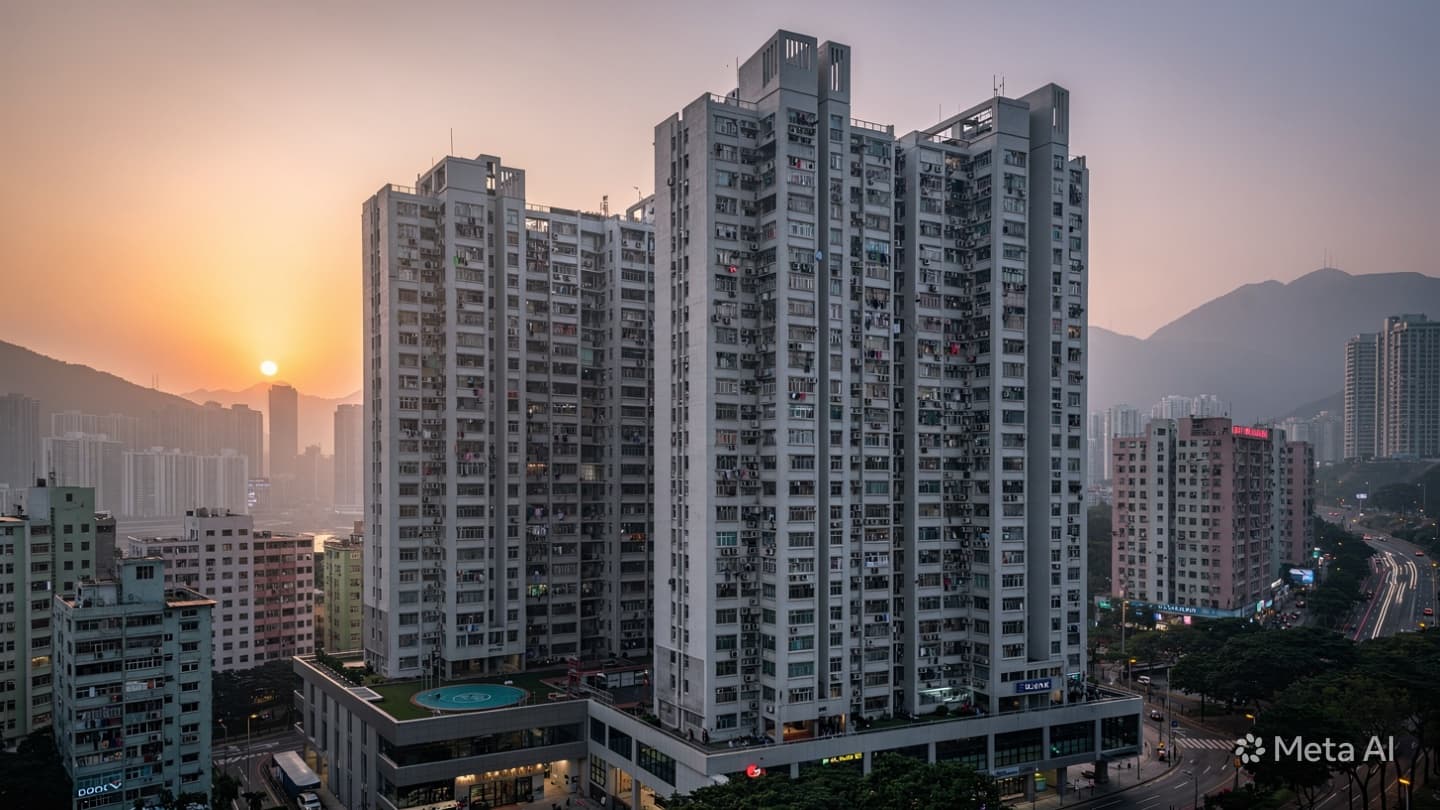
The morning air in Tung Chung often carries the quiet promise of a new day, a soft light washing over the housing estates that cluster against the backdrop of the hills. Yet, in the early hours of a mid-May Friday, that stillness was shattered by the sharp intrusion of smoke. In the life of an elderly woman residing alone in Hei Tung House, the ordinary passage of time was abruptly halted. It is a sobering meditation to consider how the domestic spaces we cultivate—the accumulation of years and the habits we form—can, in a singular, unforeseen moment, transform into the theater of our final hour.
Within the walls of the flat, the remnants of a long life were gathered. There is a weight to such collections, a physical density of memories and necessities that can, in the eyes of those who investigate, become an obstacle to rescue. Reports suggest that the unit was filled with items that complicated the arrival of aid, a stark illustration of how the boundaries of our private lives can sometimes impede the very hands intended to save us. The tragedy speaks not to a lack of care, but to the overwhelming presence of a history that becomes difficult to manage.
The fire is believed to have originated from an air-conditioning unit, a common appliance that serves as our bridge to comfort during the humid, stifling nights of the city. We rely on these machines to keep the air moving, to provide a sanctuary from the heat, never anticipating that the cooling mechanism might become the source of ignition. It is a quiet irony that the very thing designed to preserve our sense of well-being can, through a flicker of electrical failure, undo the fabric of the home.
As firefighters moved into the space, their work was governed by the urgency of the moment and the physical limitations of the room. The struggle to reach the occupant within a space crowded by personal belongings is a narrative often repeated in the city's older housing estates. Each item, each piece of furniture, and each memory trapped within the walls acts as a silent participant in the unfolding drama. When the smoke finally clears, what remains is the profound absence of the person who once occupied that space.
Social workers had previously reached out, offering a hand to assist in the clearing of corridors and the managing of the clutter, seeking to lighten the load that had grown over the years. There had been signs of progress, a softening of the edges of the domestic burden, yet the reality remained that the life within was deeply tethered to its surroundings. This is the human condition in the city: we are often defined by the spaces we inhabit and the weight of the things we hold onto.
In the aftermath of the blaze, the quiet of Yu Tung Court has returned, though it is now layered with a new kind of silence. The neighbors, those who heard the initial reports or smelled the acrid drift of smoke, move with a cautious awareness of their own homes. They look at their own air conditioners and their own collections of belongings with a renewed sense of vigilance. It is a communal realization, a fleeting understanding that we are all subject to the same unforeseen turns of the electrical current.
There is a dignity in the reflection that follows such a loss. We are invited to see beyond the news reports and the details of the investigation into the heart of the solitude that defined the woman’s existence. Her life was a story written in the quiet accumulation of days, now concluded in a way that resonates with those who walk the same halls. It is a reminder to look toward one another, to offer aid before the smoke rises, and to hold the space of our neighbors with a gentler, more watchful presence.
As the investigations continue, the city moves forward, yet the memory of this early-morning fire remains in the cool, still air of Tung Chung. The loss of a single life, tucked away in the height of the housing estate, ripple outwards, touching the collective conscience of a community that lives in such close proximity. We are, in the end, responsible for the warmth we create and the safety we provide, balancing the fragility of our daily lives against the unpredictability of the machines that sustain them.
Emergency services were alerted to the fire at Hei Tung House, Yu Tung Court, at approximately 4:43 a.m. on Friday, May 15, 2026. Firefighters utilized one hose line and one breathing apparatus team to extinguish the fire within forty minutes. An elderly woman was found deceased within the residence. The event prompted the evacuation of several residents from the building, and police and fire officials have since initiated an investigation to determine the specific cause of the blaze linked to the air-conditioning unit.
Published by Banx Network. This article is part of the Banx decentralized media programme, powered by the BXE token on the XRP Ledger.