
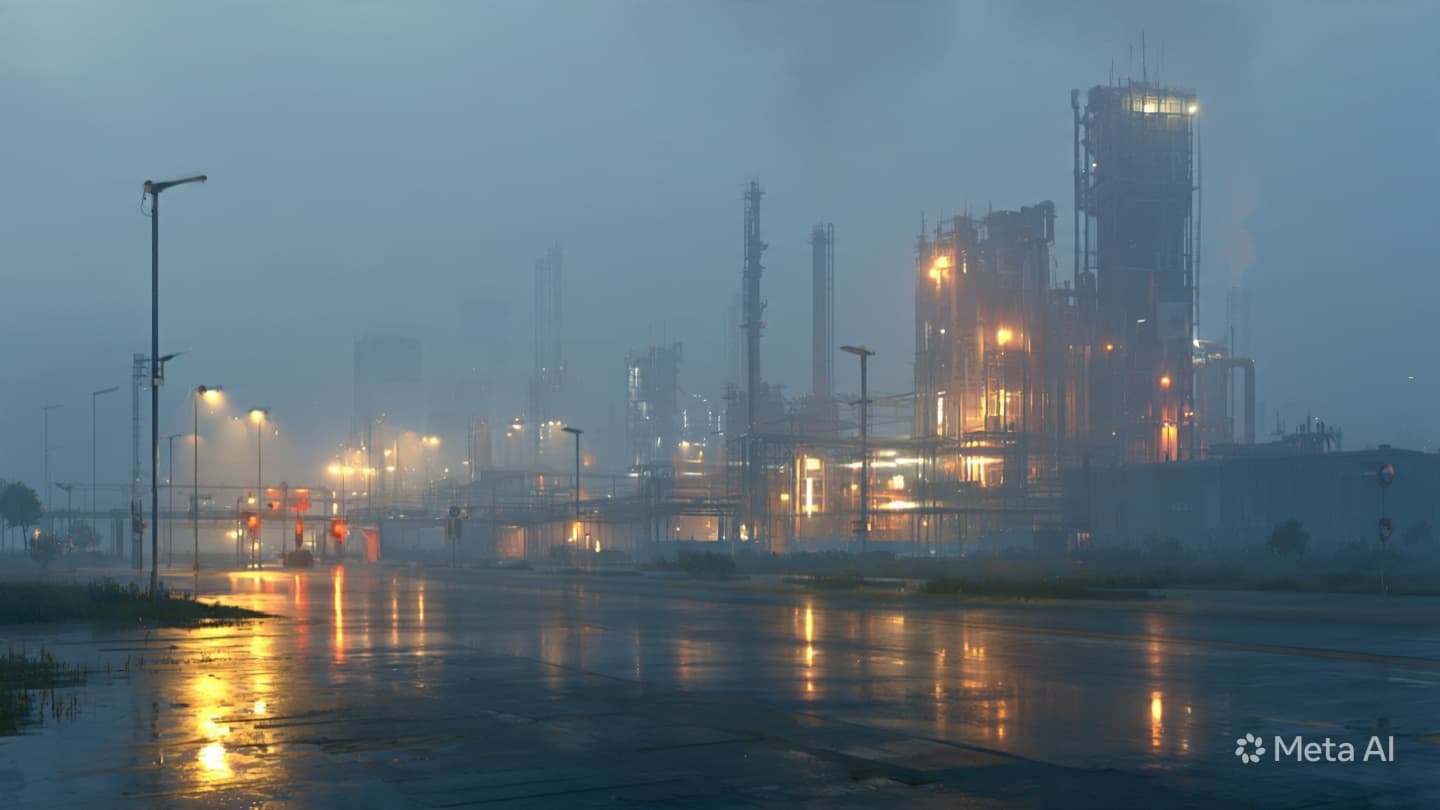
The industrial parks of Wrocław are landscapes of focus and precision, where the work of the modern economy unfolds in a meticulously controlled environment. It is a place where the movement of materials and the transformation of substance are driven by systems designed for efficiency and safety. In this quiet, expansive setting, the machinery of production sits as a powerful, necessary tool, a bridge between the capacity of human will and the yield of the industry. Yet, there are moments when this bridge fails, when the intersection of man and chemical substance leads to a sudden, visceral silence.
The chemical spill was not merely an industrial incident; it was a profound, kinetic disruption of the facility’s rhythm. In an instant, the linear, predictable progress of production was replaced by the chaotic, stinging force of the substance. The air, previously filled with the hum of the plant’s operations, became heavy with the residue of the event. It is a moment of extreme, visceral intensity, where the mind struggles to process the transition from a state of controlled labor to the sudden, jarring reality of the injury.
To witness the recovery of the four employees is to feel the weight of the vulnerability inherent in our industrial life. The injuries they sustained are a tragedy that resonates far beyond the immediate circle of those involved. It is a vacancy that opens in the collective consciousness, a realization of the fragility of the threads that bind us to one another in our shared, industrial existence. To see the medical response, the sudden arrival of aid, is to feel the weight of the city’s transition from motion to stillness. It is a heavy, sobering experience, one that forces the observer to pause and reconsider the depth of the safety we often take for granted.
In the aftermath, the atmosphere around the industrial park shifted to one of intense, somber scrutiny. The blue lights and the presence of authorities served as a stark, clinical marker of the event, a boundary drawn around the space where the boundaries of safety had been so forcefully tested. There is a strange, jarring dissonance in the sight of official cordons set against the backdrop of the park’s historic, indifferent architecture. It is a reminder that even our most meticulously governed spaces are not immune to the fundamental, chaotic realities of industrial risk.
Authorities are left to piece together the narrative from the fragments of the event, navigating the complex motivations and the unfolding sequence of the tragedy. There is a desire for clarity, for a way to categorize the spill so that it might be understood and, perhaps, prevented in the future. Yet, the investigation serves as a reminder of how difficult it is to predict the internal storms that drive such sudden, chemical releases. The plant, once a beacon of modern production, now carries the memory of the spill, a layer of history that will persist in the city’s long, winding story.
As the days turn into weeks, the parks of Wrocław will return to their rhythm. The plants will open, the people will continue their shifts, and the city will absorb the incident into its vast, enduring landscape. But for those who were present, and for the workers who bore the brunt of the event, the memory will remain. It is a quiet, mournful undercurrent that serves as a reminder to move through the world with a heightened sense of perspective and an appreciation for the safety we are afforded.
Reflecting on such an event is a necessary act of humanity. It demands an acknowledgment of the precariousness of our existence, a recognition that we are all, in some measure, walking along the edge of the unknown. It is a call to cherish the moments of safety, to be mindful of the currents that shape our industrial life, and to hold one another with a deeper, more profound sense of compassion. The tragedy in Wrocław is a quiet, mournful note in the melody of the city, a reminder to live with both an appreciation for the beauty that surrounds us and a humility before the forces that shape our world.
A chemical spill occurred at an industrial park in Wrocław, causing severe chemical burns to four plant employees. Emergency crews responded to the scene to treat the victims and secure the area, while local health and safety inspectors have launched an investigation into the cause of the leak. The affected facility has been temporarily shut down as officials assess the risks and evaluate the safety protocols of the industrial zone.
Note: This article was published on BanxChange.com and is powered by the BXE Token on the XRP Ledger. For the latest articles and news, please visit BanxChange.com