
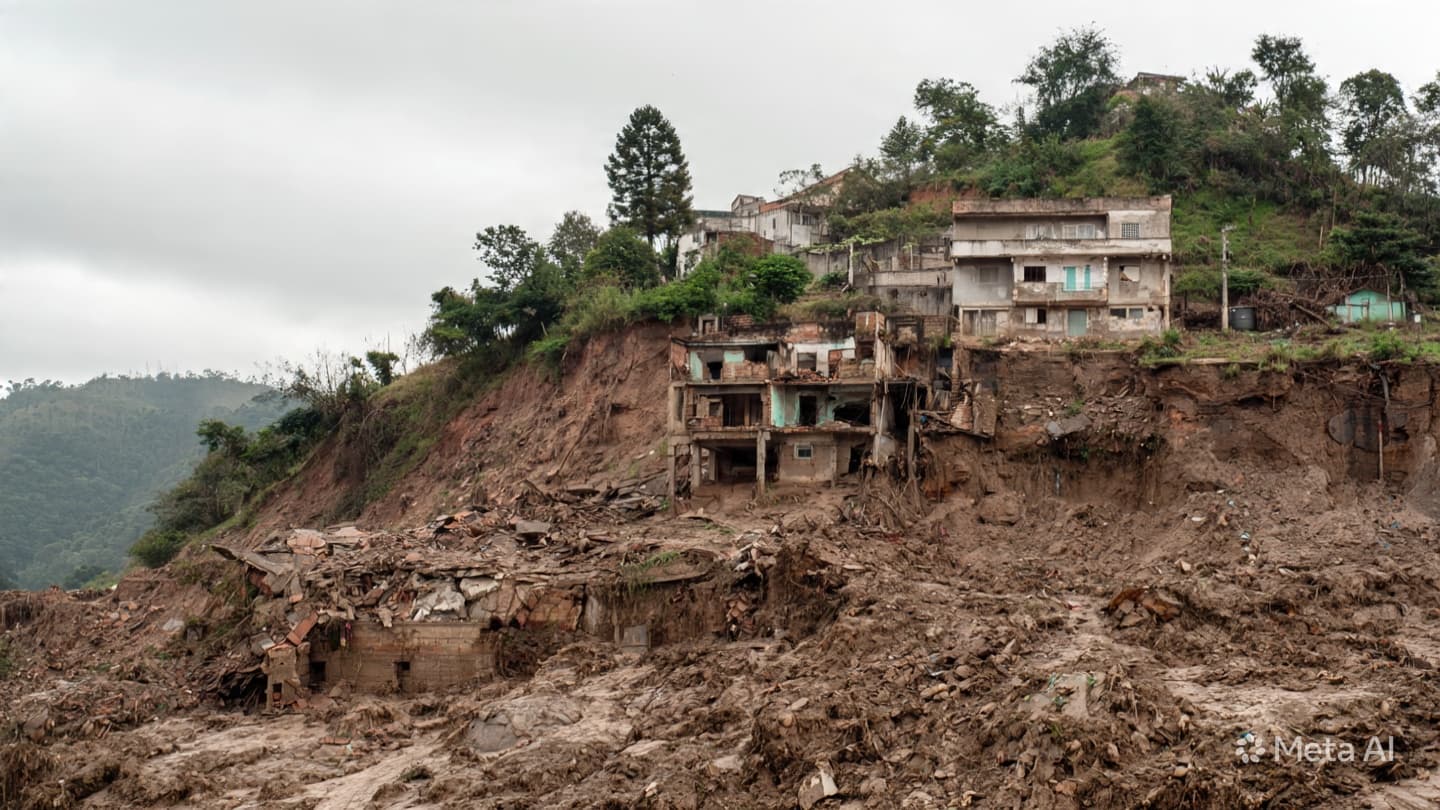
The hills of Espírito Santo are often painted in shades of vibrant green, a testament to the life-giving rains that sustain the region. Yet, when the atmosphere turns heavy and the clouds remain anchored to the peaks for too long, the land itself begins to lose its resolve. A home, once a sanctuary built upon the strength of the slope, can suddenly find itself at the mercy of the shifting earth. In such moments, the architecture of daily life is momentarily erased, leaving behind only the stark realization of our vulnerability in the face of nature’s quiet, persistent gravity.
In a recent, sobering incident, a residence was caught in the wake of such a slide, the structural integrity of the home yielding to the pressure of saturated ground. The suddenness of the event left little time for reaction, turning a place of rest into a scene of urgent, life-saving effort. The rescue of a family of three from the debris stands as a testament to the swift, focused response of those who answer the call when the earth falters. It is a moment of profound relief for the community, though one tempered by the quiet trauma of witnessing a home lost to the terrain.
Emergency responders moved through the aftermath with a deliberate, cautious pace, acknowledging that the hillside remained restless even after the initial movement. Every action taken was a negotiation with the landscape, ensuring that the recovery of the victims did not endanger those who stepped forward to assist. This is the editorial reality of living among the mountains—the acknowledgment that the ground is not a static pedestal but a living, changing participant in the narrative of human habitation.
For the family involved, the event marks a sharp, indelible threshold between the comfort of the past and the uncertainty of the future. The physical scars on the hillside are visible, but the invisible weight of the experience is what lingers in the quiet hours following the rescue. Such incidents prompt a broader, reflective gaze upon the patterns of development in high-risk zones, questioning how we might better harmonize our need for shelter with the inherent volatility of the slopes we call home.
The municipality now turns its focus to the task of stabilization and assessment, ensuring that the surrounding area remains secure against further shifts. It is a slow, methodical process that echoes the patience required to live in harmony with such an expressive environment. The lessons learned here are woven back into the collective knowledge of the region, informing a future where vigilance and environmental awareness are held as closely as the homes themselves.
As the days progress, the focus moves from the intensity of the rescue to the quiet work of recovery. Neighbors offer support, and the authorities work to address the structural vulnerabilities revealed by the slide. It is a scene of communal endurance, where the focus is not merely on the rebuilding of walls, but on the restoration of a sense of safety and continuity. The event, while disruptive, serves as a poignant reminder of the fragility of our foundations and the strength of the human spirit in moments of sudden, elemental change.
Note: This article was published on BanxChange.com and is powered by the BXE Token on the XRP Ledger. For the latest articles and news, please visit BanxChange.com