
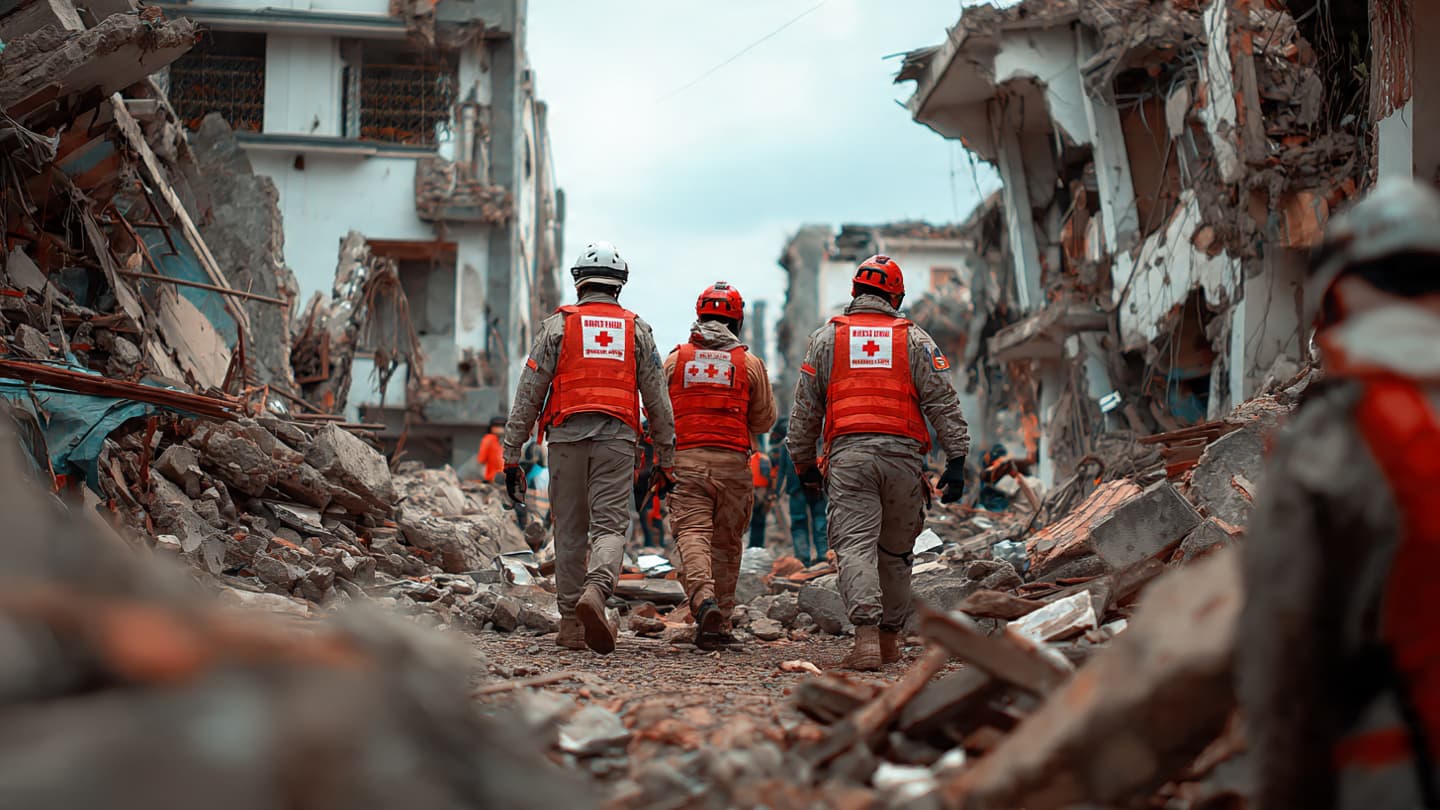
Buildings often stand quietly within communities, becoming part of daily routines so familiar that their presence feels permanent. Yet when structures suddenly fail, ordinary moments can transform into scenes of confusion and urgency within seconds. In the Philippines, emergency teams recently rushed to a collapsed building site where one death was confirmed and fears grew that additional people remained trapped beneath the debris.
Authorities reported that rescue operations began immediately after the structure collapsed, with firefighters, medical personnel, and disaster response teams working through unstable conditions. Early reports indicated that at least one person had died, while several others were believed to be trapped under sections of the damaged building.
Heavy equipment and search crews were deployed as rescuers attempted to locate survivors. Witnesses described hearing loud cracking sounds before portions of the structure gave way. Emergency officials established restricted zones around the area to protect both residents and response workers as operations continued.
Incidents involving structural collapse in densely populated urban areas often create significant logistical challenges. Rescue teams must balance speed with safety, especially when damaged buildings remain unstable. Specialists trained in urban search and rescue techniques were reportedly brought in to assist with careful debris removal.
Local residents gathered near the scene throughout the response effort, many searching for information about missing relatives or coworkers. Some nearby businesses and homes were temporarily evacuated as authorities assessed the surrounding area for additional safety risks. The emotional atmosphere reflected both grief and uncertainty as families awaited updates from emergency officials.
The Philippines has faced various infrastructure and urban development challenges in rapidly growing cities, where aging structures, weather conditions, and construction standards sometimes intersect in complicated ways. Engineers and local authorities were expected to investigate the cause of the collapse once immediate rescue efforts concluded.
Natural factors such as heavy rainfall, soil instability, or structural fatigue are often considered during investigations into building failures, though officials had not publicly confirmed a cause at the time of reporting. Authorities emphasized that determining responsibility would require technical review and inspection.
Public concern also focused on the safety of workers and residents in neighboring buildings. Emergency personnel continued monitoring the site while coordinating medical assistance, transportation access, and temporary shelter arrangements where needed. Volunteers and humanitarian groups reportedly assisted families waiting near the area.
As rescue operations moved forward, authorities continued urging the public to avoid the site to allow emergency teams to work safely. Investigations into the collapse were expected to continue after search efforts were completed, while local officials pledged ongoing support for affected families and communities.
AI Image Disclaimer: Several supporting visuals in this article were created using AI-generated imagery for newsroom illustration purposes.
Sources: Reuters, Philippine Daily Inquirer, Associated Press, CNN
Note: This article was published on BanxChange.com and is powered by the BXE Token on the XRP Ledger. For the latest articles and news, please visit BanxChange.com