
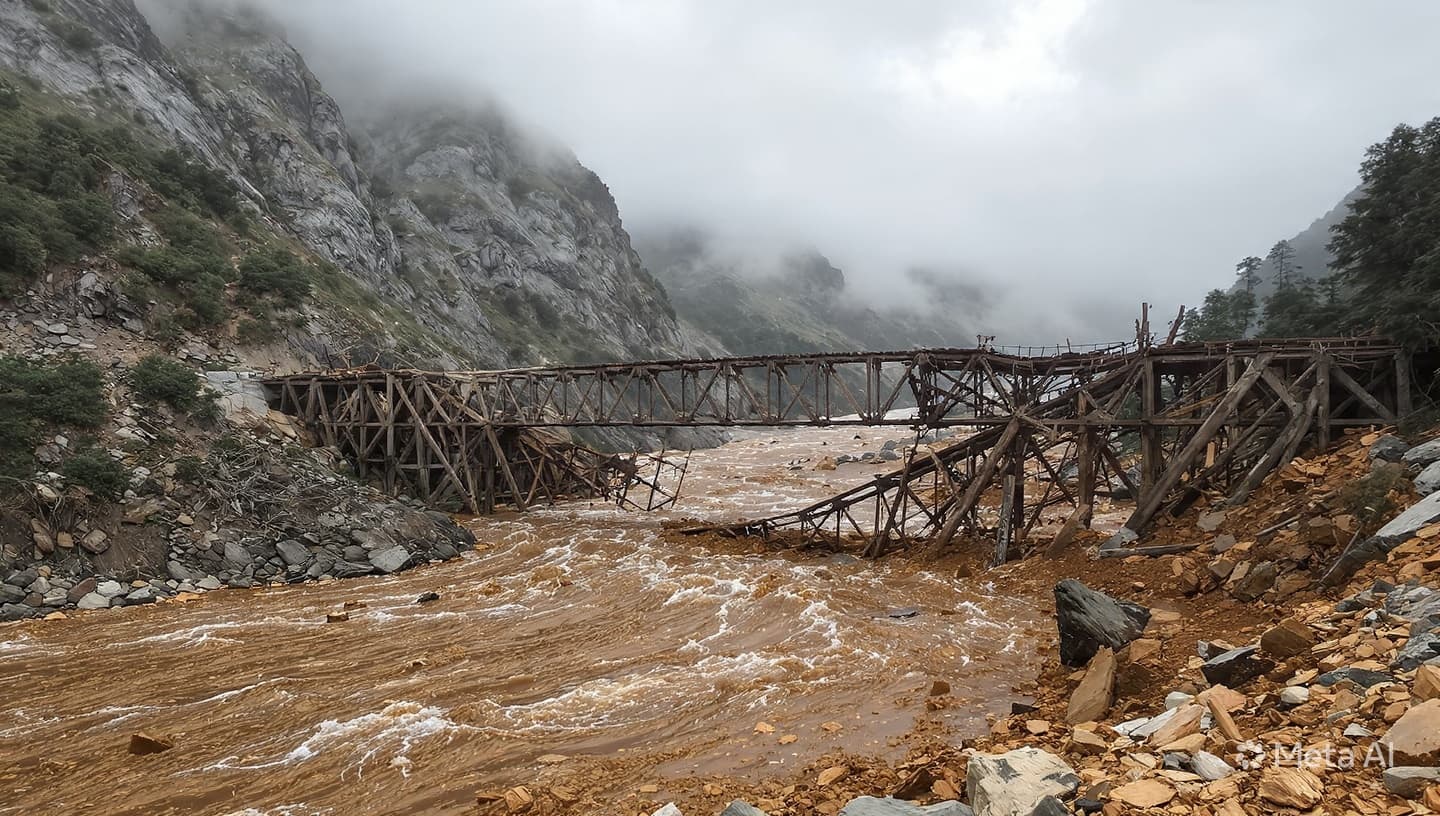
The valleys of Bhutan are shaped by the slow, deliberate movement of water, from the high, frozen reservoirs of the northern glaciers down through the steep, forested gorges to the fertile plains of the south. For generations, the communities here have built their lives in harmony with these glacial arteries, relying on the predictable melting of winter ice to feed their rivers and nourish their emerald rice paddies. Yet there are seasons when the water ceases to be a gentle companion and becomes an overwhelming force, reshaping the landscape with a sudden, chaotic energy.
In the high-altitude district of Gasa, where the mountains rise sharply into the thin, cold air, the onset of the monsoon arrived with an unfamiliar intensity. The rain did not fall in the usual rhythmic patterns of summer, but in sustained, dense deluges that quickly overwhelmed the natural absorption of the earth. The small mountain streams, usually clear and narrow enough to step across, transformed within hours into churning, gray torrents heavy with mud and alpine debris.
The infrastructure of these remote regions—the elegant bailey bridges and delicate suspension footbridges that span the deep gorges—serves as the sole connection between isolated villages and the broader world. To witness twenty-two of these structures washed away by the current is to see the human geography of the kingdom fundamentally altered. When a bridge fails, the silence that follows is absolute; the communities on the far side are suddenly cast backward into an older era of isolation, separated from medical care, markets, and the familiar faces of neighboring valleys.
Further south, in the agricultural heartland of Samtse, the impact of the water was felt not just along the riverbanks, but across the terraced hillsides that define the local economy. The heavy rains triggered a series of deep landslides that sliced through the fertile topsoil, carrying entire fields of cardamom and maize down into the valleys. The loss of agricultural land is a quiet, enduring tragedy for families whose identities and livelihoods are deeply rooted in the soil they cultivate.
The vulnerability of the highlands is further complicated by the quiet, accelerating transformation occurring at the roof of the world, where the great glaciers are receding at an unprecedented pace. The melting ice leaves behind vast, unstable lakes contained only by fragile walls of loose moraine and rock debris. These high-altitude bodies of water hang over the downstream valleys like a silent threat, their levels rising precariously with each subsequent downpour until the pressure threatens to breach the natural dams.
In the historic valley of Haa, the structural consequences of the deluge manifested in the sudden collapse of traditional buildings, where the heavy timbers and rammed-earth walls could no longer withstand the weight of the water. The loss of two lives in these collapses cast a somber shadow over the region, a stark reminder of the human cost that accompanies these shifts in the global climate. The community gathered in the rain to offer prayers, their voices rising with the smoke of juniper incense into the low-hanging clouds.
Along the farm roads that wind through the hills, massive boulders dislodged by the saturation of the upper slopes came to rest in the middle of the thoroughfares, completely halting the movement of vehicles and goods. These ancient stones, covered in moss and lichen, now sit as silent obstacles, requiring heavy machinery and days of coordinated effort to clear, while local residents navigate around them on foot, carrying supplies on their backs.
As the rain begins to taper off into a fine, persistent mist, the focus of the valleys shifts from immediate survival to the long, arduous process of restoration. The Ministry of Infrastructure and Transport begins its quiet assessments, mapping the broken roads and calculating the resources needed to span the rivers once more. The mountains stand unchanged above the clouds, their peaks holding the remaining ice, while the valleys below begin the work of rebuilding what the water took away.
The Royal Government of Bhutan and the Ministry of Infrastructure and Transport confirmed that catastrophic flash floods and landslides have claimed two lives in Haa Dzongkhag and destroyed twenty-two bridges across Samtse, Gasa, and Chhukha. The unprecedented monsoon rainfall, exacerbated by rapidly receding glaciers and unstable glacial lakes, caused extensive damage to vital water supply systems and severed transportation lifelines to dozens of remote agricultural communities. Reconstruction efforts have been initiated to restore basic connectivity and clear blocked farm roads.
Note: This article was published on BanxChange.com and is powered by the BXE Token on the XRP Ledger. For the latest articles and news, please visit BanxChange.com