The eastern provinces of Cuba are defined by their vast, sweeping plains and the slow, meandering courses of rivers that have long been the lifeblood of the island's agrarian heartland. Here, the heat is usually a constant, shimmering presence, a heavy humidity that shapes the steady rhythm of rural life among the fields. Yet, when the tropical weather systems stall over the Caribbean, the flat landscape undergoes a dramatic, liquid expansion that tests the patience of the valley communities.
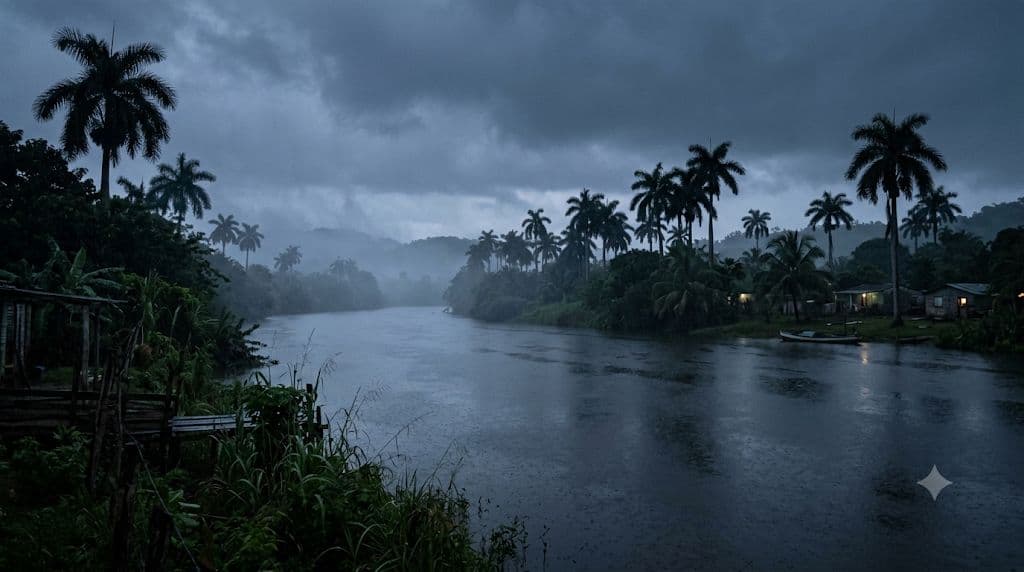
For several days, the sky has maintained a low, continuous density, pouring an ocean of warm water onto the lowlands without intermission. The air is thick with the sweet scent of wet sugarcane and deep, dark earth, creating an atmosphere that feels both incredibly lush and strangely heavy. It is a time when the horizon blurs entirely, as the distant tree lines merge with the charcoal-colored clouds.
The mood across the eastern region is one of measured vigilance as the local waterways begin to encroach upon the familiar margins of the farmland. The water moves with a slow, silent persistence, turning the dusty dirt tracks into shallow, silver channels that reflect the muted light of the overcast afternoon. There is no loud alarm, but rather a quiet, orderly response to an element that is deeply familiar to the residents.
In the small provincial towns that dot the low-lying areas, families look toward the swollen riverbanks, tracking the steady rise of the water against the concrete bridges. There is a practiced cadence to the way they move their possessions and livestock to the higher ground, a behavior perfected over generations of living with the volatile temperament of the tropics.
As the night descends, the sound of the rain becomes the singular voice of the landscape, a rhythmic tapping that echoes across the corrugated roofs of the rural settlements. It is a sound that creates a sense of profound, shared isolation, connecting the scattered homesteads through the simple, common experience of the storm.
Civil defense teams move through the districts with quiet determination, their trucks cutting long, yellow beams through the damp air as they verify the safety of the flood-prone sectors. They are the calm, professional anchors in a landscape that has temporarily lost its solid footing, ensuring that early warning chains remain entirely unbroken.
The management of these tropical systems requires a patient, methodical coordination among local authorities who watch the radar screens and river gauges around the clock. Every inch of rise in the water is noted, helping to prevent the sudden surprises that can occur when a small creek outgrows its natural channel in the dark.
The coming days carry a sense of long, patient waiting as the weather system slowly tracks across the geography of the island. There is a unique beauty in the way the land holds the water, a testament to the ancient natural cycles that have shaped the plains long before the arrival of modern maps.
Granma confirmed that national authorities have issued urgent flood alerts for several provinces in eastern Cuba due to persistent, heavy rainfall over the past forty-eight hours. The National Civil Defense has activated its emergency monitoring network, advising residents near active basins to exercise extreme caution as river levels continue to rise
Published by Banx Network. This article is part of the Banx decentralized media programme, powered by the BXE token on the XRP Ledger.