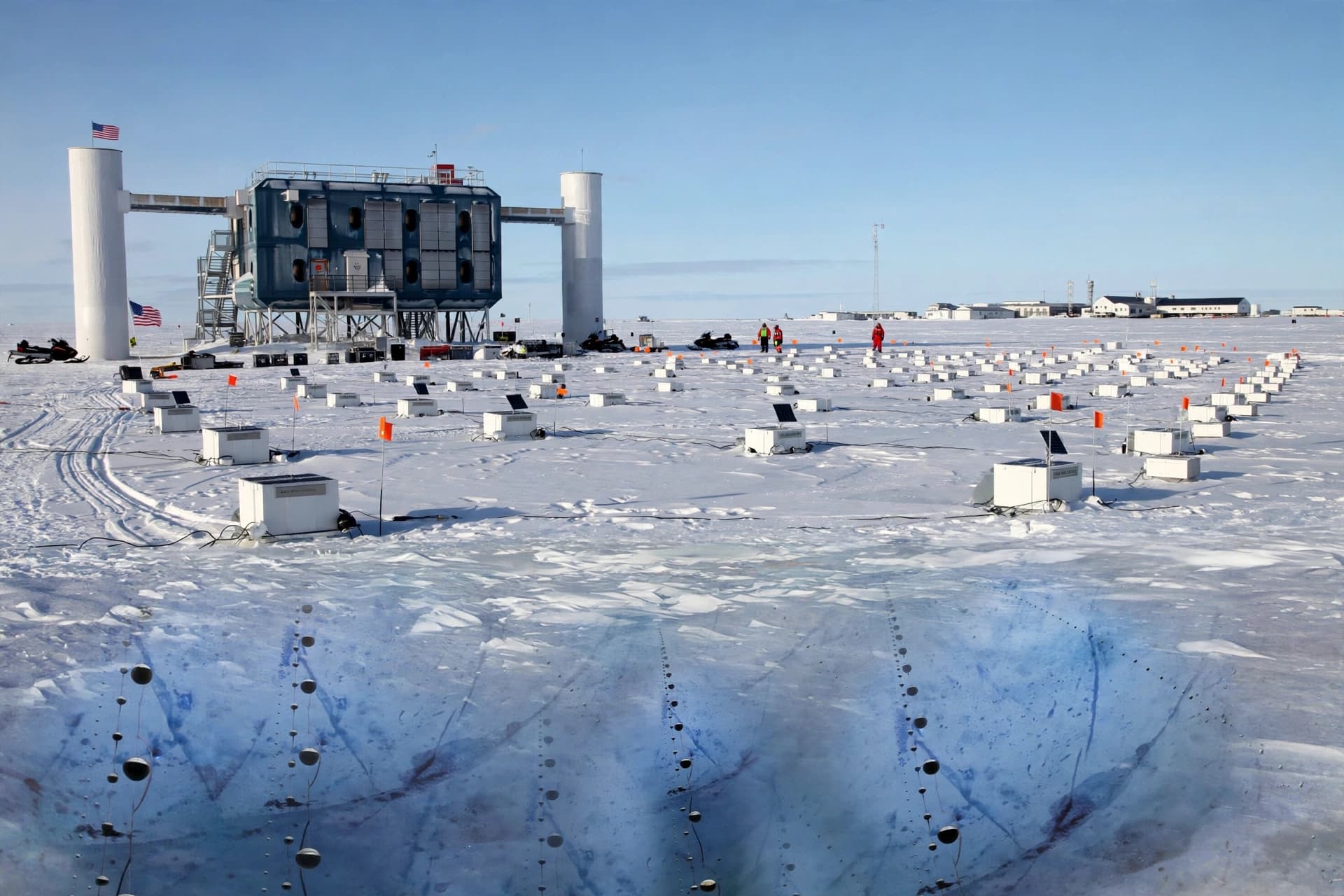
Antarctica has long occupied a special place in humanity’s imagination. Covered by vast expanses of ice and shaped by some of the harshest conditions on Earth, the continent remains one of the least explored regions of the planet. Yet even beneath its frozen surface, important discoveries continue to emerge.
Scientists recently reported the identification of a massive geological structure hidden beneath thick layers of Antarctic ice. The finding offers new insight into the continent’s ancient geological history and the forces that shaped it over millions of years.
Modern research tools have played a crucial role in revealing what cannot be seen directly. Advanced radar systems, satellite observations, and geophysical measurements allow researchers to study landscapes concealed beneath kilometers of ice.
The newly identified structure appears to be part of a much older geological environment that existed long before Antarctica became covered by ice sheets. Understanding these formations helps scientists reconstruct the continent’s distant past.
Researchers are particularly interested in how such structures may influence the behavior of ice above them. Subsurface features can affect ice movement, stability, and long-term responses to environmental change.
The discovery also contributes to broader efforts to understand Earth's geological evolution. Continents have shifted, collided, and separated over hundreds of millions of years, leaving clues preserved beneath the surface.
Antarctica's ice sheets contain valuable records of past climates. By studying both the ice and the land beneath it, scientists gain a more complete picture of environmental changes across geological timescales.
International cooperation remains central to Antarctic research. Scientists from multiple countries continue to share data and expertise in pursuit of a deeper understanding of the continent.
As technology expands humanity’s ability to explore remote regions, discoveries beneath Antarctica remind us that many chapters of Earth’s history remain hidden. Even in one of the world's coldest places, new knowledge continues to emerge from beneath the ice.
AI Image Disclaimer: This article uses an AI-generated illustration to represent scientific exploration and geological research themes.
Source Verification Check: Nature, Scientific American, ScienceDaily, Live Science, Antarctic research institutions
Published by Banx Network. This article is part of the Banx decentralized media programme, powered by the BXE token on the XRP Ledger.