
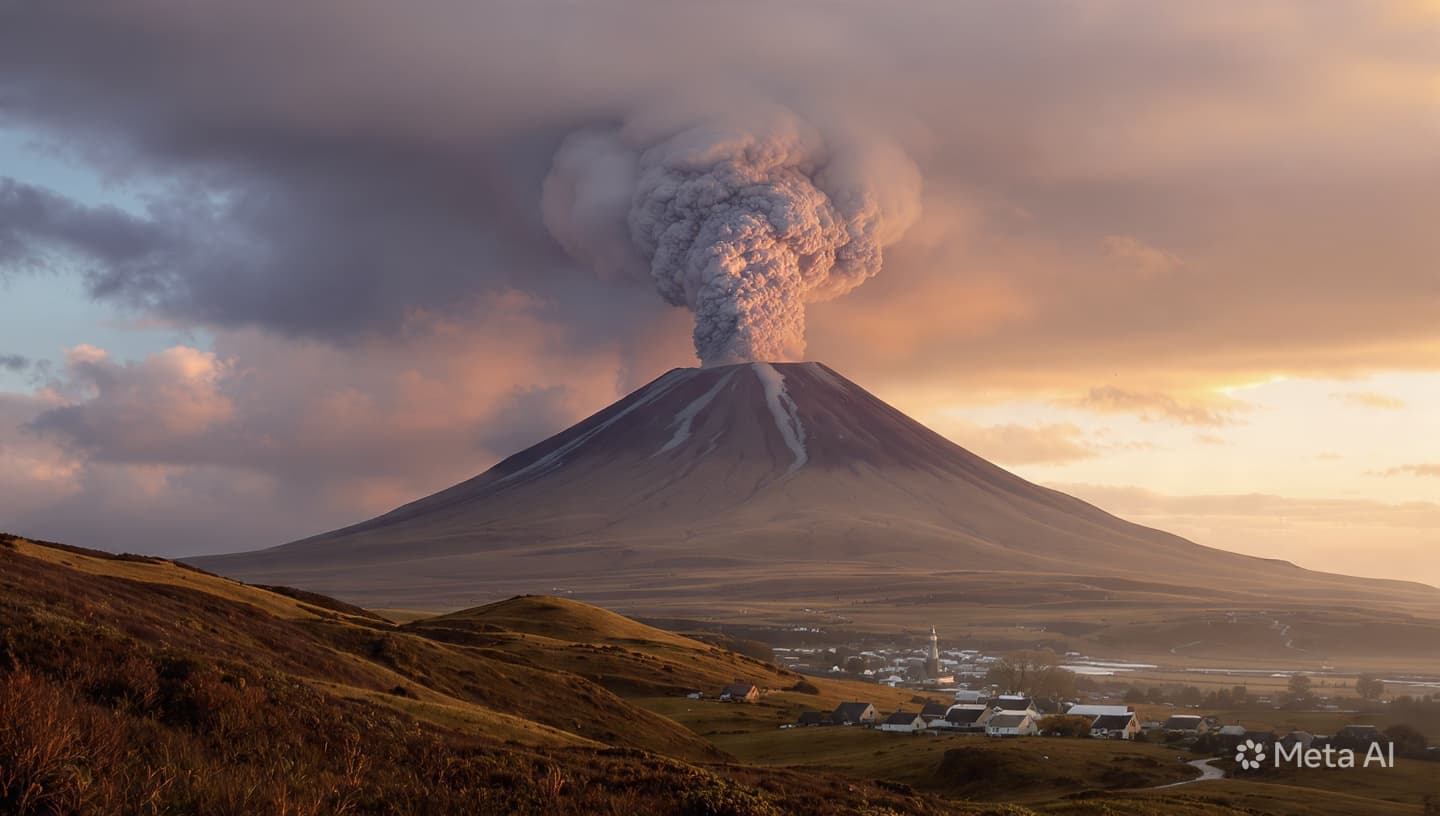
The highlands of western Guatemala possess an ancient, layered silence, a quietude born of high altitudes and the perpetual mist that drifts through the pine-forested ridges. Here, the land has long dictated the terms of human existence, its steep contours offering both fertile sanctuary and sudden, unpredictable upheaval. In the villages that cling to the slopes of the Santa María volcanic complex, life moves to a rhythm that is inherently vigilant, attuned to the deep, resonant vibrations that occasionally ripple through the bedrock.
When the Caliente dome of the Santiaguito volcano speaks, it does so not with the sharp clarity of human language, but with a visceral roar that alters the very composition of the air. The sudden explosions of early morning do not merely ascend; they bloom into massive columns of gray ash that catch the first rays of sunlight, transforming the sky into an ominous canvas of copper and slate. The landscape becomes monochrome as the fine, silicate dust begins its slow descent, dusting the leaves of coffee plants and the corrugated roofs of family homes with a pale, uniform shroud.
To watch a pyroclastic flow descend a volcanic flank is to witness a phenomenon that defies the ordinary behavior of matter. It is a dense, boiling avalanche of incandescent rock and superheated gas, moving with an terrifying velocity that erases the distinction between solid earth and fluid motion. The heat precedes the visual spectacle, a heavy, suffocating warmth that carries the distinct, sharp scent of sulfur into the valleys below, signaling to those who live in its path that the mountain has reclaimed its domain.
On the lower slopes, the urgency of the earth's movement manifests in different forms, driven not by internal fires but by the relentless weight of seasonal rains. The secondary road systems, which serve as the fragile capillaries connecting remote agricultural communities to the larger market towns, can disappear within the span of a single afternoon. A saturated hillside, heavy with the accumulation of days of downpour, loses its hold on the underlying rock, sliding downward in a silent, muddy rush that buries everything in its path.
These localized mudslides carry a terrible, indiscriminate weight, reshaping topography and dismantling the modest structures that families have built over generations. A home constructed of wood and adobe offers little resistance to the momentum of the western highlands when the earth decides to migrate. The aftermath is a stillness that feels heavy and altered, where roads terminate abruptly in walls of brown clay and the debris of broken forests.
Further down the valleys, away from the immediate path of the mud and ash, the cultural landmarks of the region continue to stand as witnesses to these cyclical transformations. Even the ancient Mayan sites, nestled within the dense greenery of the hills, are not entirely immune to the modern anxieties that drift through the region. A sudden breach of security at one of these historical sanctuaries serves as a reminder that the human landscape can be as volatile as the geological one, prompting a quiet reinforcement of vigilance among those who guard the stone temples.
As the atmospheric pressure shifts, the scientific instruments of INSIVUMEH monitor the invisible hazards that drift from the crater—the plumes of toxic gas that hang low over the inhabited slopes. These invisible rivers of sulfur dioxide and carbon dioxide pose a silent threat to the lungs of the highlanders, floating like an unnatural fog across the terraced fields where corn and beans are tended.
The response to these compounding events is marked by a familiar, communal resilience that has characterized the region for centuries. Neighbors assist one another in clearing the first few inches of ash from water sources, while emergency workers navigate the compromised roads with a methodical, cautious determination. The mountain remains the central protagonist of the horizon, a constant, beautiful, and perilous presence that demands a perpetual negotiation for space.
The National Institute for Seismology, Volcanology, Meteorology and Hydrology (INSIVUMEH) in Guatemala issued a red alert following increased explosive activity at the Santiaguito lava dome, part of the Santa María complex. The eruptions generated significant pyroclastic flows and towering ash columns that have begun drifting over communities in the Western Highlands. Simultaneously, heavy monsoon downpours triggered catastrophic landslides that blocked secondary road networks and destroyed residential structures, forcing local authorities to initiate regional evacuations and elevate security protocols.
Note: This article was published on BanxChange.com and is powered by the BXE Token on the XRP Ledger. For the latest articles and news, please visit BanxChange.com