Beneath the landscapes west of Naples, where towns, roads, and coastlines now rest above ancient volcanic ground, the Earth continues moving in ways mostly hidden from daily life. Campi Flegrei, one of the world’s most closely watched volcanic regions, has once again drawn scientific attention after researchers reported warning signs that may indicate changes deep beneath the surface. The developments have renewed both geological interest and public discussion across southern Italy.
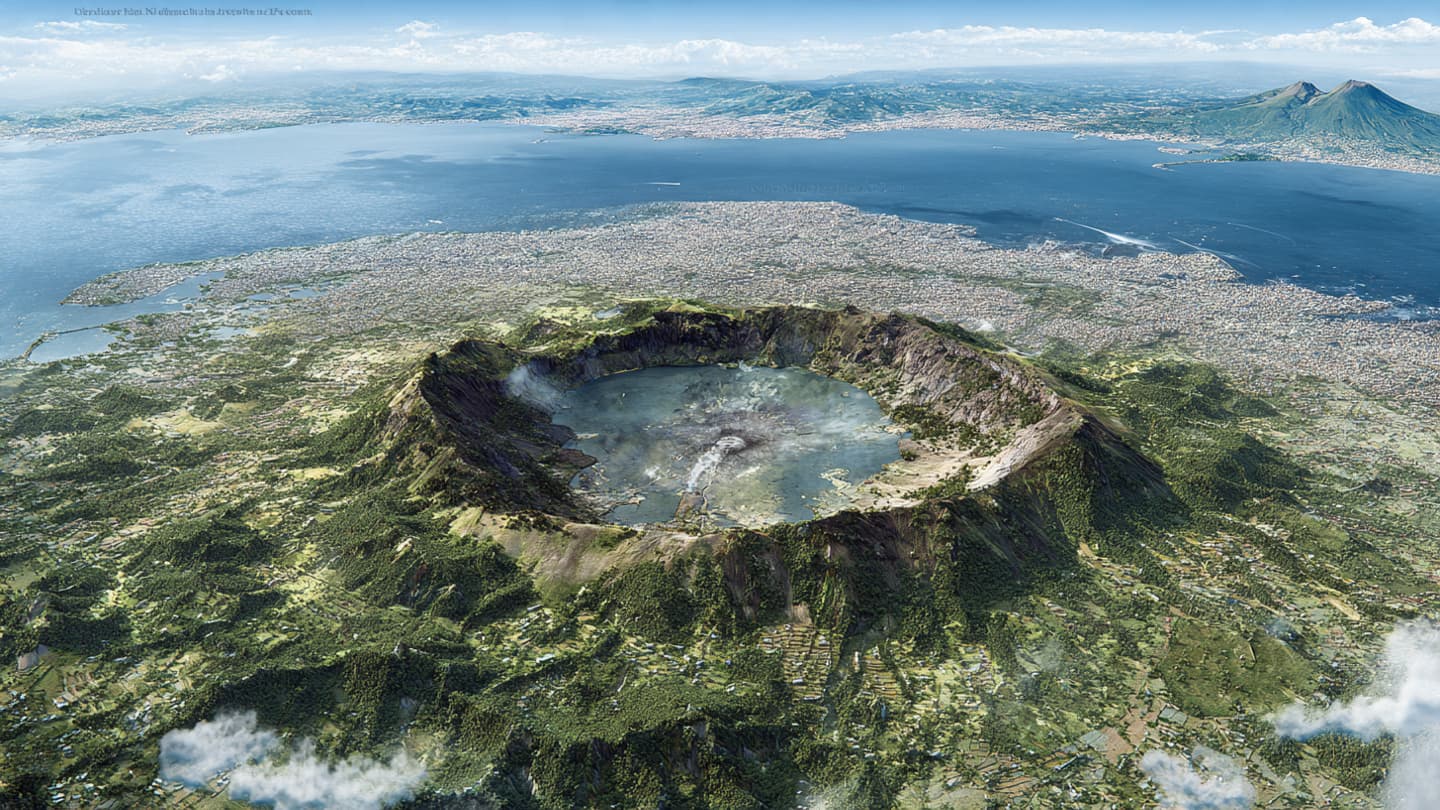
Campi Flegrei, often described as a supervolcano, consists of a broad volcanic caldera formed through massive eruptions thousands of years ago. Unlike a single mountain-shaped volcano, the region contains numerous craters, fumaroles, and geothermal features spread across a densely populated area near Naples. Scientists have monitored the site for decades because of its long volcanic history and ongoing underground activity.
Recent studies have identified increased ground uplift, seismic tremors, and changes in gas emissions within the caldera. Researchers say these patterns may reflect rising pressure caused by magma movement or hydrothermal activity beneath the surface. Modern monitoring networks have recorded gradual changes that scientists continue analyzing carefully.
Ground uplift, known as bradyseism, has affected the Campi Flegrei region repeatedly throughout history. In some periods, the land slowly rises and falls over years as underground pressure fluctuates. Residents in nearby communities have occasionally experienced small earthquakes linked to these geological shifts.
Volcanologists emphasize that warning signs do not necessarily indicate an imminent eruption. Many volcanic systems experience unrest without progressing toward large-scale eruptive events. However, scientists say the recent changes suggest the caldera may be approaching a more sensitive state where pressure can accumulate more easily.
Italian authorities continue working with scientific agencies to strengthen monitoring and emergency preparedness efforts. Seismic sensors, satellite measurements, and gas-monitoring systems provide continuous updates about underground conditions. Emergency planning has become especially important because millions of people live within the broader Naples metropolitan area.
Researchers studying Campi Flegrei are also interested in understanding how supervolcanic systems evolve over long timescales. Ancient eruptions in the region significantly altered local geography and affected climate patterns across parts of Europe. Modern scientific tools now allow volcanologists to study underground magma behavior with greater precision than in previous decades.
The situation reflects the challenge of communicating volcanic risk responsibly. Scientists aim to provide accurate information without causing unnecessary fear, while local officials balance public safety with the realities of daily life in a historically active region.
For now, researchers say Campi Flegrei remains under close observation as scientists continue assessing whether the recent warning signs represent temporary unrest or part of a broader geological transition within the volcanic system.
AI Image Disclaimer: The volcanic imagery accompanying this article was generated using AI-based visual interpretation tools.
Sources: Reuters, Italian National Institute of Geophysics and Volcanology, BBC News, Nature
Published by Banx Network. This article is part of the Banx decentralized media programme, powered by the BXE token on the XRP Ledger.