
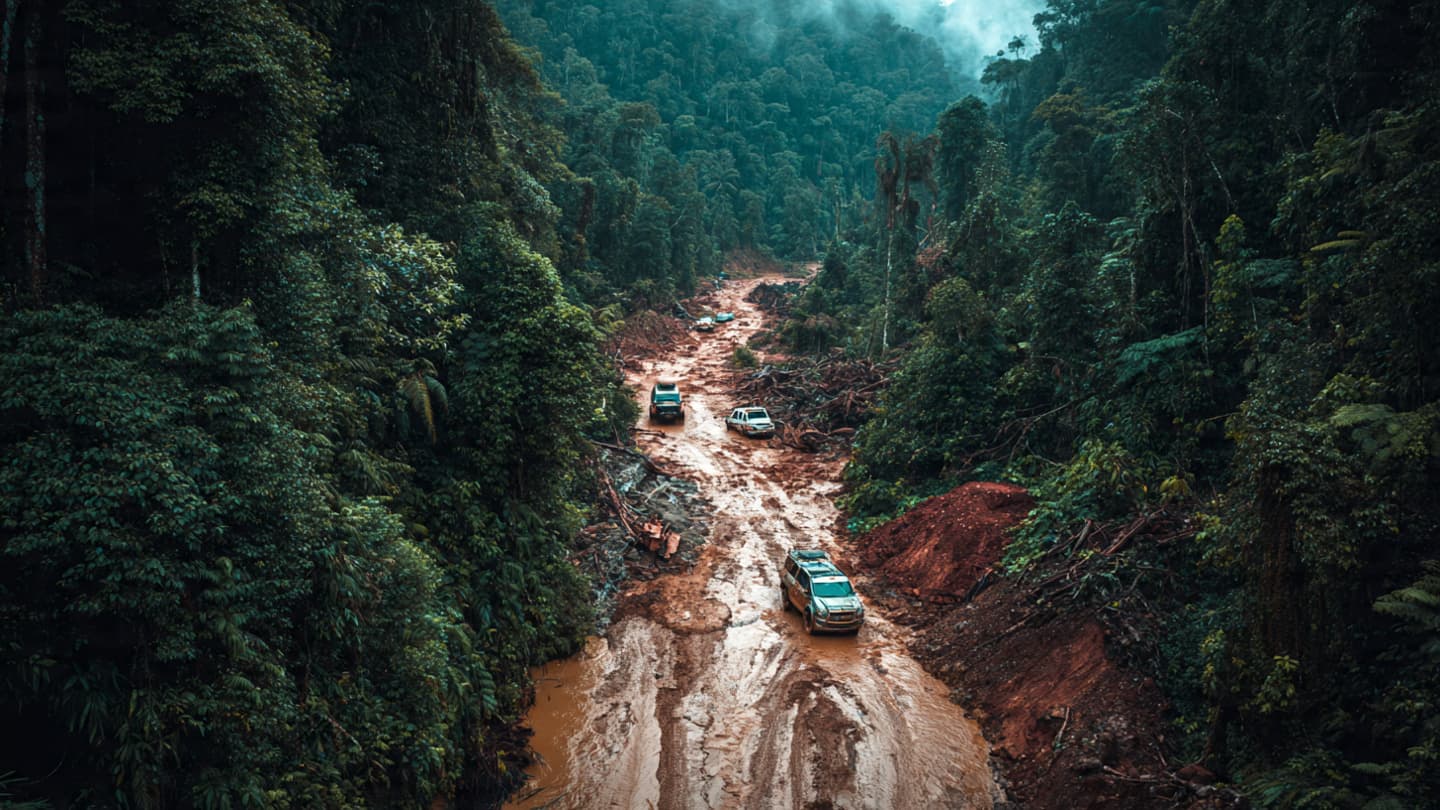
The roads leading toward Suriname’s mining regions often cut through steep hills, dense vegetation, and long stretches of rain-soaked earth. During heavy weather, those fragile routes can shift without warning, turning pathways of commerce and movement into barriers of mud and silence. This week, communities near several mining areas found themselves partially cut off after landslides buried access roads deep within the interior.
Authorities reported that prolonged rainfall triggered multiple landslides near routes connecting remote mining settlements. Thick layers of mud, fallen trees, and debris blocked transportation corridors used by supply trucks, workers, and emergency services traveling between interior camps and nearby towns.
Heavy machinery was deployed to affected areas as road crews attempted to clear damaged sections. Officials stated that unstable ground conditions complicated operations, forcing some teams to suspend work temporarily during renewed rainfall. In several locations, vehicles remained stranded for hours while drivers waited for safe passage to reopen.
Mining communities dependent on these roads quickly began experiencing supply disruptions. Fuel deliveries slowed, food shipments faced delays, and transport between camps became increasingly difficult. Some residents reported limited communication access as weather conditions affected electrical and mobile infrastructure across isolated districts.
The landslides also heightened concerns regarding safety near hillside settlements already vulnerable to erosion during Suriname’s rainy season. Authorities urged residents and workers to avoid unstable slopes while emergency coordinators monitored additional regions at risk for further ground movement.
For many interior communities, the roads are more than transportation routes. They connect distant settlements to medical care, markets, schools, and regional support services. When landslides sever those connections, isolation settles quickly across areas already shaped by difficult terrain and unpredictable weather.
Local environmental observers noted that deforestation and mining activity may increase vulnerability to soil instability in some regions. Exposed hillsides and weakened vegetation can reduce the land’s ability to absorb heavy rainfall, particularly during extended storm periods. Officials, however, stated that investigations into the exact causes of the landslides remain ongoing.
As excavators continued removing mud and debris beneath humid skies, long lines of vehicles waited quietly along blocked roads stretching deeper into the forest. The sound of engines and machinery echoed through terrain temporarily reshaped by rain and collapsing earth.
Authorities confirmed that restoration work remains active while weather monitoring teams continue assessing conditions near vulnerable transportation routes across Suriname’s mining interior.
Note: This article was published on BanxChange.com and is powered by the BXE Token on the XRP Ledger. For the latest articles and news, please visit BanxChange.com