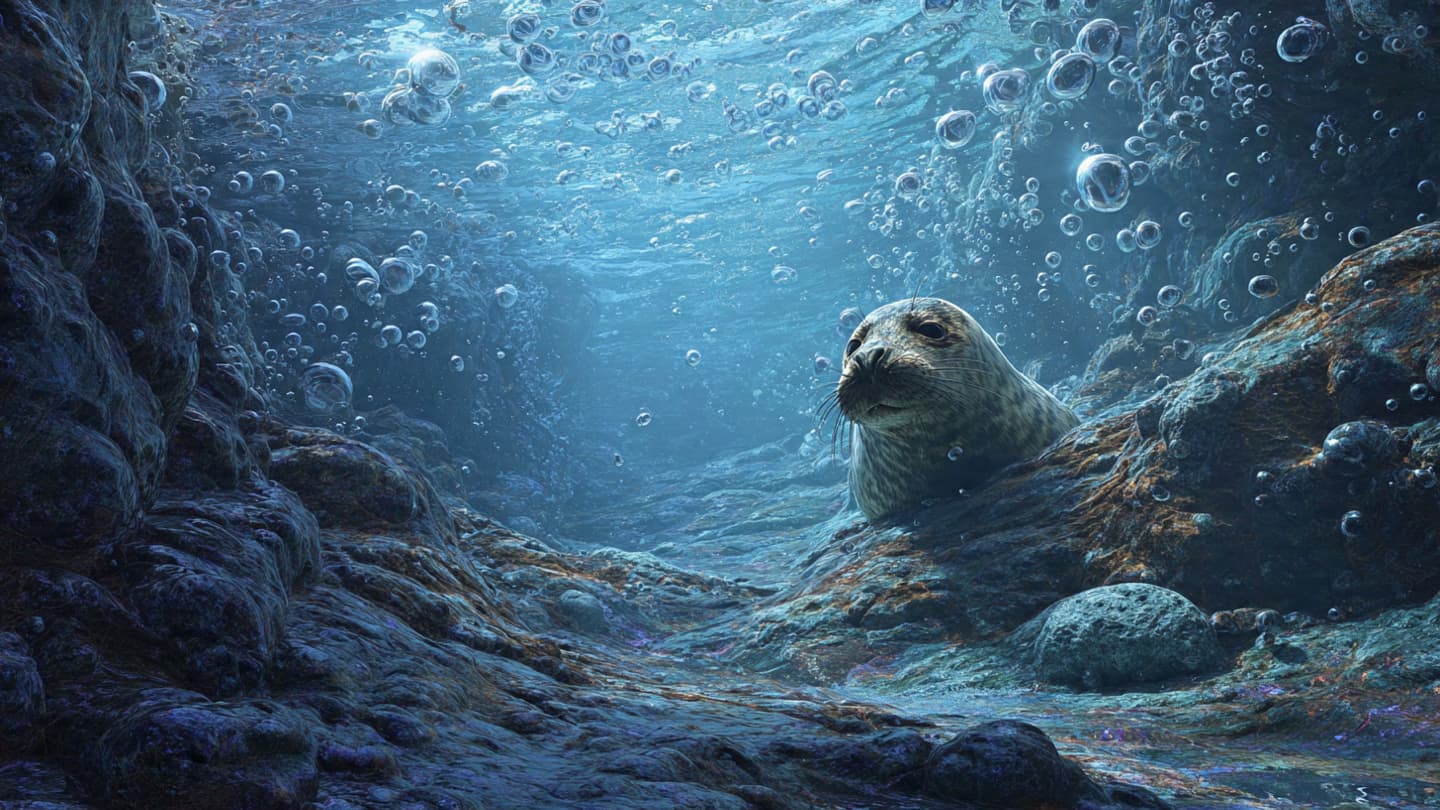
Along remote coastlines where waves fold gently against stone cliffs, marine life has long moved according to rhythms older than tourism itself. Yet as more travelers seek encounters with rare wildlife, some animals are quietly adjusting their behavior in response. Researchers studying rare seals have now observed individuals retreating into underwater “bubble caves,” using secluded spaces beneath coastal rock formations to avoid growing human attention.
Scientists documenting the phenomenon say the caves contain small pockets of trapped air where seals can briefly surface while remaining concealed from boats and swimmers above. These underwater shelters offer both protection and privacy in regions where tourism activity has increased in recent years.
The seals involved are considered sensitive marine mammals whose populations remain limited in several coastal areas. Researchers note that even well-intentioned tourism can create stress for wildlife when encounters become too frequent or intrusive. Repeated disturbance may affect feeding patterns, breeding behavior, and resting habits.
Marine biologists observed that some seals appeared to spend longer periods inside the submerged caves during peak tourist seasons. Motion-sensitive cameras and underwater monitoring systems helped researchers document the animals moving quietly between rocky chambers beneath the surface.
The discovery has renewed discussion about balancing wildlife tourism with conservation efforts. Coastal tourism often supports local economies and can encourage public appreciation for marine ecosystems. However, scientists say careful management is necessary to ensure that human presence does not unintentionally disrupt vulnerable species.
Protected marine zones and visitor guidelines have become increasingly important in regions known for rare wildlife. Conservation groups often encourage maintaining viewing distances, limiting noise levels, and restricting access to sensitive habitats during breeding seasons. Such measures aim to reduce stress while allowing responsible tourism to continue.
Researchers also emphasize that the seals’ use of bubble caves demonstrates behavioral adaptability rather than a complete solution to disturbance. While the caves offer temporary refuge, long-term conservation still depends on habitat protection and sustainable human activity along coastlines.
As coastal tourism continues expanding globally, scientists say these underwater sanctuaries reveal both the resilience and vulnerability of marine wildlife. Beneath the surface, hidden from crowded shores, the seals continue searching for quiet spaces where the natural rhythm of the sea can remain undisturbed.
AI Image Disclaimer: Certain accompanying illustrations were generated using AI-assisted imaging technology.
Sources Verified: National Geographic, BBC Wildlife, Marine Mammal Science Journal, Smithsonian Magazine, Reuters
Published by Banx Network. This article is part of the Banx decentralized media programme, powered by the BXE token on the XRP Ledger.