
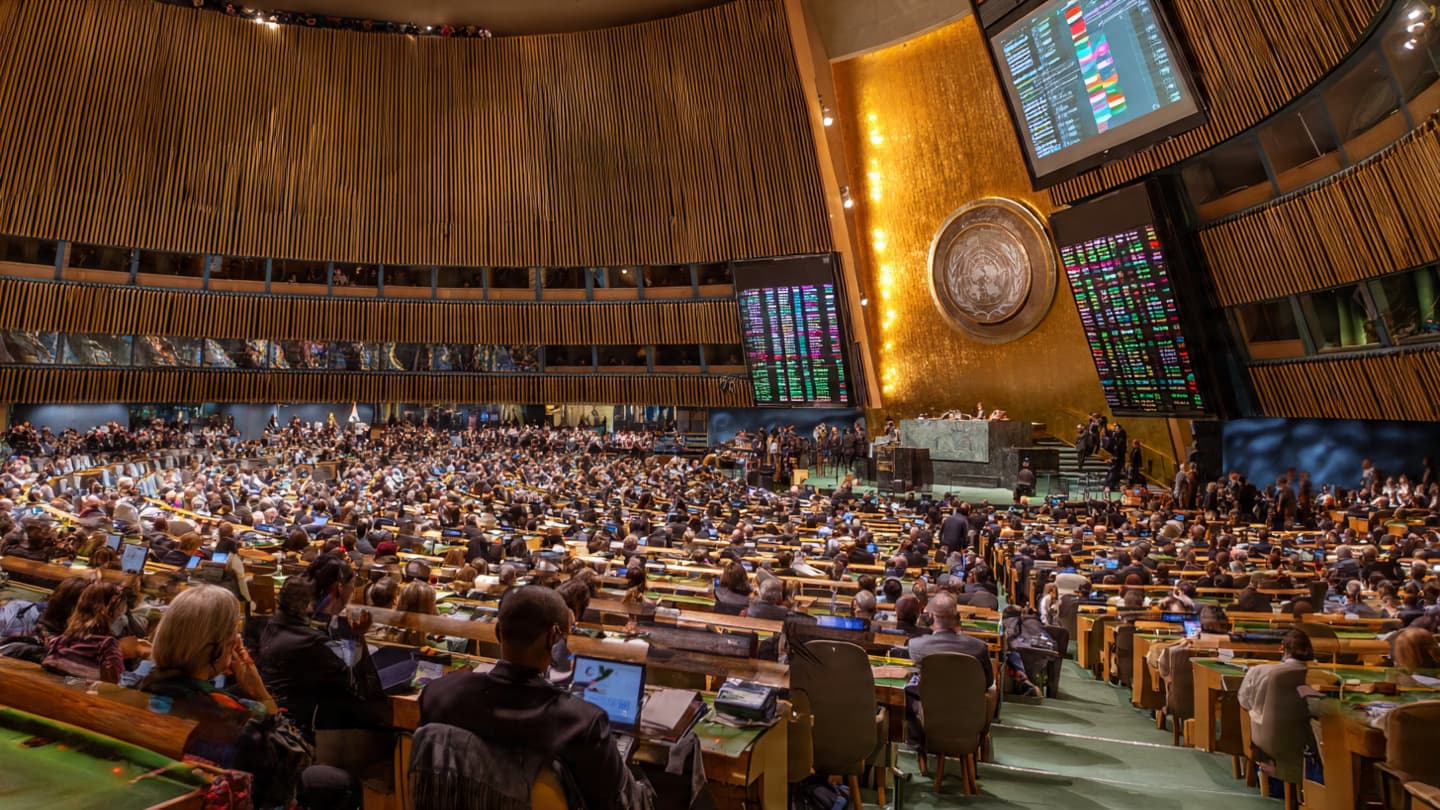
Rain fell lightly over New York as diplomats entered the United Nations headquarters, carrying folders, translated speeches, and the familiar gravity of negotiations that often stretch late into the evening. Inside the vast chambers overlooking the East River, conversations moved through headphones and microphones in dozens of languages at once. Some debates arrive with visible urgency; others unfold quietly, gathering significance almost imperceptibly until a vote reveals how much the world has changed around them.
This week, such a moment emerged at the United Nations, where member states backed a landmark climate-related resolution despite efforts by the United States to weaken or halt parts of the process. The decision, centered on advancing international legal clarity around states’ obligations regarding climate change, marked another step in the growing movement to frame the climate crisis not only as an environmental emergency, but also as a question of justice, responsibility, and international law.
The resolution’s origins can be traced far from the diplomatic avenues of Manhattan. In recent years, small island nations threatened by rising seas — particularly Pacific countries such as Vanuatu — have increasingly pushed global institutions to confront the legal dimensions of climate change. For communities already watching shorelines erode and storms intensify, the issue carries an immediacy beyond policy language. Entire futures appear tied to questions once treated as abstract negotiations: who bears responsibility for emissions, what obligations states owe vulnerable populations, and whether international law can adapt quickly enough to a warming planet.
At the center of the current effort is a push for stronger international legal interpretation regarding climate obligations. Supporters argue that clearer legal frameworks could influence future court decisions, strengthen accountability, and guide how governments address environmental harm. While such resolutions do not themselves impose direct penalties, they can reshape the moral and legal architecture surrounding global climate policy over time.
The United States reportedly sought changes to the wording and scope of the initiative, reflecting longstanding concerns among major emitting nations about potential legal exposure and liability. Washington has often supported climate cooperation in principle while resisting measures that could open pathways toward compensation claims or binding legal obligations under international courts. Yet despite those concerns, the broader coalition supporting the resolution remained intact.
The vote revealed a shifting diplomatic landscape where climate-vulnerable countries increasingly hold moral influence disproportionate to their size. Delegates from island nations spoke not in the language of geopolitical rivalry, but of survival measured in tides, fisheries, and disappearing coastlines. Their arguments carried a quiet persistence shaped less by ideology than by lived environmental change.
There is something striking about how climate diplomacy now unfolds. For decades, negotiations largely revolved around emissions targets, technical benchmarks, and economic trade-offs. Increasingly, however, the conversation has begun moving toward accountability and rights. Floods, droughts, heat waves, and wildfires have altered not only ecosystems, but also public imagination. Climate change no longer feels distant for many countries; it arrives through smoke-filled summers, collapsing crops, stronger storms, and displaced communities.
Inside the United Nations chamber, these realities remain filtered through procedural language and carefully balanced diplomacy. Yet beneath the formal wording lies a deeper shift in tone. Nations once viewed primarily as aid recipients now shape major global discussions through moral authority and coalition-building. Meanwhile, larger powers navigate the tension between supporting climate action publicly while guarding against legal precedents that may carry future consequences.
Environmental advocates described the resolution as historic because it signals growing international recognition that climate harm cannot remain politically acknowledged yet legally undefined forever. Critics, however, cautioned that symbolic victories alone will not lower emissions or immediately protect vulnerable populations already experiencing severe climate impacts. Like many UN processes, the significance may emerge gradually rather than instantly — through future court rulings, policy debates, and evolving norms in international law.
Outside the UN building, the city moved through its ordinary rhythm: taxis crossing wet intersections, ferries moving through gray water, office lights flickering on as evening approached. Yet within the assembly halls, another kind of tide had shifted quietly. Not dramatic enough to halt the machinery of global politics overnight, but steady enough to suggest that the climate crisis is increasingly being understood not only as a scientific challenge, but also as a legal and ethical one.
For the United States, the outcome reflected the growing difficulty of steering global climate debates solely through the interests of major powers. For smaller nations, it represented a rare moment when vulnerability itself became a form of diplomatic influence. And for the United Nations, often criticized for its slow and procedural nature, the resolution served as a reminder that international institutions sometimes move like oceans — gradual on the surface, but capable of reshaping coastlines over time.
As delegates departed beneath rows of national flags, the language of the resolution entered official record. No storms stopped, no seas receded, and no temperatures immediately fell. But somewhere between the marble corridors and the rising tides beyond them, the world edged slightly closer toward treating climate change not simply as an environmental crisis, but as a matter of shared global accountability.
AI Image Disclaimer: These images were generated using AI as conceptual illustrations and are not documentary photographs.
Sources:
Reuters Associated Press United Nations News BBC News Climate Home News
Note: This article was published on BanxChange.com and is powered by the BXE Token on the XRP Ledger. For the latest articles and news, please visit BanxChange.com