
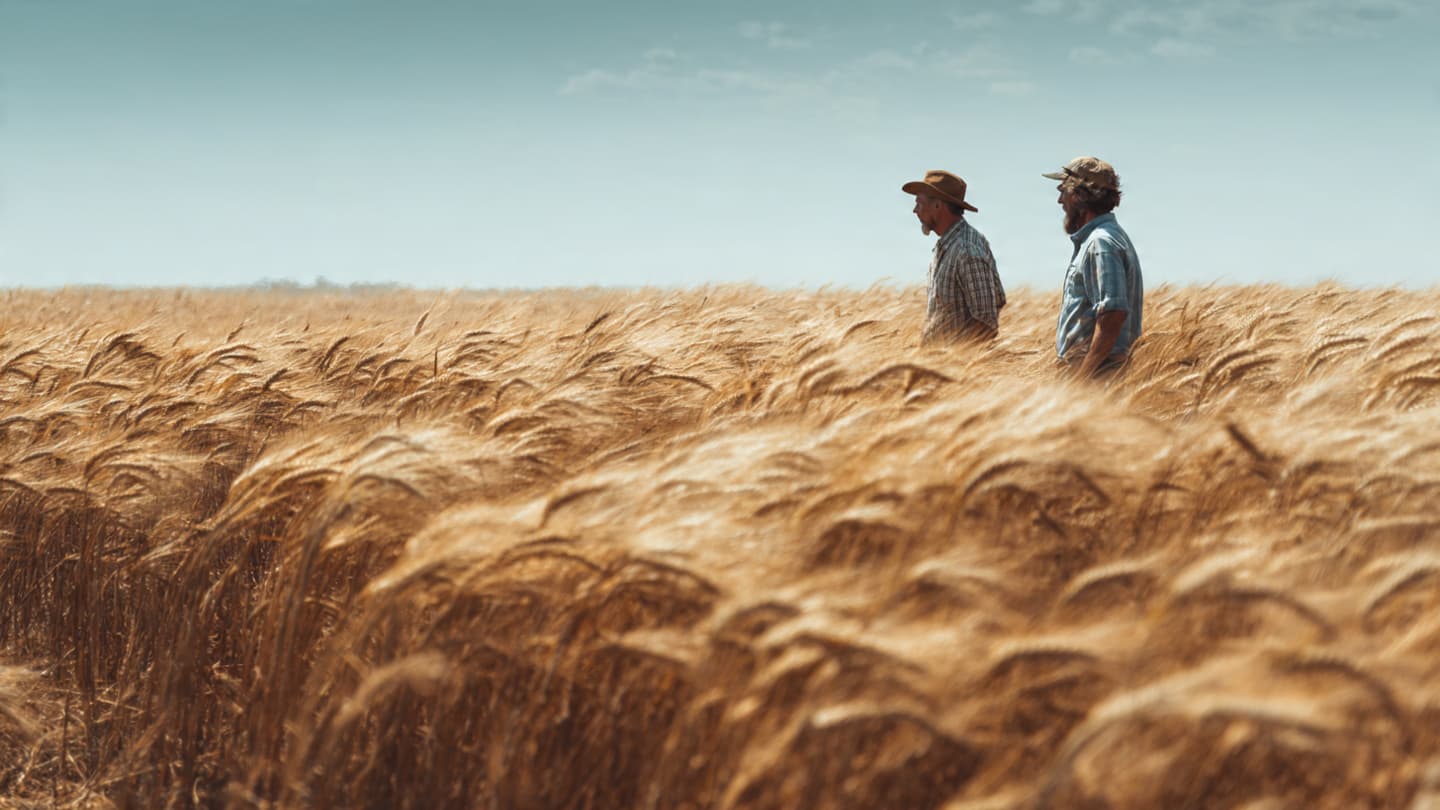
Across wide farming plains where seasons once moved with familiar rhythm, uncertainty now lingers like dust carried by dry winds. Wheat fields that traditionally promised abundance have, in many regions, become symbols of vulnerability under increasingly unpredictable climate conditions. For farmers watching the skies and soil alike, this year’s harvest season has arrived with deep concern.
Agricultural producers in several wheat-growing regions are preparing for what experts describe as potentially the worst crop yields in more than fifty years. Prolonged drought, extreme heat, and unstable weather patterns have significantly affected wheat development, raising fears over reduced production and economic strain for farming communities.
In parts of North America and other major agricultural zones, rainfall shortages have left soil moisture levels critically low. Farmers report stunted crop growth and reduced grain quality as fields struggle under persistent dry conditions. Some producers have already begun adjusting harvest expectations downward after months of difficult weather.
Agricultural economists warn that lower wheat output may contribute to broader market pressures, particularly if multiple producing countries face similar conditions simultaneously. Wheat remains one of the world’s most important staple crops, influencing food prices, livestock feed, and global trade networks. Even moderate production declines can ripple across international supply chains.
For farming families, however, the issue extends beyond economics. Many growers describe the emotional toll of watching fields deteriorate despite months of labor and investment. Generations of agricultural knowledge are increasingly being tested by climate variability that often arrives with little predictability. In rural communities, conversations about resilience have become more common than discussions of expansion.
Government agencies and agricultural organizations are monitoring conditions closely while considering support measures for affected producers. Some regions have expanded drought assistance programs or emergency relief initiatives aimed at helping farmers manage losses. Researchers are also continuing efforts to develop more heat- and drought-resistant crop varieties.
Climate scientists note that extreme weather events affecting agriculture are becoming more frequent in many parts of the world. While individual seasons vary, long-term warming trends are reshaping growing conditions and increasing pressure on food production systems. The challenges facing wheat farmers this year are therefore being viewed within a much broader environmental context.
The image of golden wheat fields has long represented stability and continuity within rural landscapes. Yet this season serves as another reminder that agriculture remains deeply dependent on delicate environmental balances. When weather patterns shift too sharply, even the most experienced hands can find themselves navigating unfamiliar ground.
Harvest operations are expected to continue in the coming weeks, though many producers remain cautious about final outcomes. Agricultural markets and policymakers alike will be watching closely as farmers confront one of the most difficult growing seasons in decades.
AI Image Disclaimer: Certain images related to this story were digitally generated with artificial intelligence to illustrate the topic.
Sources: Reuters, Associated Press, Bloomberg, USDA reports, The Guardian
Note: This article was published on BanxChange.com and is powered by the BXE Token on the XRP Ledger. For the latest articles and news, please visit BanxChange.com