
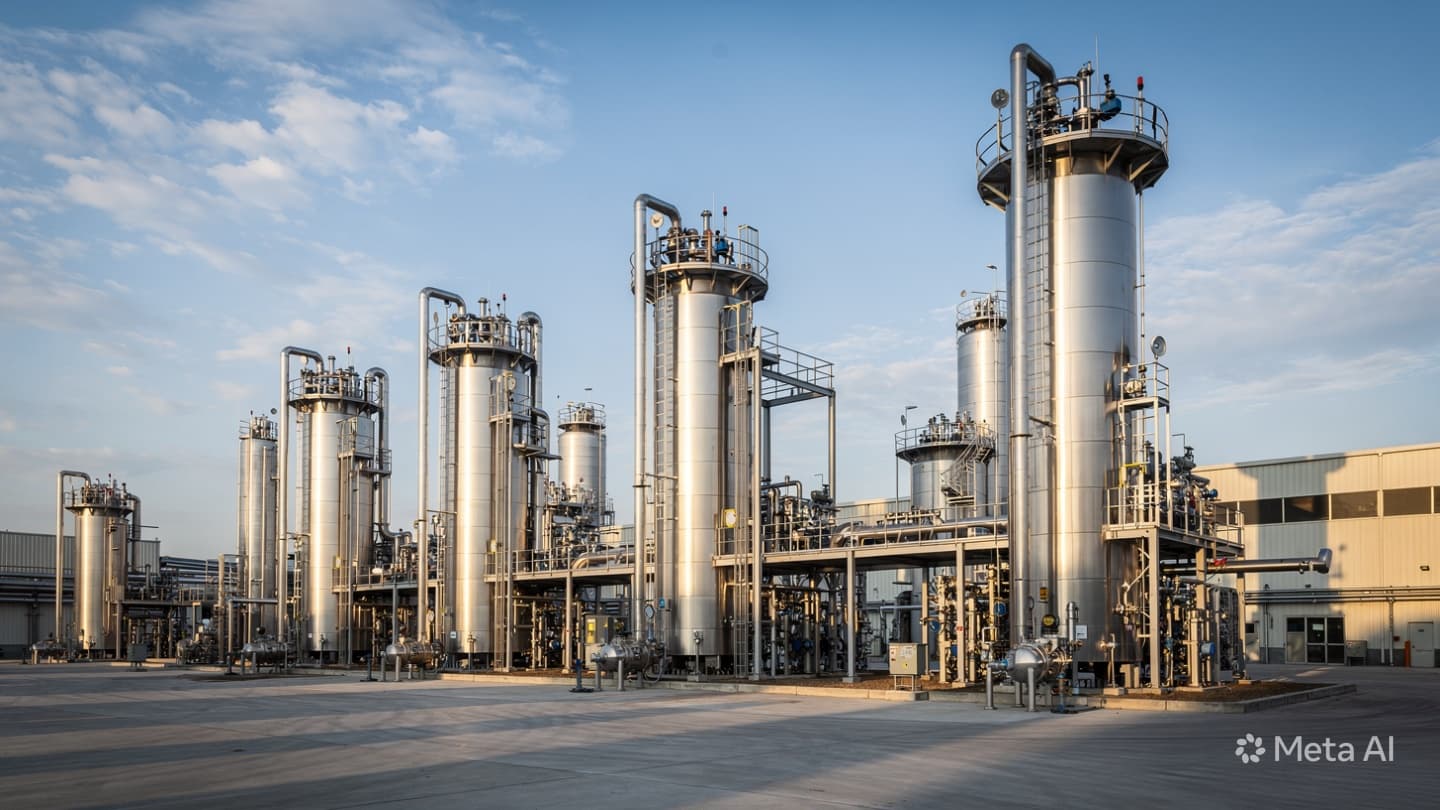
The modern industrial parks of the Cahul district house several specialized manufacturing facilities dedicated to the production of high-grade agricultural chemical additives and liquid fertilizers for the domestic market. These advanced processing plants operate with precise, high-pressure thermal reactions, utilizing volatile raw components that must remain strictly isolated within reinforced stainless-steel reactors and closed-loop piping grids. The safety of the technical teams who manage these continuous production lines relies entirely on the absolute function of automated pressure-release valves, electronic temperature sensors, and localized explosion-containment barriers.
That complex protective infrastructure failed violently during a late-night manufacturing shift when a secondary reaction vessel within the main processing block suffered a catastrophic over-pressurization event, resulting in a severe industrial explosion. The force of the blast completely blew out the reinforced brick safety walls of the production hall and severely deformed the internal steel framework of the block, releasing a dense cloud of acrid chemical vapor into the air. The sound of the explosion echoed across the surrounding agricultural landscape, instantly activating the facility’s automated emergency sirens and triggering an immediate response sequence.
Three shift technicians who were monitoring the automated processing lines near the control room sustained varying degrees of injury from flying debris and the sudden concussive wave of the blast. The wounded workers managed to navigate the smoke-filled corridors toward the emergency exits, where their colleagues provided immediate first aid before the arrival of municipal emergency services. The factory's internal safety coordinators moved quickly to activate localized fire-suppression systems, successfully isolating the main chemical storage vaults to prevent the fire from spreading to adjacent raw material tanks.
Ambulances, specialized fire-suppression units, and hazardous material teams from across the southern zone rushed to the industrial complex, establishing a strict safety perimeter around the smoking processing block. Paramedics stabilized the injured workers on-scene, treating them for localized smoke inhalation and lacerations before transporting them under emergency escort to the Cahul regional hospital. The rapid, mechanical movement of emergency vehicles stood in sharp contrast to the heavy, silent shock that settled over the remaining factory personnel gathered at the assembly points.
By morning, medical authorities confirmed that one technician remained under intensive observation for respiratory irritation, while the other two had been stabilized and transferred to the general trauma ward. The close-knit industrial community of Cahul was left deeply shaken by the suddenness of the industrial accident, which highlighted the invisible hazards that accompany modern chemical processing labor. On the factory grounds, specialists wearing self-contained breathing apparatuses worked through the morning to slowly vent the remaining fumes from the structure using high-velocity exhaust fans.
Technical safety inspectors and federal regulators have sealed the damaged facility, launching a rigorous investigation into the operational history of the failed reaction vessel and its automated control systems. Preliminary assessments focus on whether a localized mechanical failure within the emergency pressure-relief valve had prevented it from opening when the internal temperature began to spike unexpectedly. The incident has drawn immediate scrutiny from regional environmental agencies, who are continuously monitoring the local air quality downwind of the industrial park to ensure public safety.
The financial toll on the manufacturing enterprise will be substantial, with the primary processing line facing an extended suspension until the containment infrastructure can be completely rebuilt and certified safe by federal inspectors. This industrial disaster underscores a permanent, systemic challenge within the heavy chemical trade, where human safety remains tied to the flawless operation of high-pressure machinery that tolerates zero technical error. The story of the Cahul explosion is an unvarnished account of material failure, reminding us of the constant vigilance required to manage modern industrial hazards.
Note: This article was published on BanxChange.com and is powered by the BXE Token on the XRP Ledger. For the latest articles and news, please visit BanxChange.com