
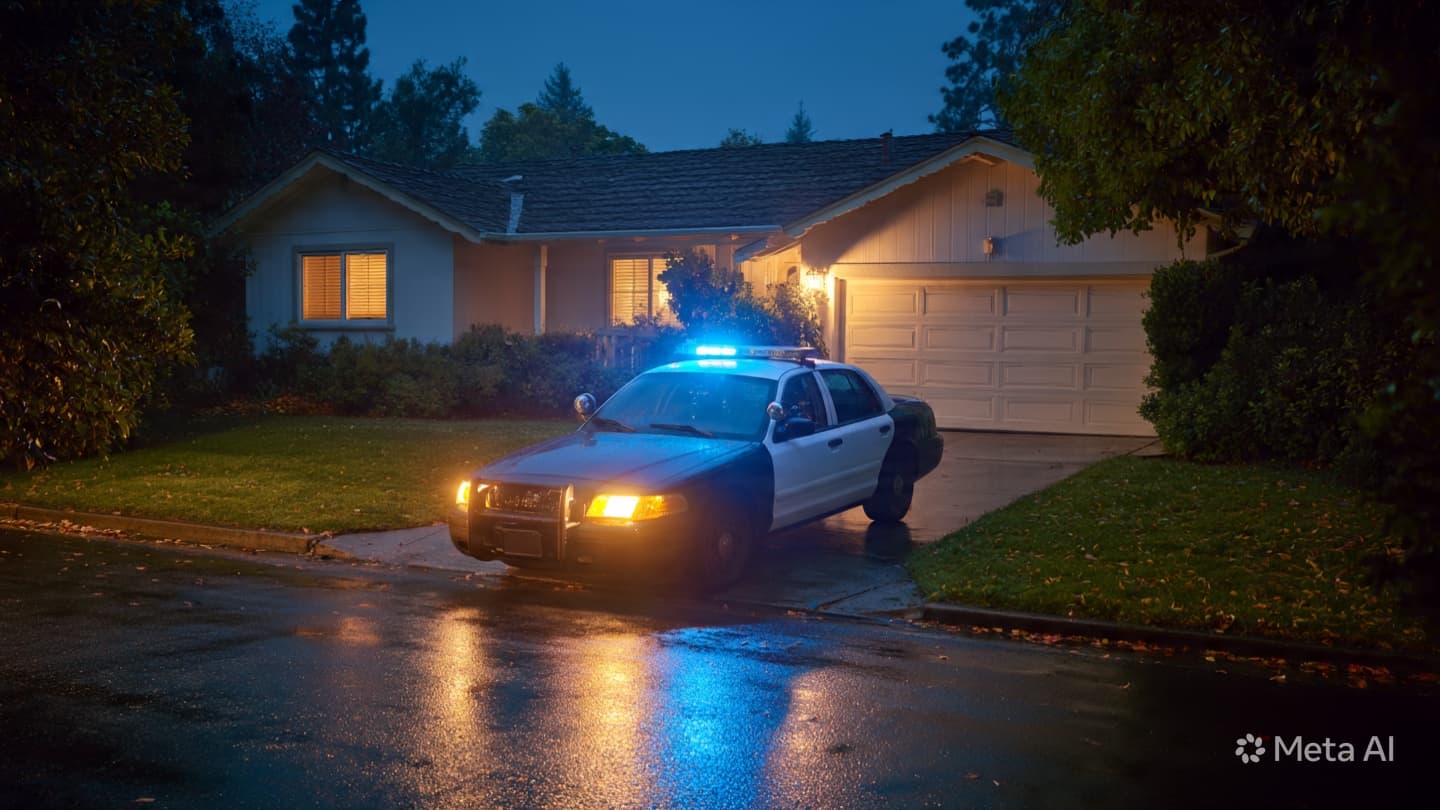
The coastal breeze in Hua Hin has long carried a reputation for restoration, rolling gently over the shoreline to cool the quiet residential avenues tucked away from the resort hotels. For generations, these seaside neighborhoods have been defined by their predictable, tranquil rhythms, where families seek a sanctuary from the frantic energy of the capital. It is an environment of manicured gardens and soft porch lights, where the night is typically filled with nothing more jarring than the rustle of palm fronds. Yet, behind the neat facades of these domestic retreats, a different kind of atmospheric pressure can slowly accumulate, unnoticed by the world outside.
There is a profound tragedy in the realization that the places built for safety are often the very spaces where the deepest fractures occur. Within the private geography of a home, grievances can fester in the dark, multiplying until the language of companionship is entirely replaced by the language of confrontation. The transition from a quiet disagreement to physical endangerment happens with a terrifying velocity, altering the landscape of a life in a single heartbeat. When a firearm is introduced into these volatile dynamics, the symbolic architecture of the home collapses completely, transformed into a theater of immediate, existential crisis.
The arrival of the local police forces on that warm evening disrupted the heavy stillness that always follows a moment of localized violence. There were no flashing sirens at first, only the sudden, heavy presence of blue uniforms crossing a threshold that had previously been private. Inside the residence, the debris of a shared life lay scattered across the floor, illuminated by the cold glare of tactical flashlights. The metallic tang of gunpowder hung faintly in the air, a stubborn, uninvited guest that signaled the crossing of a legal and moral boundary from which there is no easy return.
To watch an individual being led away in restraints from their own doorstep is to witness a profound reduction of dignity, a stark manifestation of a personal reckoning. The suspect, whose grievances had moments before felt all-consuming, appeared suddenly fragile and isolated under the gaze of gathering neighbors. The firearm, once held as a tool of absolute leverage and anger, was carefully tagged and placed in a plastic evidence bag, rendered cold and inert by the mechanics of the state. It is a visual representation of how quickly individual passion is neutralized when it collides with the unyielding machinery of the law.
The broader community often absorbs these incidents with a quiet, reflective discomfort, recognizing that the thin veneer of neighborhood peace can be easily punctured. In the days that follow, the immediate area returns to its outward calm, yet a lingering shadow remains over the property, a silent reminder of the volatility that resides within the human heart. The incident becomes a cautionary tale whispered across fences, a narrative of how easily the small frustrations of daily existence can be magnified into a life-altering tragedy when patience fails.
As the physical evidence is logged into the local precinct's archives, the legal system begins its slow, methodical translation of human emotion into the objective terms of a criminal indictment. The subjective arguments that triggered the escalation lose their relevance in the eyes of the court, replaced entirely by the strict geometry of trajectories, ballistic measurements, and statutory definitions. The accused is no longer a partner or a parent engaged in a personal dispute, but a defendant facing the heavy institutional weight of an aggrieved society.
There remains an enduring lesson in the quiet aftermath of these domestic emergencies about the critical necessity of early intervention and structural support. The path to violence is rarely a straight line, but rather a series of small, missed exits where the accumulation of stress outpaces the capacity to cope. When a community lacks the mechanisms to recognize and defuse these internal pressures before they reach a flashpoint, the final resolution is inevitably left to the flashing lights of the emergency services and the cold finality of a prison cell.
In the final analysis, the management of domestic violence involving deadly weapons remains a persistent priority for regional law enforcement agencies across Prachuap Khiri Khan province. Command statistics indicate that timely public reporting continues to be the most effective factor in preventing fatal outcomes during high-risk escalations within residential zones. As local advocacy groups continue to call for stricter monitoring of regional firearm permits, the judiciary remains committed to processing these infractions with the full severity permitted under the national criminal code.
The Prachuap Khiri Khan Provincial Police command confirmed that a forty-five-year-old male resident was formally charged with aggravated assault and illegal possession of a firearm following an emergency intervention in central Hua Hin. Officers responding to a domestic disturbance call recovered a point thirty-eight caliber revolver at the scene, which had been discharged during the altercation. The victim was transported to a local hospital for treatment of non-life-threatening injuries and remains under protective custody. The defendant is currently being held without bail at the provincial detention facility pending formal arraignment next week.
Note: This article was published on BanxChange.com and is powered by the BXE Token on the XRP Ledger. For the latest articles and news, please visit BanxChange.com