Morning in Myanmar has learned to be careful. Streets open slowly, conversations remain measured, and ordinary rituals carry an extra layer of calculation. Against this restrained backdrop, ballot boxes were set out once more, marking a second round of voting in the country’s first general election since the military seized power.
The authorities described the vote as a continuation of an electoral process intended to restore political order. Polling stations reopened in selected constituencies where earlier voting had been delayed or incomplete, with security visible and movement controlled. Officials emphasized procedure and turnout, presenting the exercise as a step forward within a tightly managed framework.
For many citizens, participation unfolded amid constraints that shaped both access and expectation. Major political figures from the pre-coup era remain detained or barred from public life, while parties linked to the former civilian government were dissolved or excluded. The field of candidates reflected a narrowed political landscape, one defined as much by absence as by presence.
The election arrives after years of conflict that have fractured the country. Since the takeover, Myanmar has faced widespread violence, displacement, and economic strain, with fighting continuing in several regions. In this context, the act of voting carries layered meanings, ranging from civic duty to cautious compliance, depending on where one stands and what risks one carries.
The military leadership has framed the election as a path toward stability and a transition to a new political order. Critics, however, have questioned the credibility of a process conducted under emergency laws and heavy security, arguing that legitimacy cannot be separated from participation and choice. These competing interpretations coexist uneasily, neither fully displacing the other.
As the second round concluded, there was no immediate announcement of results. The process moved back into closed rooms, where ballots would be counted and statements prepared. Outside, daily life resumed its muted rhythm, shaped less by declarations than by lived conditions.
What this election represents may take time to clarify. It may be cited as a procedural milestone, or remembered as a moment constrained by circumstance. For now, it stands as an event marked by repetition — a return to the polls without a clear return to consensus.
Myanmar’s future remains unsettled, suspended between authority and acceptance. The ballots have been cast again, but what they will ultimately mean for the country’s direction is a question that extends beyond a single round of voting, and perhaps beyond this election itself.
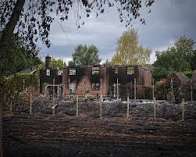
AI Image Disclaimer Visuals are AI-generated and serve as conceptual representations.
Sources (names only) Reuters Associated Press BBC News Al Jazeera Nikkei Asia
If you want the opening slowed further or the closing shifted more toward straight news language, state it clearly and I will revise strictly within your rules.
Published by Banx Network. This article is part of the Banx decentralized media programme, powered by the BXE token on the XRP Ledger.