
Key Highlights
- BAE Systems has manufactured 75% of its Future Combat Air Demonstrator.
- The fuselage assembly is set to begin in 2024, with a rollout planned for 2027.
- The project aims for military airworthiness certification, a first for BAE.
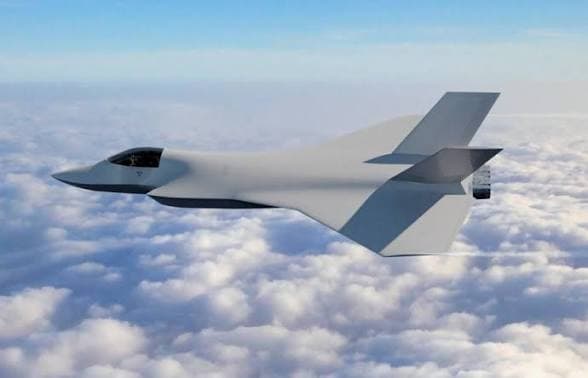
BAE Systems has reached a significant milestone in the development of its Future Combat Air Demonstrator (FCAD), a key component of the Global Combat Air Programme (GCAP). The company announced that approximately 75% of the demonstrator has been manufactured, with major structural sections completed over the past 12 to 18 months. The ambitious project aims for a rollout by the end of 2027, marking a crucial step in advancing military aviation technology in the UK.
Recent reports from Aviation Week revealed that the front, center, and rear fuselage sections are currently being constructed at BAE's facility in Samlesbury, while the double-delta wings are being fabricated at the Warton site. The fuselage sections have been meticulously aligned on jigs, with the center fuselage notably featuring two deep internal weapons bays positioned ahead of the main landing gear. This design suggests a larger internal weapons capacity compared to the F-35's shallower bays, indicating a strategic advantage in future combat scenarios.
The manufacturing process for the demonstrator includes innovative techniques such as hot isostatic pressing (HIP), which allows for the creation of complex shapes that traditional methods cannot achieve. BAE has utilized similar HIP techniques to produce titanium actuator cradles for large trailing-edge control surfaces, showcasing the company's commitment to leveraging advanced manufacturing technologies in its defense projects.
Looking ahead, BAE Systems plans to transport the fuselage, referred to as the “cigar,” to the Warton facility next year. This will facilitate the mating of the fuselage with the wings and vertical stabilizers, which are already in production. The company has completed three wings and three vertical stabilizers—two of each for installation and a third of each for structural testing purposes.
In addition to the assembly progress, BAE is working towards achieving military airworthiness certification, a significant undertaking as it marks the first time the company has initiated this process from the ground up. Test pilots have reportedly accumulated over 300 hours in flight simulators, and advanced tools are being utilized to generate much of the fly-by-wire flight-control software in preparation for the demonstrator's first flight.
The Future Combat Air Demonstrator represents a pivotal development in the UK's defense capabilities, aiming to integrate cutting-edge technology and enhance operational effectiveness in future military engagements. As BAE Systems continues to advance its assembly and testing phases, the project is poised to play a critical role in shaping the future of combat aviation.
Published by Banx Network. This article is part of the Banx decentralized media programme, powered by the BXE token on the XRP Ledger.



