
Key Highlights
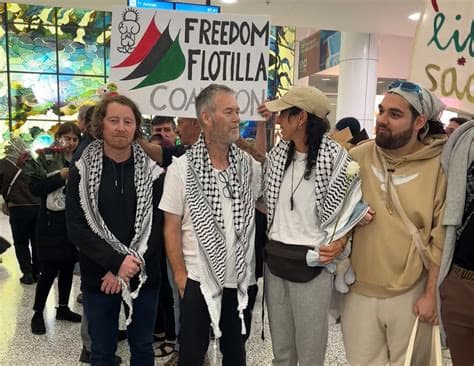
- Activists' Return: Eleven Australian activists return home after detention.
- Allegations of Abuse:Activists report physical abuse by Israeli forces.
- International Reactions:Australian officials and allies condemn treatment.
A group of eleven Australian activists involved in the Global Sumud Flotilla has returned to Australia after being detained by Israeli forces during their attempt to breach the naval blockade of Gaza. Following their release, the activists shared troubling accounts of alleged physical abuse and mishandling while in custody, raising serious concerns about the treatment of detainees in such situations.
Neve O’Connor, one of the activists, described her harrowing experience, claiming she was "brutalised" by members of the Israel Defense Forces (IDF). "My shoulders were almost dislocated. I was kneed in the face, kicked in the ankles to force me to fall … it was just constant abuse and oppression," she reported. Such allegations have sparked outrage and calls for accountability regarding the treatment of individuals detained in the context of humanitarian missions.
The flotilla, which began its journey from Türkiye, aimed to deliver humanitarian assistance to Gaza, a region that continues to face severe restrictions. Upon interception by Israeli authorities, the activists were transported to detention facilities, where they reportedly faced humiliating treatment. This included being shown in a video with their hands tied and heads down, which has attracted international condemnation and raised questions about Israel's adherence to international human rights standards.
In defense of the government's actions, Israeli Ambassador to Australia Hillel Newman asserted that the treatment of activists was conducted "with great sensitivity" and insisted that no one was harmed during the interception. He emphasized the necessity of maintaining the naval blockade, citing Israel's commitment to enforcing its security measures. However, this stance has been met with skepticism given the activists' accounts.
The treatment of the activists has drawn widespread criticism not only from Australian officials but also from international allies. Penny Wong, Australia’s Foreign Affairs Minister, condemned the actions of Israeli authorities, demanding accountability and adherence to international obligations in the treatment of detainees. Wong's statements reflect a growing concern among nations regarding the treatment of individuals engaged in humanitarian efforts.
In response to the public outcry, including from other nations involved in the flotilla, Israel's Prime Minister Benjamin Netanyahu distanced himself from the remarks of far-right national security minister Itamar Ben-Gvir. Netanyahu stated that the conduct shown in the video was not in line with Israel’s values, indicating a potential rift within the Israeli government regarding the treatment of activists.
While the activists have expressed a commitment to continuing their mission of advocating for Palestinian rights, the incident has highlighted ongoing tensions and complexities surrounding humanitarian efforts in the region. The activists are now expected to return to their normal lives in Australia but are likely to continue focusing on humanitarian advocacy and raising awareness regarding the situation in Gaza. Their experiences may serve to galvanize further support for humanitarian initiatives aimed at alleviating the suffering of those in the region.
Published by Banx Network. This article is part of the Banx decentralized media programme, powered by the BXE token on the XRP Ledger.



