The universe often reveals itself through moments of extraordinary violence, events so powerful that they reshape entire stellar systems. Yet even amid cosmic destruction, scientists find opportunities to better understand the laws governing the cosmos.
Astronomers have reported what may represent the first observed instance of a black hole destroying a white dwarf star, a phenomenon that, if confirmed, would mark a significant milestone in astrophysical research.
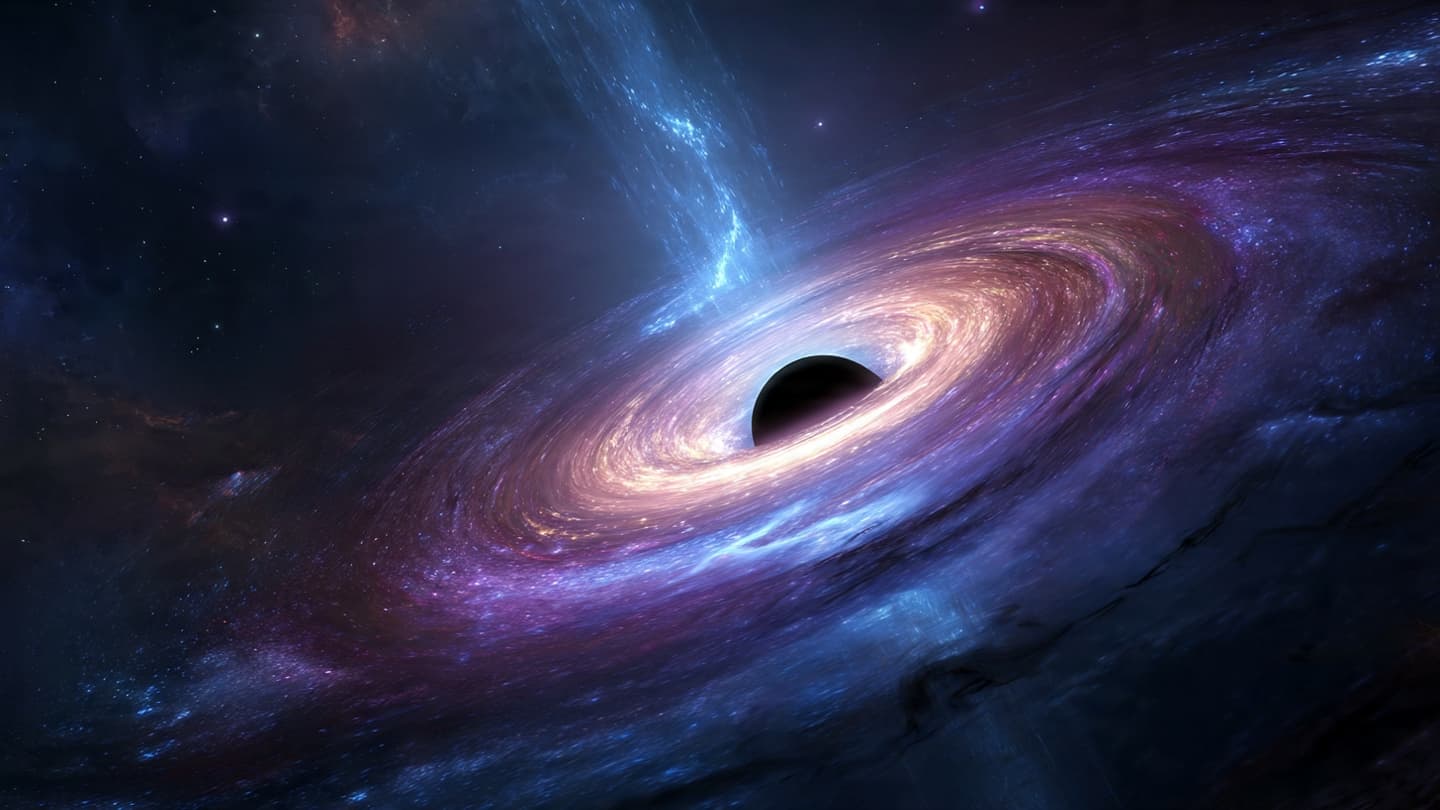
White dwarfs are dense stellar remnants left behind after stars similar to the Sun exhaust their nuclear fuel. Black holes, by contrast, possess gravitational fields so intense that nothing, not even light, can escape once crossing the event horizon.
Researchers believe the event may have occurred when a white dwarf ventured too close to a black hole. The immense gravitational forces would have torn the star apart in a process known as a tidal disruption event.
Observational data gathered from multiple telescopes revealed unusual radiation signatures that attracted the attention of astronomers. Detailed analysis is ongoing to confirm the precise nature of the phenomenon.
Scientists note that tidal disruption events provide rare opportunities to study black holes indirectly. Since black holes themselves emit no light, researchers often rely on interactions with surrounding matter to investigate their properties.
Understanding how black holes interact with different types of stars may improve models describing galactic evolution, stellar populations, and the growth of supermassive black holes over cosmic timescales.
International observatories are expected to continue monitoring similar events as increasingly sensitive telescopes become operational in the coming years.
If verified, this observation could open a new chapter in high-energy astrophysics, offering scientists an unprecedented glimpse into one of the universe's most dramatic interactions.
AI Image Disclaimer: Some accompanying images are AI-generated artistic interpretations created to illustrate complex astronomical phenomena.
Source Verification Check: ScienceDaily, Nature, NASA, European Space Agency, Astrophysical Journal
Published by Banx Network. This article is part of the Banx decentralized media programme, powered by the BXE token on the XRP Ledger.