
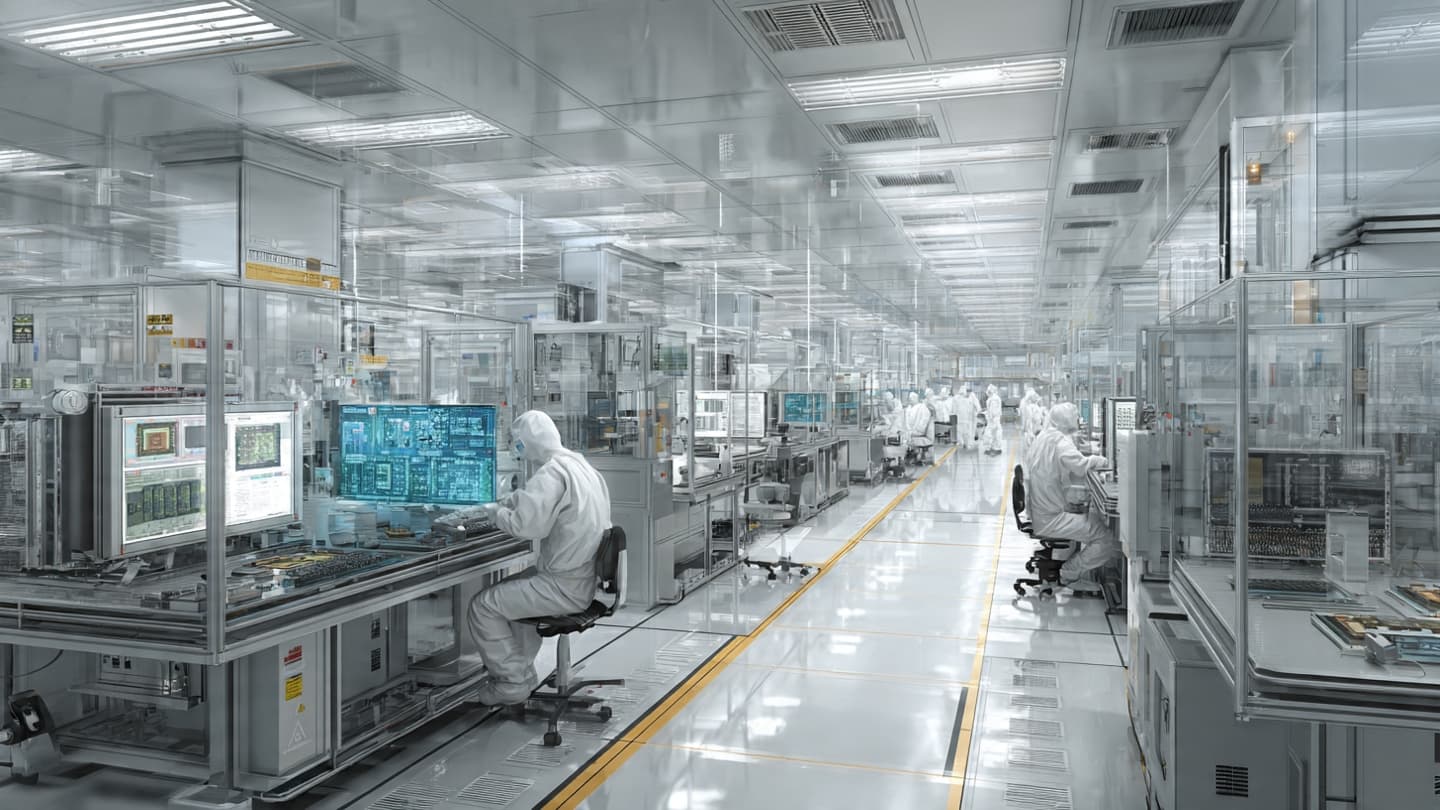
The digital world often feels intangible, as though modern technology exists somewhere beyond physical reality. Yet behind every smartphone, server, and artificial intelligence system lies an industry built on extraordinary precision. Semiconductor factories, though rarely visible to the public, quietly sustain much of contemporary life.
Global semiconductor manufacturers are continuing to expand production capacity as demand for advanced AI chips accelerates across industries. Technology companies worldwide are increasing investments in processors required for machine learning systems, cloud infrastructure, and high-performance computing.
The surge reflects the broader rise of artificial intelligence throughout the global economy. Businesses developing AI systems require increasingly powerful semiconductors capable of processing enormous volumes of information efficiently and continuously.
Modern chip manufacturing remains one of the most technically demanding industries in existence. Producing advanced semiconductors involves microscopic engineering precision, highly controlled environments, and deeply interconnected international supply chains stretching across multiple continents.
Industry leaders describe current demand as historically significant. AI systems have introduced new computational requirements that extend far beyond traditional consumer electronics. Large-scale data centers, autonomous systems, and advanced analytics platforms now depend heavily on next-generation processors.
Semiconductor expansion has therefore become closely linked to national economic strategies as well. Governments across North America, Europe, and Asia are investing heavily in domestic chip production to strengthen technological resilience and reduce dependence on fragile supply chains.
At the same time, the industry faces substantial challenges. Semiconductor facilities require enormous capital investment, highly specialized talent, and long development timelines. Building advanced manufacturing plants can take years before production reaches full operational capacity.
Environmental considerations have also become increasingly important. Semiconductor production consumes significant amounts of energy and water, prompting companies to explore more sustainable manufacturing processes and renewable energy integration.
Despite these complexities, demand for advanced chips continues growing steadily. Artificial intelligence, cloud computing, electric vehicles, and connected technologies are all contributing to a broader digital transformation requiring ever-greater computational power.
The semiconductor industry may remain largely invisible to ordinary consumers, yet its influence continues expanding beneath the surface of modern civilization. Inside cleanrooms and production facilities, engineers quietly build the components powering the systems increasingly shaping how the world communicates, works, and evolves.
AI Image Disclaimer: Visuals are created with AI tools and are not real photographs.
Sources Checked: Reuters Bloomberg CNBC Investing.com The Wall Street Journal
Note: This article was published on BanxChange.com and is powered by the BXE Token on the XRP Ledger. For the latest articles and news, please visit BanxChange.com