Scientific discovery has often depended on patience measured in years. Chemists test reactions repeatedly, revise formulas carefully, and move step by step through processes that can require enormous time and resources. Now, researchers are increasingly exploring how artificial intelligence might accelerate some parts of that work. A recent breakthrough drew attention after an AI-assisted program reportedly helped scientists synthesize 35 entirely new chemical compounds.
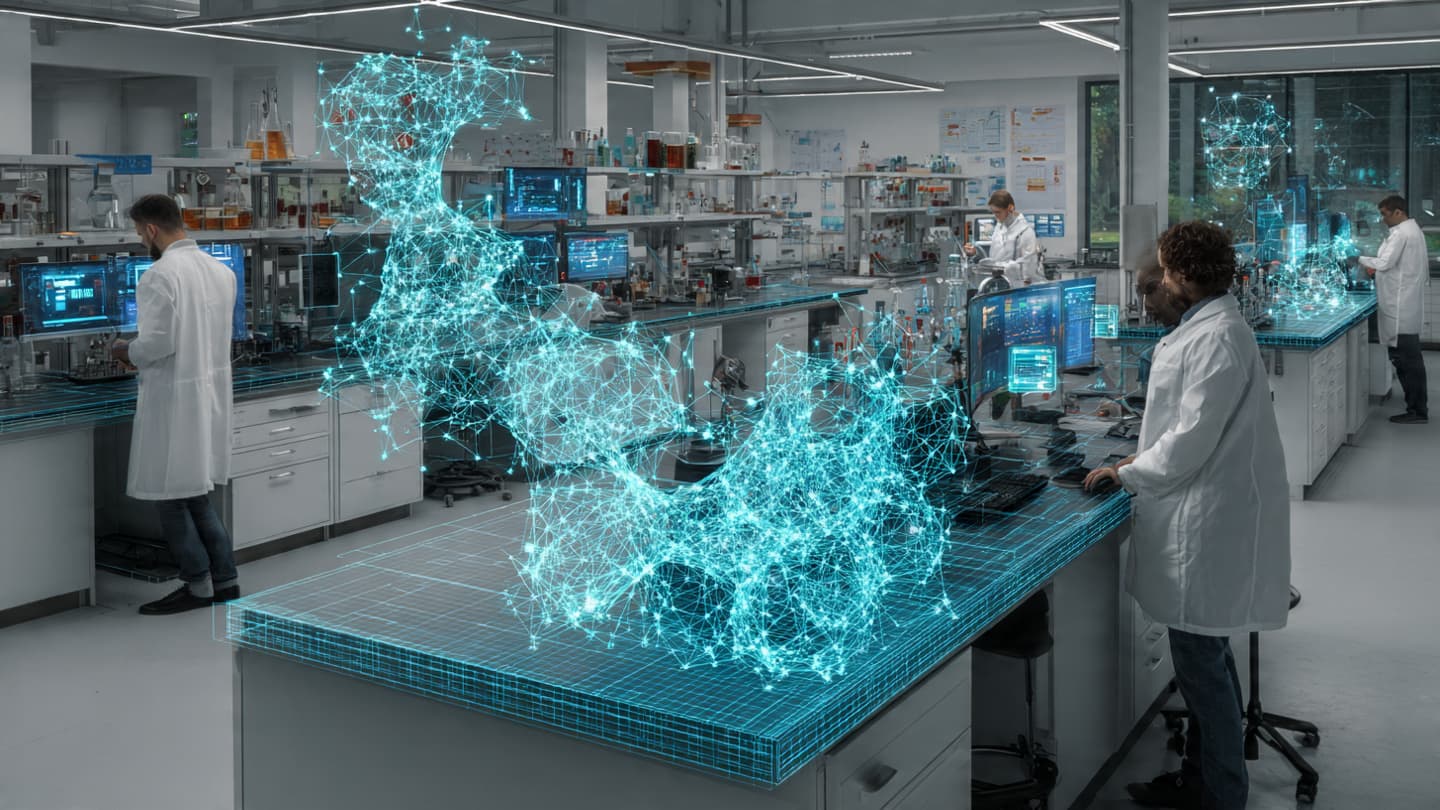
The research involved machine-learning systems designed to predict promising molecular structures and reaction pathways. Instead of relying solely on traditional trial-and-error methods, scientists used AI models to analyze large datasets of existing chemical information and identify combinations likely to produce viable new compounds.
Researchers explained that the AI system did not independently “invent” chemicals in the human sense. Rather, it acted as a highly advanced analytical assistant capable of narrowing possibilities and highlighting patterns that may otherwise take researchers far longer to identify manually. Human scientists still directed the experimental process and verified results inside laboratories.
The newly synthesized compounds could eventually contribute to multiple scientific fields, including pharmaceuticals, materials science, and industrial chemistry. Early-stage chemical discovery often serves as the foundation for future medicines, batteries, manufacturing materials, and environmental technologies, although practical applications may still require years of additional research.
Artificial intelligence has increasingly entered scientific disciplines that traditionally depended heavily on manual experimentation. In recent years, AI systems have assisted researchers in protein folding analysis, drug discovery, climate modeling, and genomic research. Many scientists view these tools as ways to enhance efficiency rather than replace human expertise.
Still, experts caution that AI-driven chemistry remains highly dependent on data quality and experimental validation. Predictive systems can identify promising possibilities, but laboratory testing remains essential for confirming safety, stability, and real-world functionality. Unexpected reactions and limitations continue to require human judgment throughout the research process.
The growing relationship between AI and science has also sparked broader discussions about the future of research itself. Universities and technology companies are investing heavily in computational laboratories, automated testing systems, and AI-assisted modeling tools. Some researchers believe these technologies may significantly shorten development timelines across several industries.
At the same time, scientists emphasize the importance of maintaining transparency and reproducibility within AI-supported research. Understanding how algorithms generate predictions remains crucial, particularly in fields connected to medicine, environmental safety, and public health. International scientific institutions continue developing standards for responsible AI integration in laboratories.
For now, the synthesis of 35 new compounds represents another example of how artificial intelligence is gradually reshaping scientific workflows. Rather than replacing traditional chemistry, AI appears to be expanding the pace and scale at which researchers can explore possibilities—opening doors to discoveries that may once have taken far longer to reach.
AI Image Disclaimer: Several illustrations accompanying this report were generated using AI-assisted imagery for visual representation purposes.
Sources: Nature, Reuters, Science Magazine, MIT Technology Review, Scientific American
Published by Banx Network. This article is part of the Banx decentralized media programme, powered by the BXE token on the XRP Ledger.