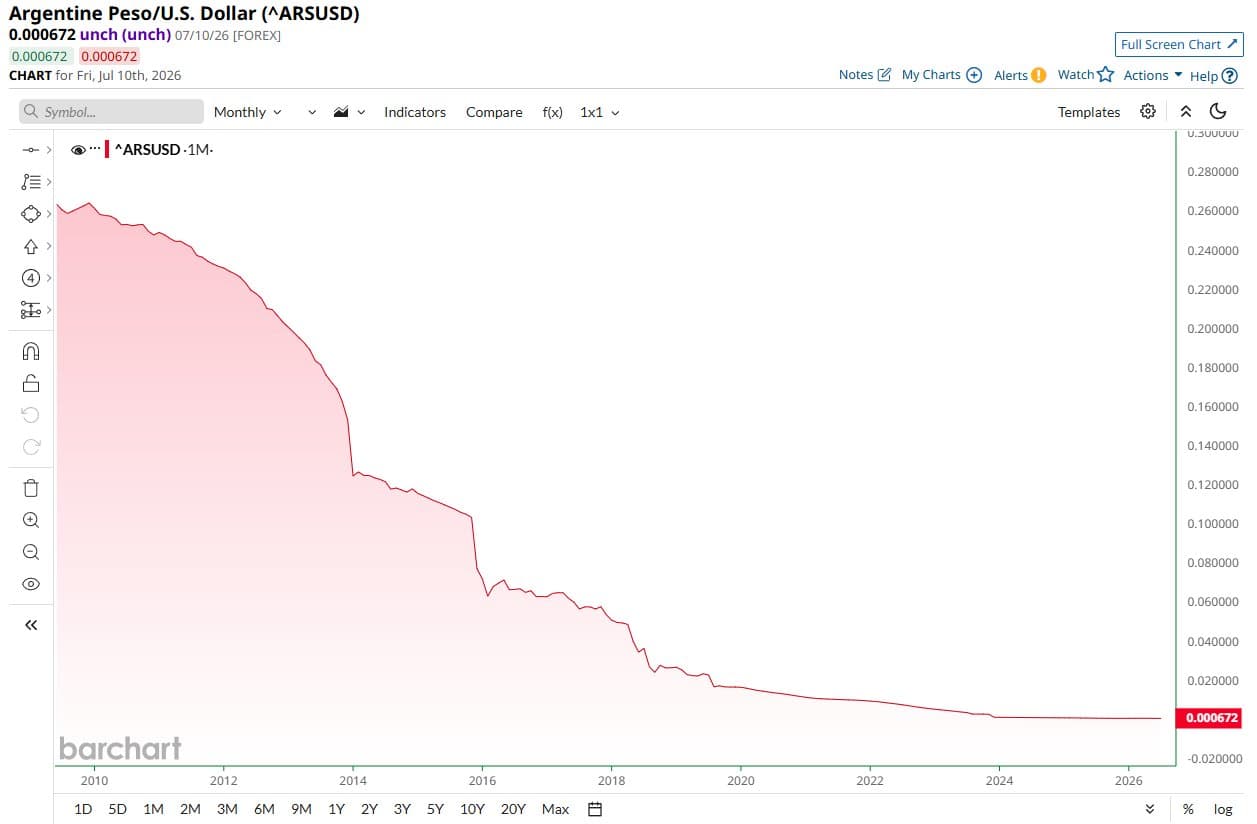
Argentina's currency has reached another historic milestone after the peso declined to its weakest level ever against the U.S. dollar. Market data shared by Barchart indicates the peso has lost approximately 99.8% of its value against the dollar since 2009, reflecting years of persistent inflation, repeated financial crises, and economic instability. The peso's long-term decline has been driven by chronic government budget deficits, rapid money supply growth, limited foreign currency reserves, and declining confidence among investors. High inflation has significantly reduced purchasing power, encouraging many Argentinians to save in U.S. dollars rather than local currency whenever possible. Recent economic reforms have attempted to stabilize public finances by reducing government spending, deregulating sectors of the economy, and rebuilding investor confidence. While these measures aim to improve long-term stability, they have also created short-term challenges for households facing higher living costs and reduced purchasing power. Currency depreciation affects nearly every aspect of the economy. Imported goods become more expensive, businesses face higher production costs, and consumers experience declining real incomes. Exporters may benefit from improved international competitiveness, but these gains often fail to fully offset broader inflationary pressures. Argentina's experience serves as a reminder of the importance of maintaining sound fiscal policy, stable monetary management, and investor confidence. Economists continue monitoring whether ongoing reforms can eventually restore stability after more than a decade of severe currency depreciation.
Published by Banx Network. This article is part of the Banx decentralized media programme, powered by the BXE token on the XRP Ledger.