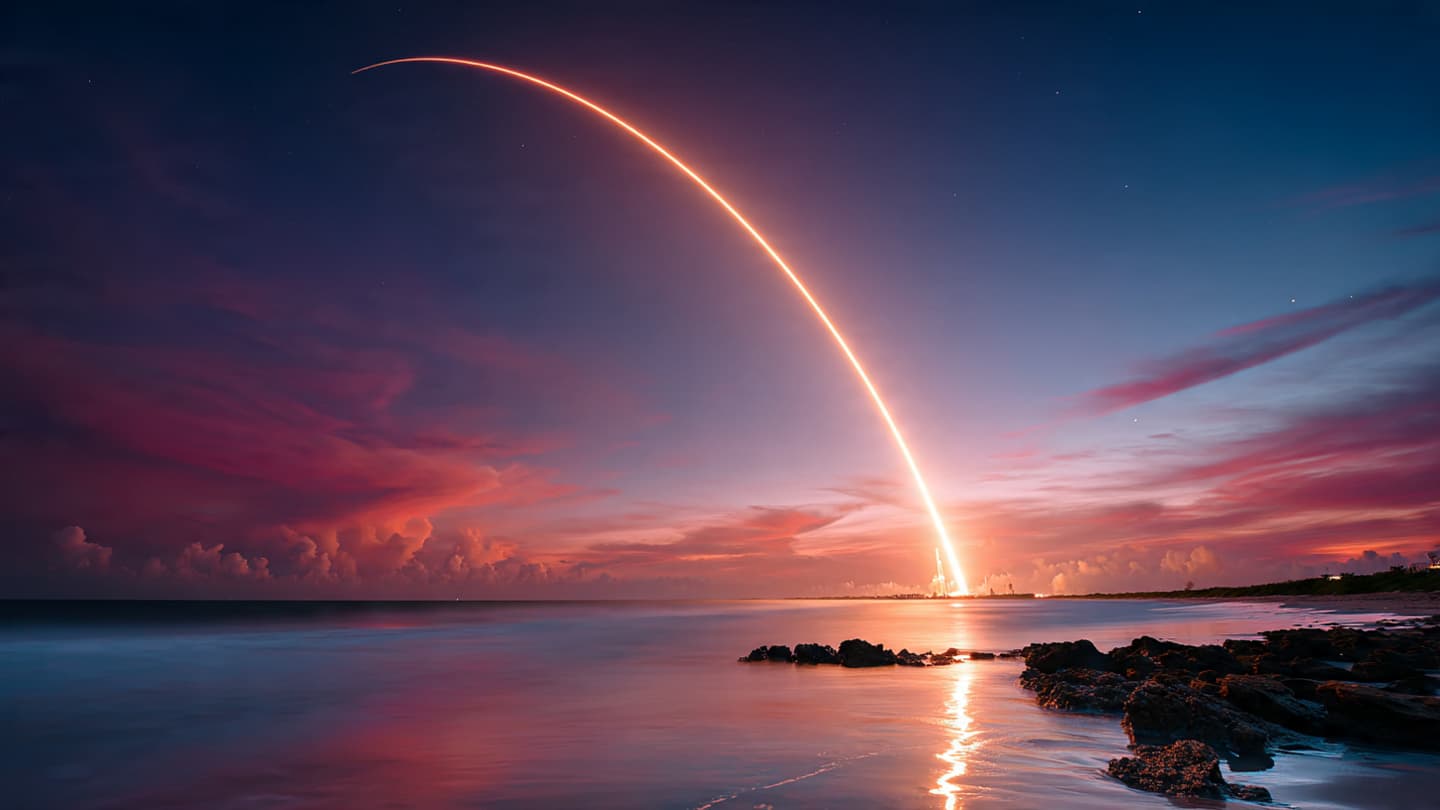
Before sunrise along Florida’s Atlantic coast, the horizon briefly turned brighter than the sea itself. A column of fire rose steadily into the sky from , carrying another group of satellites into orbit as part of ’s expanding Starlink network. For nearby observers, the launch lasted only minutes. For the broader space industry, however, it reflected a continuing transformation in how humanity connects across the planet.
The mission, identified as Starlink 10-31, lifted off aboard a rocket from Cape Canaveral, continuing the company’s rapid launch schedule. The payload consisted of additional Starlink satellites intended to strengthen global internet coverage through low Earth orbit infrastructure.
Over the past several years, Starlink has become one of the most visible examples of commercial satellite deployment on a massive scale. Thousands of satellites already circle Earth within the network, designed to provide broadband internet access to remote regions, maritime operations, aviation routes, and underserved communities.
Supporters of the system argue that satellite-based connectivity may reduce communication gaps in areas where traditional infrastructure remains limited or difficult to build. During natural disasters and emergencies, satellite internet services have also been used to restore temporary communication capabilities when ground systems were damaged.
At the same time, the rapid expansion of satellite constellations has raised concerns within parts of the scientific community. Astronomers have repeatedly discussed how increasing numbers of bright satellites may affect night-sky observations and long-exposure telescope imaging. Space traffic management and orbital debris also remain ongoing topics of international discussion.
SpaceX has stated that it continues working with astronomers and regulatory agencies to reduce satellite brightness and improve operational coordination. The company has introduced design modifications intended to lessen reflective visibility from the ground while maintaining communication performance.
The Falcon 9 rocket itself remains central to the company’s launch operations. Its reusable booster technology has significantly lowered launch costs compared with traditional expendable systems, helping reshape the economics of commercial spaceflight over the past decade.
The launch from Cape Canaveral also reflects the broader rhythm of modern space activity, where missions once considered rare now occur with growing frequency. Rockets increasingly depart not only for scientific exploration, but also for communications, navigation, climate monitoring, and commercial services that quietly support daily life on Earth.
According to mission updates, the satellite deployment proceeded as planned following launch. SpaceX is expected to continue additional Starlink missions throughout the year as the company expands coverage and upgrades orbital capacity.
AI Image Disclaimer: Certain accompanying visuals were generated using AI-based imaging tools for illustrative support.
Sources: SpaceX, NASA Spaceflight, Reuters, Florida Today
Published by Banx Network. This article is part of the Banx decentralized media programme, powered by the BXE token on the XRP Ledger.