History is often imagined as something preserved behind museum glass, distant and untouchable. Yet science occasionally opens unexpected doors, allowing fragments of ancient life to return in surprising ways. This is precisely what researchers achieved when they revived ancient yeast linked to one of the world's most famous mummies.
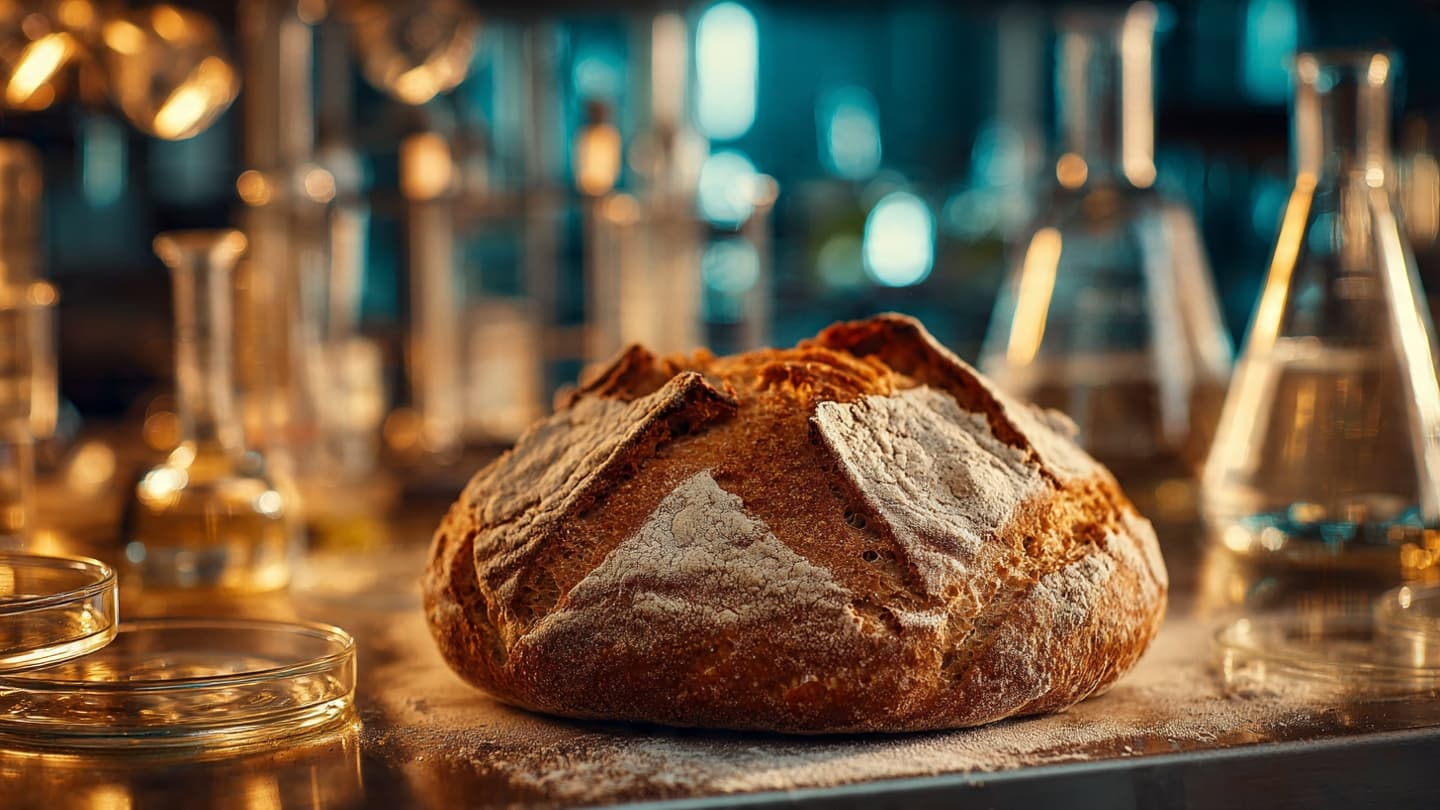
Scientists studying the remains of Ötzi the Iceman, a naturally preserved mummy estimated to be more than 5,000 years old, successfully isolated ancient yeast strains and used them to bake sourdough bread. The achievement offers researchers a unique glimpse into prehistoric microorganisms and ancient food practices.
Ötzi was discovered in the Alps in 1991 near the border between Italy and Austria. Since then, the mummy has become one of archaeology's most extensively studied discoveries, providing valuable information about life during the Copper Age.
Researchers explained that the yeast was recovered from biological samples associated with Ötzi. After careful laboratory analysis, scientists confirmed that some microorganisms had remained sufficiently preserved to be revived under controlled conditions.
The resulting sourdough bread was reportedly comparable to modern varieties, although scientists emphasized that the primary objective was scientific research rather than culinary experimentation. The findings may help researchers better understand historical diets, fermentation techniques, and ancient microbial ecosystems.
Microorganisms such as yeast play essential roles in food production, from bread and cheese to beverages. Studying ancient strains may reveal how these organisms evolved over thousands of years and how human societies interacted with them.
Experts also note that advances in genetic sequencing and microbiology are increasingly allowing scientists to reconstruct aspects of daily life from distant historical periods. Such studies bridge archaeology, biology, and food science in innovative ways.
While few expected a prehistoric mummy to contribute to modern baking, the research highlights science's remarkable ability to connect present-day society with humanity's distant past.
AI Image Disclaimer: The images accompanying this article were generated using artificial intelligence to illustrate the scientific findings described
Published by Banx Network. This article is part of the Banx decentralized media programme, powered by the BXE token on the XRP Ledger.