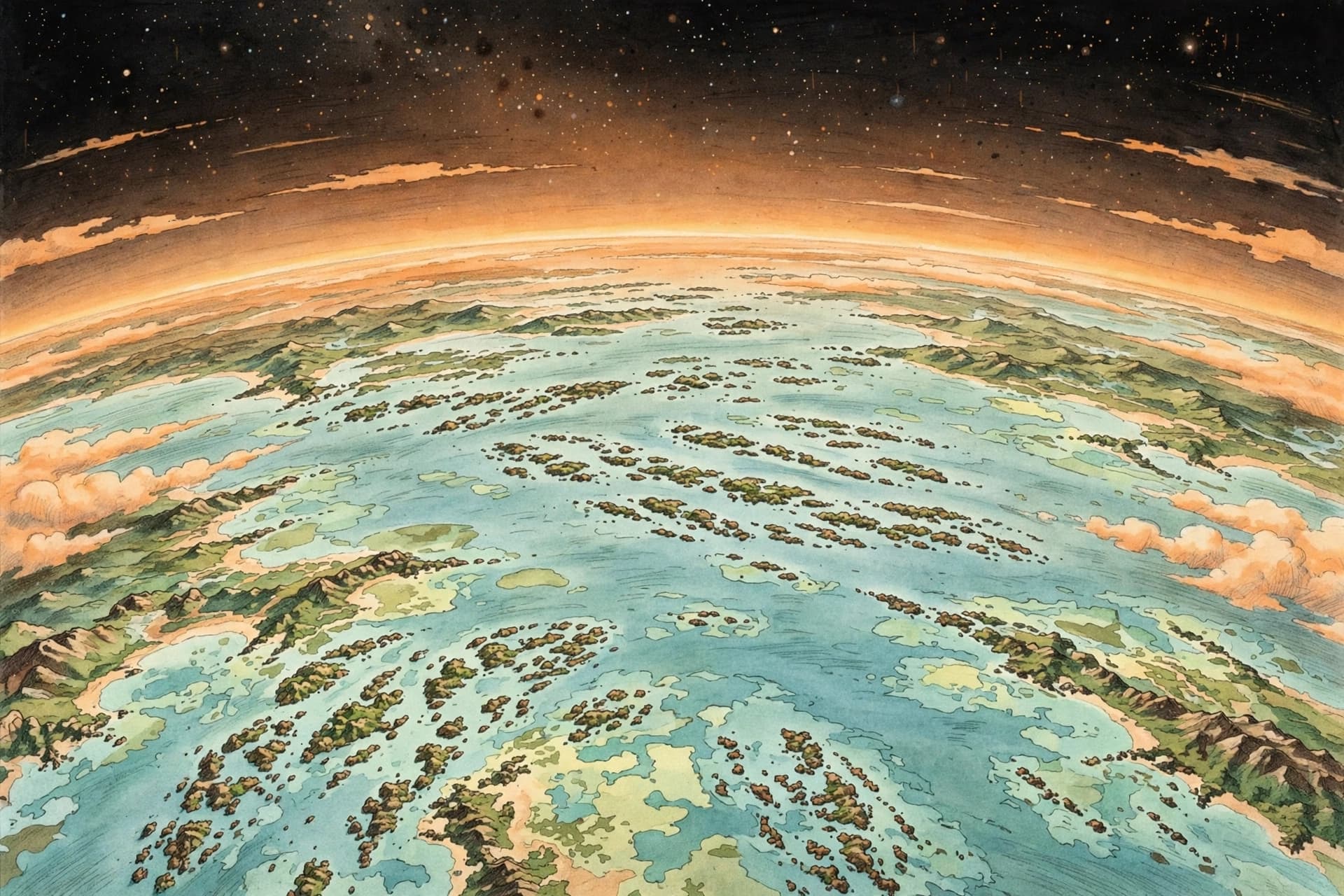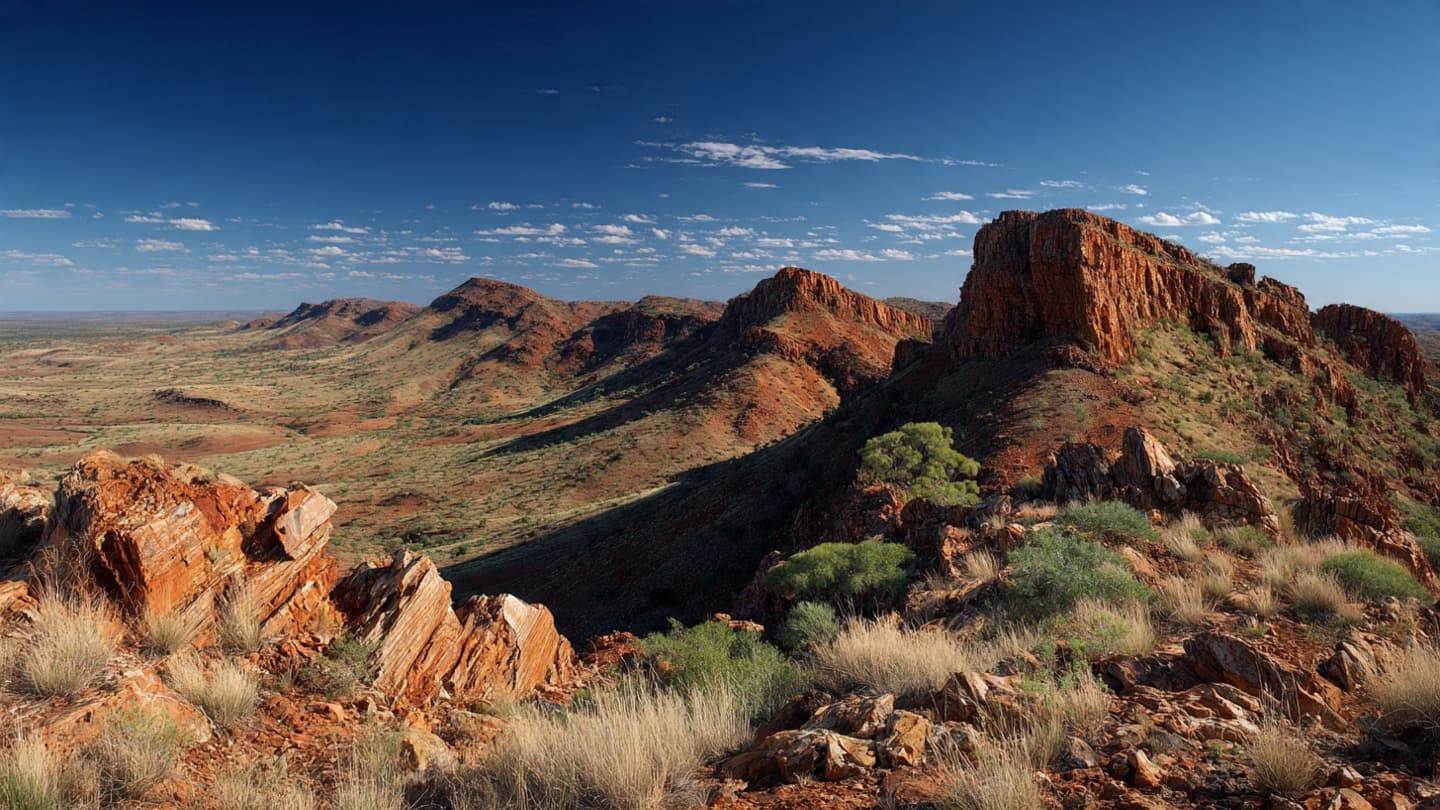
There are landscapes that appear quiet on the surface yet hold memories reaching billions of years into the past. Every layer of ancient rock carries fragments of Earth's earliest history, waiting patiently for scientists to interpret them. In Western Australia's Pilbara region, one of those remarkable stories has once again come into sharper focus through renewed geological research.
Researchers have reconfirmed that an ancient impact structure in the Pilbara region of Western Australia is believed to be the oldest known meteorite impact crater on Earth. The findings strengthen previous geological evidence suggesting the crater formed more than 3.4 billion years ago, during a period when the young planet experienced frequent collisions with celestial bodies.
The study examined distinctive geological features known as shatter cones, rock formations created only by the immense pressures generated during large meteorite impacts. Scientists also analyzed surrounding rock layers to better understand the scale and timing of the ancient collision.
According to researchers, Earth experienced significantly more asteroid and meteorite impacts during its early history than it does today. These impacts played an important role in shaping the planet's surface, influencing the formation of continents and altering environmental conditions over geological time.
The Pilbara region has long been recognized as one of the world's most valuable geological archives. Many of its exposed rock formations date back to Earth's earliest chapters, providing scientists with rare opportunities to investigate conditions that existed billions of years before complex life emerged.
Geologists believe discoveries like the Pilbara crater contribute not only to Earth's history but also to planetary science more broadly. By comparing ancient terrestrial impact sites with craters found on the Moon, Mars, and other planetary bodies, researchers can better understand how the solar system evolved during its formative years.
The research also highlights the importance of preserving significant geological sites for future scientific investigation. Advances in analytical technology continue allowing researchers to extract new information from rocks that have been studied for decades, revealing details that earlier generations of scientists could not observe.
Although many questions about Earth's earliest history remain unanswered, the Pilbara crater provides another important piece of the puzzle. As research continues, scientists hope discoveries from this ancient landscape will further illuminate the dynamic processes that shaped our planet long before human history began.
AI Image Disclaimer: The images accompanying this article are AI-generated visual illustrations prepared exclusively for editorial purposes.
Sources (Source Verification Check): ABC News Australia, Curtin University, peer-reviewed geological research, Nature Geoscience
Published by Banx Network. This article is part of the Banx decentralized media programme, powered by the BXE token on the XRP Ledger.