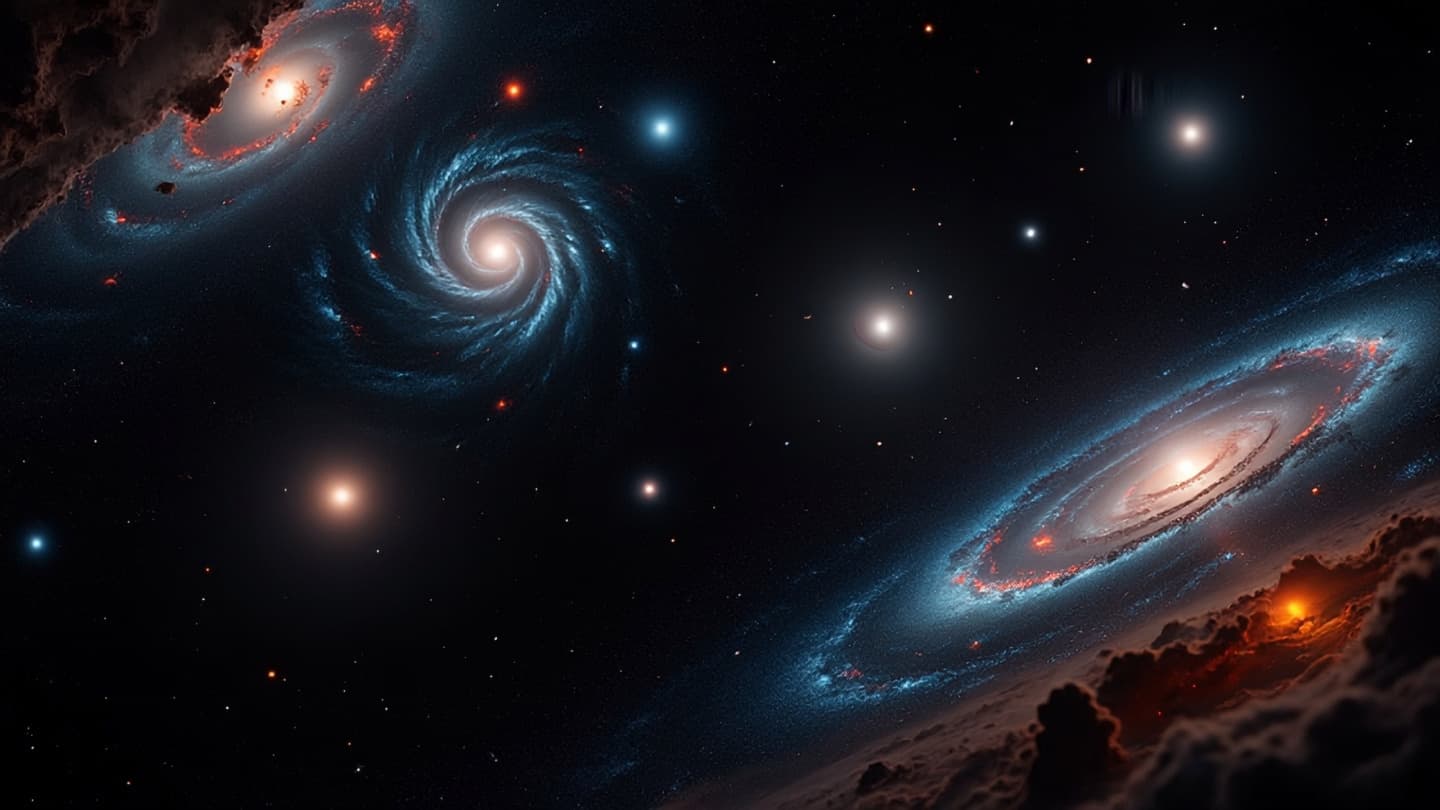
Across the vast darkness of space, every distant galaxy carries a message from the past. Light traveling across billions of years allows astronomers to observe the universe as it existed long before Earth and the Solar System were formed. With increasingly powerful telescopes, scientists continue uncovering new details about how the earliest galaxies emerged and how the universe transformed from a simple collection of early structures into the complex cosmos seen today.
Recent astronomical observations have provided new clues about the formation of early galaxies during the first stages of cosmic history. By studying extremely distant objects, researchers are examining how the first generations of stars formed, how galaxies grew, and how matter began organizing itself after the birth of the universe.
Scientists use advanced space telescopes and ground-based observatories to study these ancient galaxies. Instruments capable of detecting faint infrared light allow researchers to observe objects whose light has traveled for more than 13 billion years. These observations provide a rare opportunity to investigate conditions that existed shortly after the universe began expanding.
Researchers have found that some early galaxies appear to have developed structures more quickly than traditional models predicted. These discoveries do not necessarily contradict existing theories, but they encourage scientists to refine their understanding of how gravity, gas, and star formation interacted during the universe’s earliest periods.
The formation of galaxies is a complex process involving enormous clouds of gas, dark matter, and generations of stars. Over millions of years, gravity pulls material together, creating regions where new stars are born. These stars then produce heavier elements that later become the building blocks of planets and future generations of stellar systems.
Astronomers emphasize that studying early galaxies helps answer fundamental questions about humanity’s cosmic origins. The elements that make up Earth and living organisms were created through processes that began inside ancient stars. Understanding how the first galaxies formed therefore provides insight into the long chain of events that eventually allowed life to develop.
New discoveries are also helping scientists improve computer simulations of the universe. By comparing theoretical models with actual observations, researchers can identify which explanations best describe the evolution of cosmic structures over billions of years. This process allows astronomy to continuously develop through evidence and refinement.
The exploration of early galaxies represents humanity’s effort to understand its place within a much larger cosmic story. Each observation from distant space expands knowledge about the universe’s beginnings and demonstrates how modern astronomy continues transforming questions about the past into discoveries about the future.
AI Image Disclaimer: The illustrations accompanying this article are AI-generated representations of astronomical concepts and are not actual telescope photographs.
Source Verification: Verified.
Sources: NASA, European Space Agency (ESA), Nature Astronomy
Published by Banx Network. This article is part of the Banx decentralized media programme, powered by the BXE token on the XRP Ledger.