The night sky often appears calm from Earth, its stars arranged in familiar patterns that seem fixed across generations. Yet modern astronomy continues to reveal a far more restless universe, shaped by collisions, migrations, and transformations unfolding over immense stretches of time. New research now suggests that a major galactic collision may have dramatically reshaped the Milky Way around 11 billion years ago.
According to astronomers studying the structure of the galaxy, evidence points to an ancient merger between the young Milky Way and another smaller galaxy. The event may have disrupted the developing galactic disk, altering its motion and influencing how stars later formed across the system.
The Milky Way’s disk is the broad, flattened region where many of its stars, planets, and gas clouds reside. Scientists believe that understanding how this disk evolved is essential to explaining the broader history of our galaxy, including the environment that eventually allowed the solar system to emerge billions of years later.
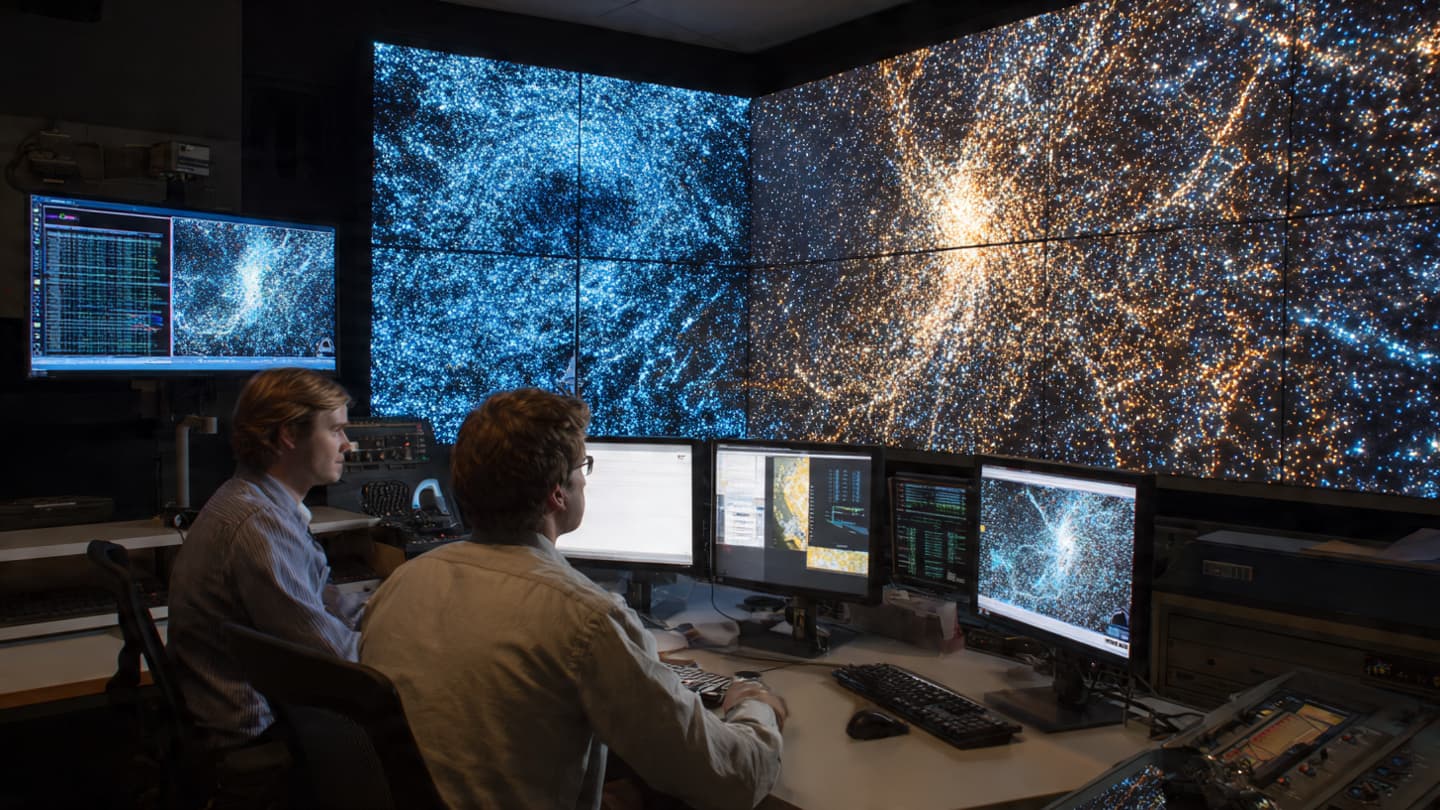
Researchers analyzed stellar motions, chemical compositions, and large astronomical datasets collected through modern observatories. By tracing the ages and trajectories of stars, astronomers identified patterns consistent with a significant disruption during the galaxy’s early development.
The proposed collision likely unfolded gradually over millions of years rather than as a single sudden event. As galaxies passed through one another, gravitational forces would have reshaped stellar orbits, redistributed gas, and triggered new periods of star formation. Such mergers are considered common throughout the universe.
Scientists noted that the findings contribute to a growing understanding that galaxies evolve through interaction rather than isolation. Even the Milky Way, often viewed as stable and familiar, carries signs of ancient encounters preserved within its structure.
The research also illustrates how astronomy increasingly relies on large-scale data analysis. Modern telescopes and space observatories can now map millions of stars with extraordinary precision, allowing researchers to reconstruct events that occurred billions of years before Earth itself formed.
While many details remain under investigation, the study provides another glimpse into the dynamic history of the cosmos. The galaxy visible above Earth each night is not simply a backdrop of light, but the result of countless processes unfolding across unimaginable distances and timescales.
Astronomers are expected to continue refining their models as additional observational data becomes available, further clarifying how ancient galactic interactions shaped the modern Milky Way.
AI Image Disclaimer: Some images used for visual interpretation in this article were produced with AI-assisted generation tools.
Sources: Reuters, Astronomy Magazine, Nature, Space.com
Published by Banx Network. This article is part of the Banx decentralized media programme, powered by the BXE token on the XRP Ledger.