The oldest chapters of Earth’s history are written not in ink, but in stone. For centuries, scientists have pieced together fragments of those distant eras like readers reconstructing a weathered manuscript whose pages were scattered across oceans and mountains. Now, fossils dating back roughly 540 million years are offering researchers another unexpected glimpse into the beginnings of complex life, suggesting that Earth’s earliest ecosystems may have been more dynamic and sophisticated than previously believed.
Researchers examining newly analyzed fossil specimens from the early Cambrian period reported evidence that challenges long-standing assumptions about the evolution of ancient organisms. The findings suggest that early life forms developed structural and behavioral complexity sooner than many scientists had estimated in earlier evolutionary models.
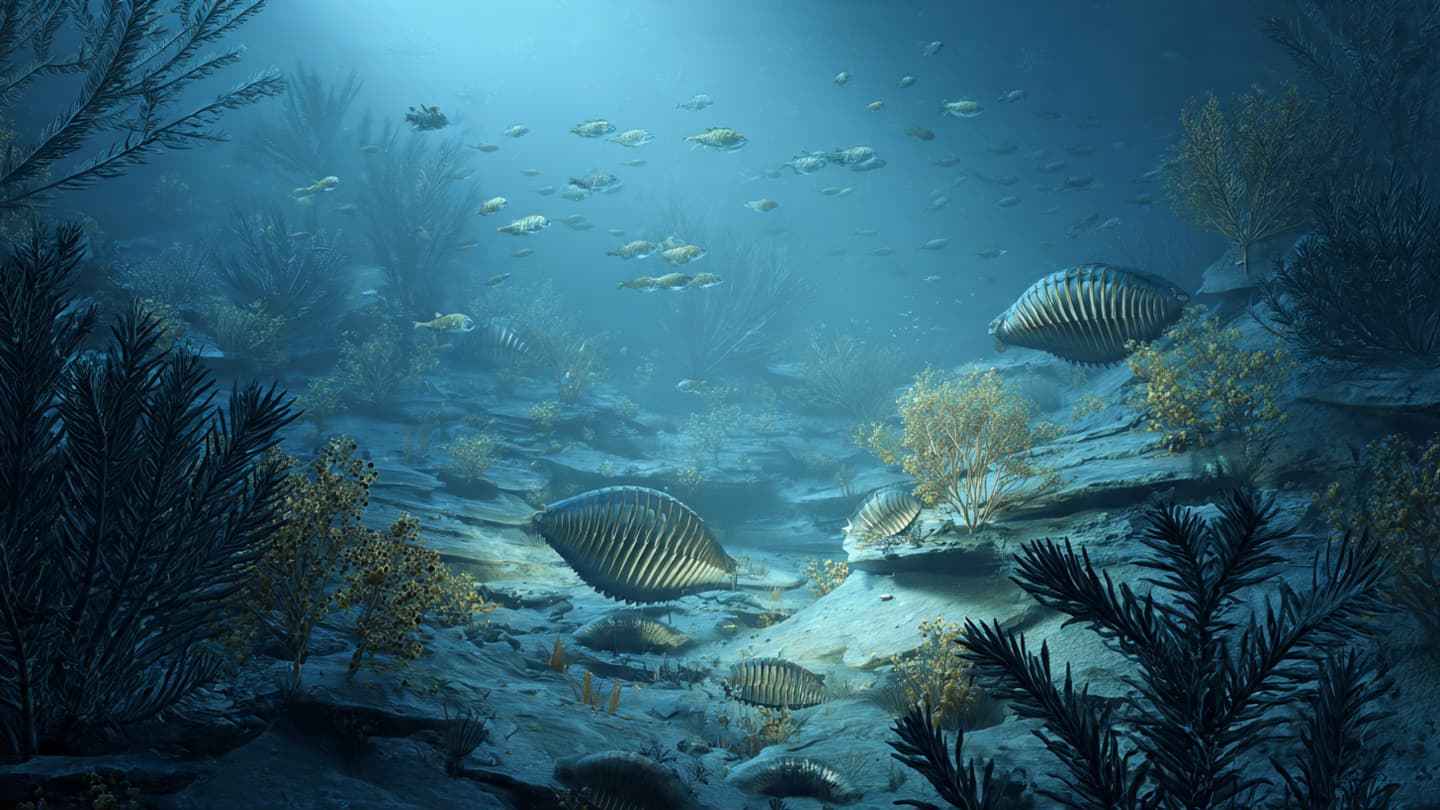
The Cambrian period, often associated with the “Cambrian Explosion,” represents one of the most significant transitions in biological history. During this interval, a remarkable diversification of life appeared in Earth’s oceans, including organisms with shells, limbs, sensory systems, and more advanced body structures. Scientists have long debated the precise pace and causes of this evolutionary expansion.
According to researchers, the fossil discoveries reveal unexpectedly intricate anatomical features preserved within ancient marine organisms. Advanced imaging and microscopic analysis allowed scientists to identify patterns that may indicate early developmental specialization, movement capability, or ecological interaction within primitive marine environments.
Paleontologists note that discoveries involving ancient soft-bodied organisms remain particularly valuable because such tissues rarely survive the fossilization process. Under exceptional conditions, however, sediment and mineralization can preserve delicate biological structures with remarkable detail, allowing researchers to reconstruct aspects of ancient ecosystems more accurately.
The findings also contribute to broader discussions about evolutionary timing. Some scientists suggest the results may support the idea that biological innovation occurred gradually over long periods before becoming visible in the fossil record. Others interpret the evidence as an indication that environmental conditions during the Cambrian period accelerated evolutionary experimentation.
Modern fossil research increasingly relies on collaboration between biology, chemistry, geology, and digital imaging technology. Laboratories can now analyze fossils at microscopic and molecular levels, uncovering details that earlier generations of scientists could not easily detect. These technological advances continue reshaping humanity’s understanding of early life on Earth.
Beyond scientific implications, discoveries from deep geological time often inspire reflection about humanity’s place within a far older planetary narrative. The organisms preserved within ancient rock formations lived in oceans that existed hundreds of millions of years before forests, mammals, or human civilization emerged.
Researchers say further analysis of the fossils is ongoing, with additional studies expected to refine interpretations surrounding early evolutionary development. For now, the discovery adds another important piece to the evolving story of how complex life first emerged on Earth.
AI Image Disclaimer: Several visual illustrations accompanying this article were generated using AI tools for educational and artistic representation.
Sources: Nature, Science.org, Reuters, Smithsonian Magazine, National Geographic
Published by Banx Network. This article is part of the Banx decentralized media programme, powered by the BXE token on the XRP Ledger.