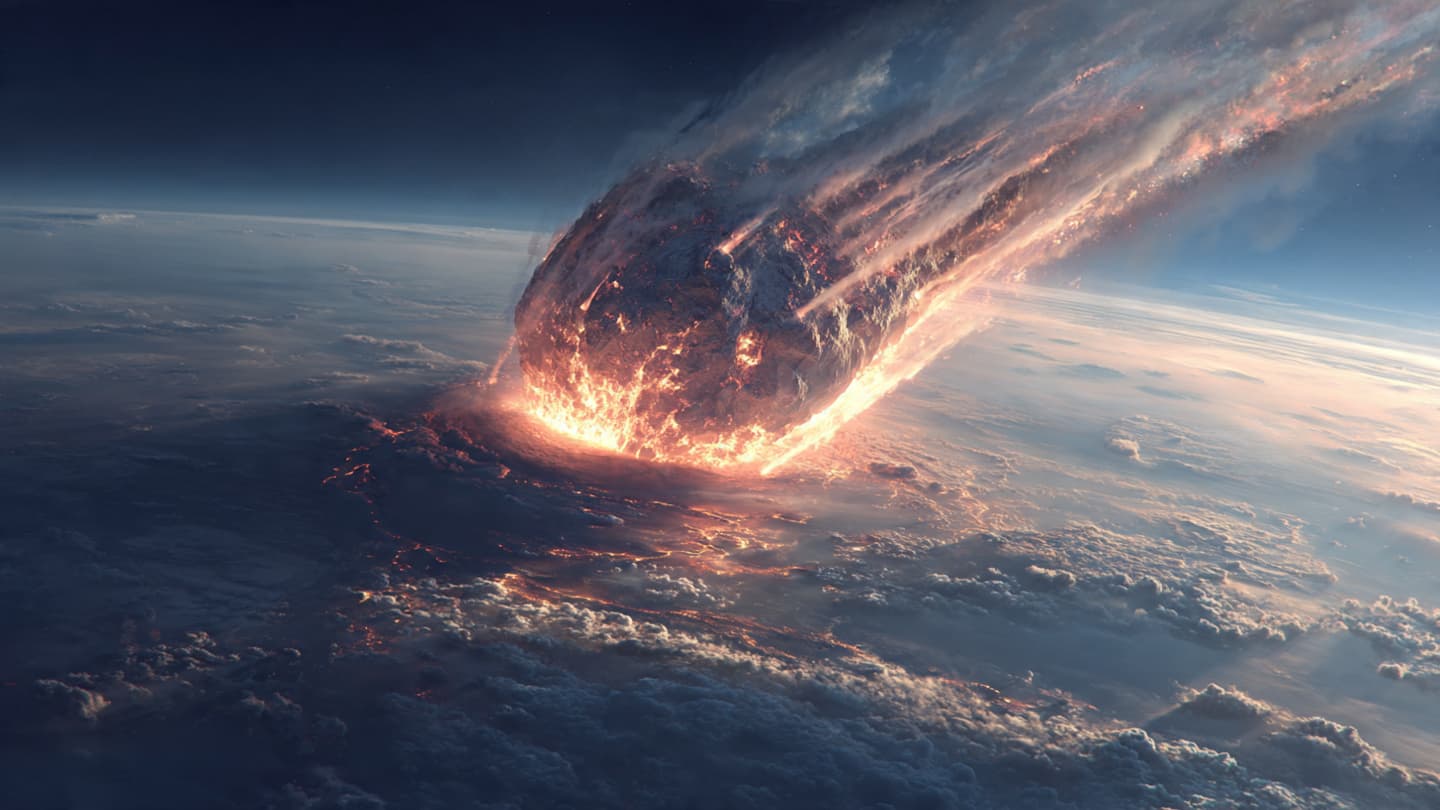
Long before cities, oceanside harbors, or even forests existed, Earth was a quieter and harsher world shaped by collisions from space. Asteroids crossed the young solar system like wandering messengers, carrying minerals, ice, and chemical compounds through the darkness. Now, scientists say new evidence may strengthen the idea that some of those ancient impacts helped create conditions necessary for life on Earth.
Researchers studying asteroid samples and early planetary chemistry have increasingly focused on the possibility that key organic ingredients arrived from space billions of years ago. Rather than viewing asteroids solely as destructive objects, many scientists now consider them potential contributors to the chemical foundation from which life eventually emerged.
The findings build upon decades of research involving meteorites rich in carbon compounds and amino acids. Scientists have previously identified organic molecules inside fragments of space rocks that landed on Earth, suggesting that asteroids may carry some of the basic components associated with biological processes. Recent studies appear to add further support to that theory.
Programs led by organizations such as and other international research teams have expanded access to pristine asteroid material collected directly in space. Missions involving asteroid sampling provide scientists with less-contaminated material than meteorites exposed to Earth’s environment after landing, improving the reliability of laboratory analysis.
Researchers caution that the evidence does not mean life itself arrived fully formed from space. Instead, the theory centers on chemical precursors—molecules that may have contributed to the gradual development of biological systems on early Earth. Scientists continue debating exactly how those compounds interacted with oceans, volcanic environments, and atmospheric conditions during the planet’s earliest stages.
The broader field of astrobiology increasingly explores how chemistry moves across planetary systems. Asteroids, comets, and interstellar dust are now understood not simply as debris, but as active participants in the distribution of water and organic materials throughout the cosmos. In that sense, Earth’s story may be connected to a much wider galactic exchange.
Public fascination with the origins of life often gravitates toward dramatic possibilities, yet scientists emphasize that discoveries in this field usually emerge through slow accumulation of evidence rather than sudden breakthroughs. Each new asteroid sample or chemical analysis contributes another small piece to a puzzle stretching back more than four billion years.
As future missions continue gathering material from distant objects, researchers hope to better understand how chemistry evolved into biology on Earth. For now, the growing evidence surrounding asteroids offers a reflective reminder that life’s origins may have depended not only on our planet itself, but also on ancient travelers arriving from far beyond it.
AI Image Disclaimer: Some scientific visuals associated with this article were generated using AI-assisted imagery for educational illustration.
Sources: NASA, Nature, Reuters, Scientific American, Space.com
Published by Banx Network. This article is part of the Banx decentralized media programme, powered by the BXE token on the XRP Ledger.