Many of the most important discoveries in astronomy emerge from clues that cannot be seen directly. Scientists often infer the existence of distant phenomena by studying subtle interactions between light, particles, and energy. A recent study has provided what researchers describe as some of the strongest evidence yet for a magnetic field surrounding a planet beyond our solar system.
The discovery centers on an exoplanet, a planet orbiting a star outside the Sun's planetary system. Thousands of exoplanets have been identified in recent decades, but understanding their physical characteristics remains a significant scientific challenge.
Magnetic fields are considered important because they can help protect planetary atmospheres from being stripped away by stellar radiation. On Earth, the magnetic field plays a crucial role in shielding the planet from charged particles emitted by the Sun.
Researchers detected signals that suggest interactions between the exoplanet and its host star. These interactions appear consistent with the presence of a magnetic field surrounding the distant world. Although indirect, the evidence is regarded as particularly compelling by the scientific community.
The finding has implications that extend beyond planetary physics. Magnetic fields may contribute to long-term atmospheric stability, a factor often considered when evaluating whether a planet could potentially support conditions favorable to life.
Modern observatories have enabled scientists to investigate exoplanets in remarkable detail. By analyzing light and radio emissions from distant systems, researchers can infer characteristics that would have been impossible to study only a few decades ago.
Experts caution that additional observations will be necessary to confirm the results and refine existing models. Scientific understanding advances through repeated verification and independent analysis, making follow-up studies especially important.
The search for habitable worlds remains one of astronomy's most compelling pursuits. Discoveries related to planetary atmospheres, magnetic fields, and environmental conditions help scientists build a more complete picture of distant planetary systems.
As technology continues advancing, researchers expect to uncover even more details about worlds orbiting distant stars. The latest evidence represents another step toward understanding how planets form, evolve, and survive within the vast expanse of the universe.
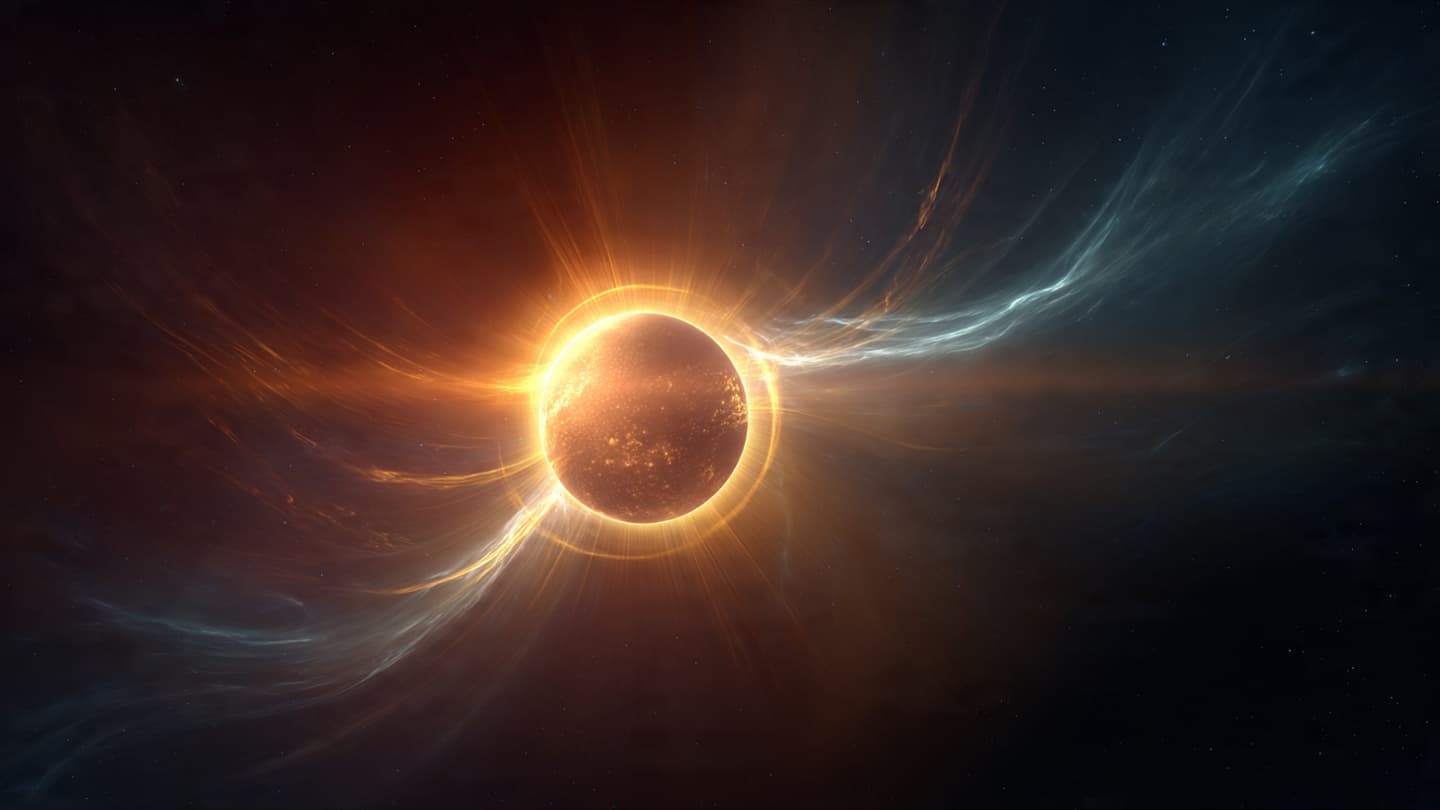
AI Image Disclaimer: The visual accompanying this article is AI-generated and intended only to illustrate the scientific concepts discussed.
Source Verification Check: The Debrief, Nature Astronomy, NASA, European Space Agency
Published by Banx Network. This article is part of the Banx decentralized media programme, powered by the BXE token on the XRP Ledger.