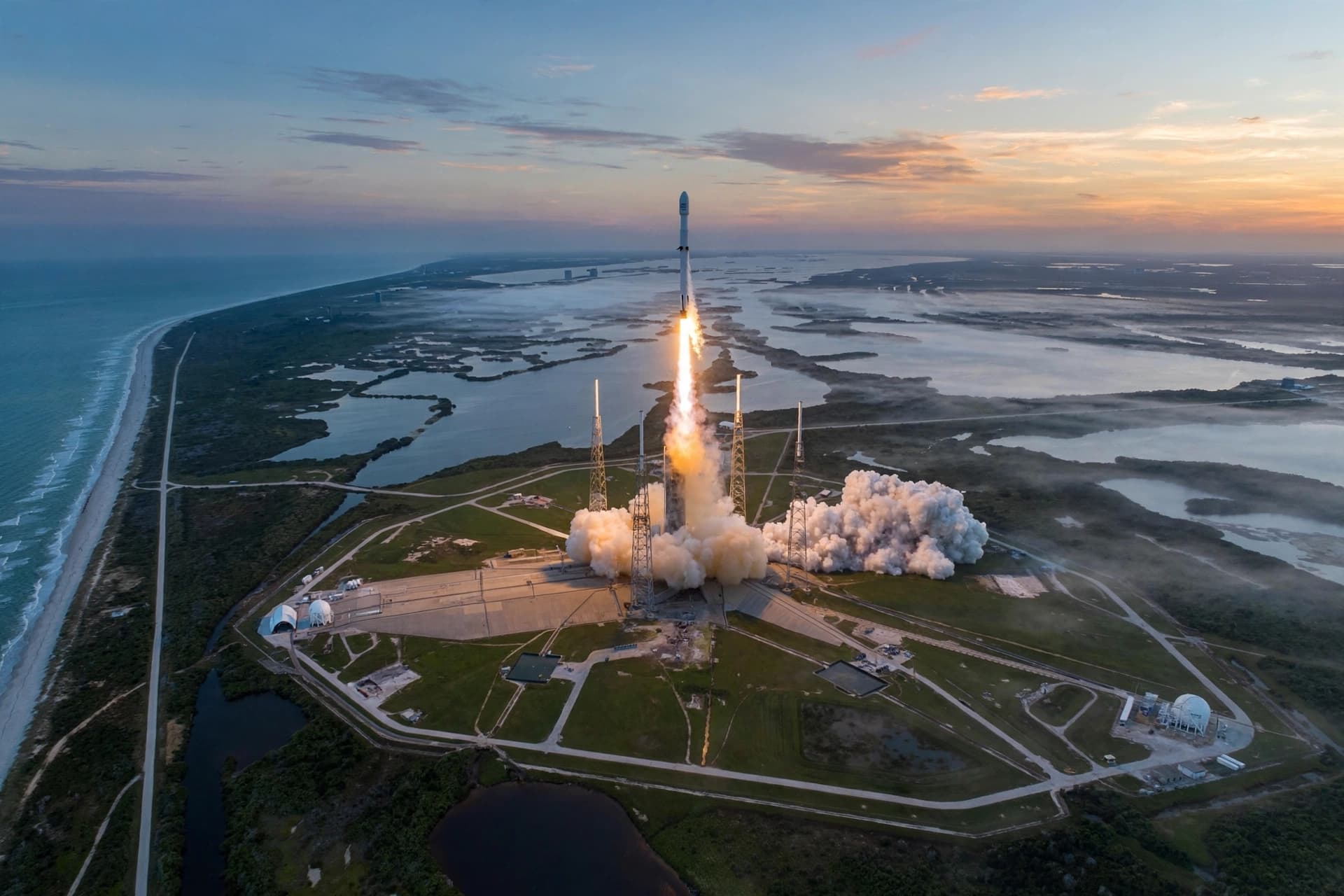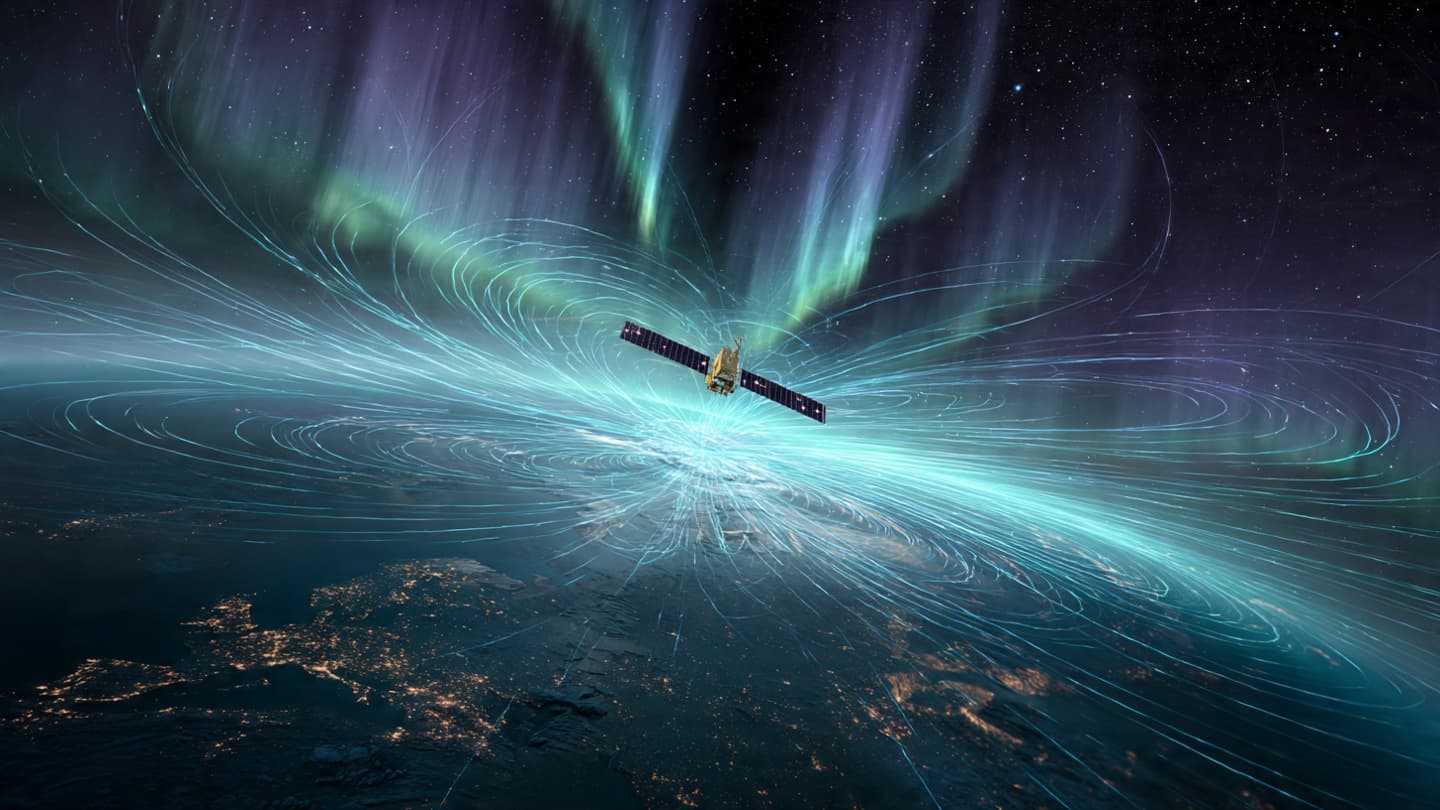
Above the noise of daily headlines, humanity continues to send quiet instruments into the sky, each carrying questions larger than itself. This week, another such journey began as a joint European-Chinese satellite launched aboard the rocket, opening a new chapter in the scientific effort to better understand Earth’s magnetic shield and the invisible forces surrounding the planet.
The satellite mission represents cooperation between researchers and institutions from and , combining technological expertise with shared scientific goals. While political tensions often dominate international discussions, space research continues to offer moments where collaboration crosses borders in pursuit of broader knowledge.
Earth’s magnetic shield, known as the magnetosphere, acts as a protective barrier against charged particles streaming from the Sun. Without it, solar radiation could significantly disrupt satellites, communications systems, power grids, and even conditions necessary for life itself. Yet despite decades of research, many details about how this magnetic environment behaves remain only partially understood.
Scientists hope the satellite’s imaging capabilities will provide clearer observations of interactions between solar winds and Earth’s upper atmosphere. Researchers are particularly interested in how magnetic disturbances evolve during solar storms, which can affect navigation systems, aviation, and electrical infrastructure on Earth.
The launch aboard Vega-C also carries significance for the European space sector. The rocket has faced technical scrutiny in recent years following earlier setbacks, making successful missions especially important for restoring operational confidence. Engineers and scientists alike view each stable launch as part of a longer process of strengthening independent access to space.
For China, participation reflects the country’s growing role in international scientific research and advanced space technology. Chinese space programs have expanded rapidly over the past decade, ranging from lunar exploration to space station operations and Earth observation missions. Joint projects such as this satellite mission suggest that scientific cooperation can still emerge even during periods of broader geopolitical competition.
Experts say the data collected may improve forecasting models related to space weather. More accurate predictions could help governments and industries prepare for solar events capable of interfering with communication networks, satellites, and energy systems. In an increasingly connected world, understanding space weather is becoming less abstract and more economically relevant.
The mission also highlights a deeper human instinct: the desire to understand unseen systems that quietly shape everyday existence. Earth’s magnetic field cannot be touched or directly observed with the naked eye, yet its presence shields life continuously, like an invisible coastline holding back a restless cosmic sea.
As the satellite begins transmitting images and scientific measurements back to Earth, researchers across multiple countries will examine the data carefully. The answers may arrive slowly, piece by piece, but each transmission could bring scientists closer to understanding one of the planet’s most essential and mysterious defenses.
AI Image Disclaimer: Illustrative visuals connected to this article were generated with AI to depict space research and satellite operations in a realistic manner.
Sources: SpaceNews, European Space Agency, Reuters, Ars Technica, Space.com
Published by Banx Network. This article is part of the Banx decentralized media programme, powered by the BXE token on the XRP Ledger.