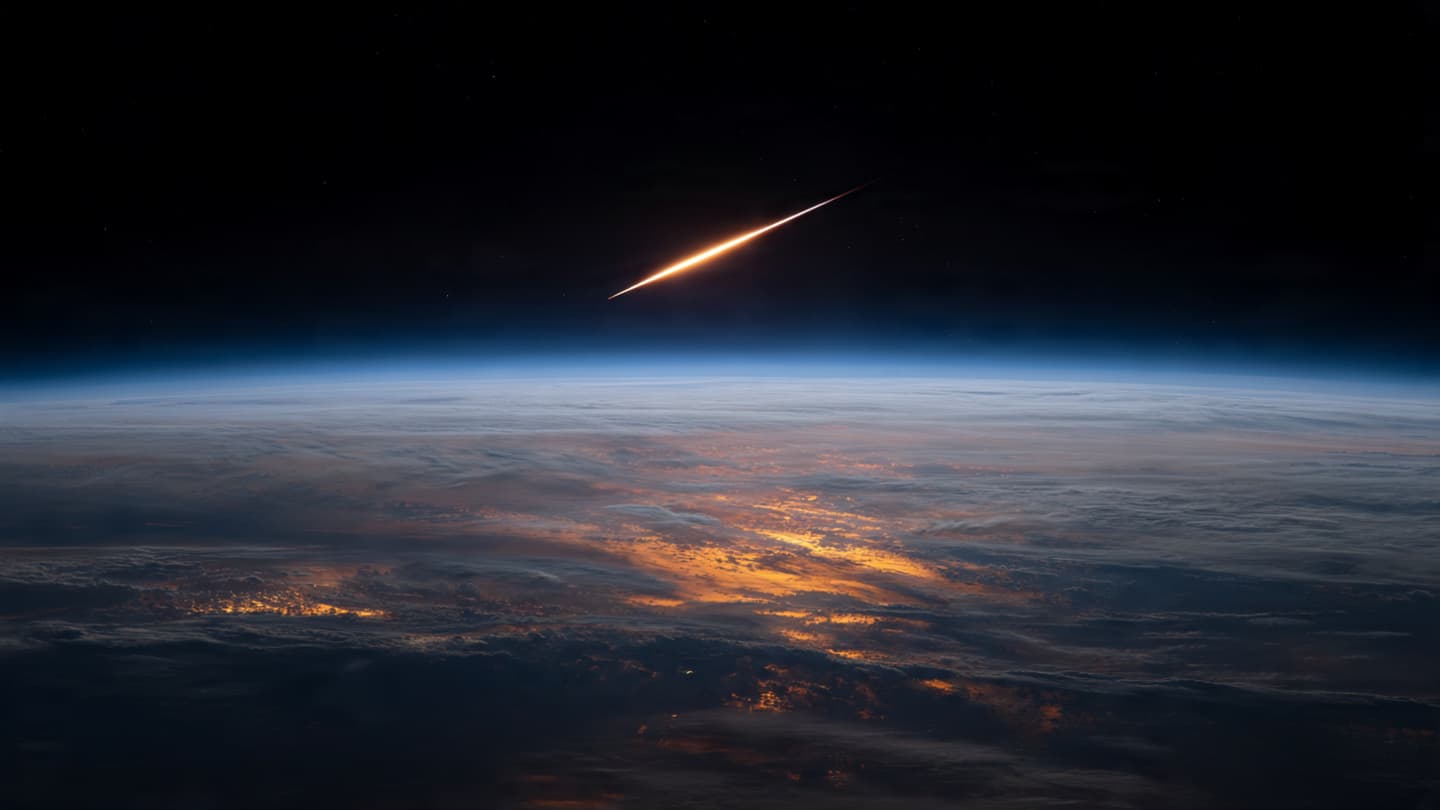
From orbit, Earth often appears calm and luminous, its oceans and clouds drifting in slow silence beneath the darkness of space. Yet even from hundreds of miles above the planet, moments of sudden brilliance can interrupt that stillness. Recently, a NASA astronaut captured footage of a spectacular fireball streaking through Earth’s atmosphere, drawing attention from both scientists and the public.
The event was recorded aboard the International Space Station during routine observational activities. The glowing object appeared as a bright streak crossing the atmosphere before fading within seconds. Scientists believe the fireball was likely caused by a meteoroid entering Earth’s atmosphere at extremely high speed.
Fireballs occur when space debris or rocky fragments from asteroids burn intensely as they collide with atmospheric gases. The friction generated during entry produces bright flashes of light, sometimes visible across wide geographic regions. Larger objects can create especially dramatic visual displays before disintegrating completely.
Astronaut footage provides researchers with valuable observational data. Unlike ground-based cameras limited by weather and geography, orbital recordings can capture atmospheric events from broad vantage points. These observations help scientists study meteor behavior, atmospheric interaction, and entry trajectories more accurately.
NASA officials noted that Earth encounters small meteoroids regularly. Most burn harmlessly in the atmosphere before reaching the surface. Larger impacts capable of causing significant damage remain extremely rare, though international monitoring programs continue tracking near-Earth objects as part of planetary defense efforts.
The recording also highlighted the unique perspective astronauts experience while orbiting Earth. From space, natural phenomena such as lightning storms, auroras, volcanic eruptions, and meteors appear interconnected within a single planetary system. Many astronauts have described these observations as reminders of Earth’s fragility and unity.
Public fascination with fireballs often reflects something deeper than scientific curiosity alone. Sudden flashes crossing the night sky have inspired stories, myths, and wonder throughout human history. Modern technology may explain their physical origins more clearly, yet the emotional response they evoke remains remarkably familiar.
Researchers continue analyzing the footage to estimate the object’s size, speed, and atmospheric behavior. Such studies contribute to broader efforts aimed at understanding the constant flow of cosmic material entering Earth’s environment.
For now, the recorded fireball stands as another brief intersection between Earth and the wider solar system—an instant of brightness captured from orbit before disappearing into the atmosphere below.
AI Image Disclaimer: Some accompanying illustrations in this article were created using AI-assisted visual generation tools.
Sources: , Space.com, Reuters, Live Science, CBS News
Published by Banx Network. This article is part of the Banx decentralized media programme, powered by the BXE token on the XRP Ledger.