
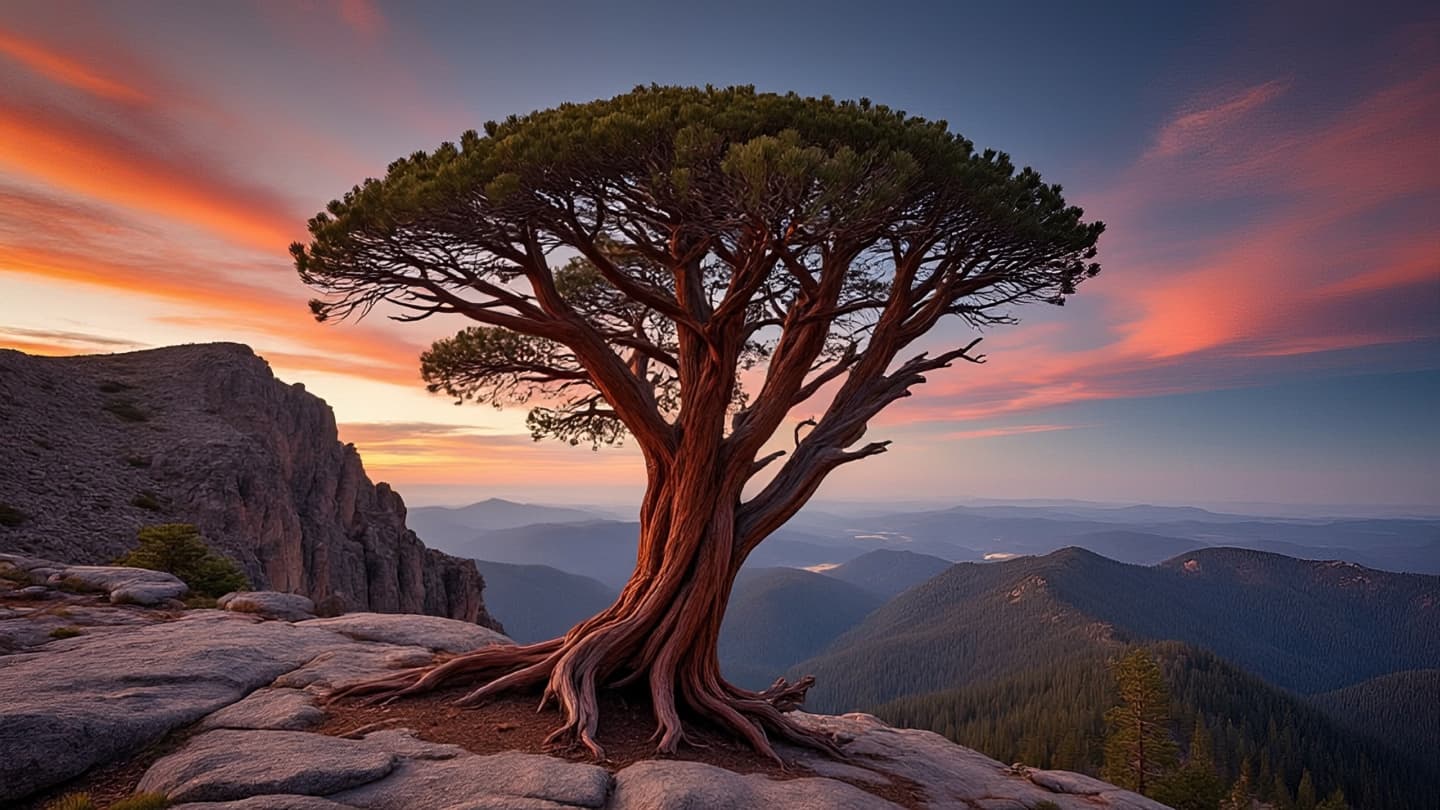
Opening: In the high, windswept ridges of the White Mountains in California, time moves differently. Here, amidst the granite and thin air, stands Methuselah, a Great Basin bristlecone pine that has witnessed nearly five millennia of history. Older than the Pyramids of Giza, older than the invention of the wheel, this gnarled and twisted tree is a living testament to resilience. Its existence invites a quiet reflection on longevity, endurance, and the slow, steady pulse of nature that outlasts empires and civilizations.
Body: Methuselah is not the tallest or the most majestic tree in the forest. In fact, its beauty lies in its ruggedness. Twisted by centuries of harsh winds and freezing temperatures, its wood is dense and resinous, resistant to rot, insects, and disease. These adaptations allow bristlecone pines to survive in environments where other species cannot thrive. At altitudes above 10,000 feet, the growing season is short, and the conditions are brutal, yet Methuselah has persisted.
The exact age of Methuselah is a closely guarded secret. To protect the tree from vandalism and excessive tourism, the U.S. Forest Service does not disclose its precise location. Only a few researchers know where it stands, ensuring that it remains undisturbed. This secrecy is a necessary measure to preserve a biological treasure that belongs to all humanity. It reflects a commitment to conservation over curiosity.
Bristlecone pines grow incredibly slowly, adding a mere fraction of an inch to their trunk diameter each year. This slow growth results in tight ring patterns that provide a detailed record of past climate conditions. Scientists use these rings to reconstruct historical weather patterns, droughts, and temperature changes. Methuselah is not just a tree; it is an archive of Earth’s climatic history, storing data that helps us understand the present and predict the future.
The fact that Methuselah predates the Egyptian pyramids places its germination around 2833 BC. It was already a sapling when ancient civilizations were just beginning to rise. It has survived the fall of Rome, the Middle Ages, and the Industrial Revolution. Its longevity puts human history into perspective, reminding us of our fleeting presence on the planet. We are visitors in a world that operates on a much grander timescale.
Threats to Methuselah include climate change, which is altering the delicate balance of its high-altitude ecosystem. Warmer temperatures and changing precipitation patterns could stress the tree and make it more vulnerable to pests and fire. Additionally, the potential for human error or intentional harm remains a risk, despite protective measures. Conservation efforts are focused on monitoring the health of the tree and its surrounding habitat.
The story of Methuselah also highlights the importance of old-growth forests. These ecosystems support unique biodiversity and play a crucial role in carbon sequestration. Protecting ancient trees is not just about preserving individual specimens but about maintaining the integrity of entire ecological communities. Each old tree is a node in a network of life that has developed over thousands of years.
Visitors to the White Mountains can see other ancient bristlecones, though not Methuselah itself. The experience of walking among these living relics is profound. It fosters a sense of humility and connection to the natural world. People leave with a deeper appreciation for the endurance of life and the need to protect it.
As we face global environmental challenges, Methuselah stands as a symbol of hope and resilience. It shows that life can endure even in the harshest conditions, provided it is given the chance. Its continued survival depends on our collective willingness to value and protect the natural heritage that has been entrusted to us.
Closing: Methuselah, the 4,800-year-old bristlecone pine, remains the oldest known living tree on Earth. Its protected location in California’s White Mountains ensures its preservation. The tree serves as a vital scientific resource and a powerful symbol of natural endurance and historical continuity.
AI Image Disclaimer: Please be aware that the visual aids in this piece are AI-generated interpretations designed to support the narrative of ancient nature.
Sources: U.S. Forest Service National Geographic Smithsonian Magazine Live Science
Published by Banx Network. This article is part of the Banx decentralized media programme, powered by the BXE token on the XRP Ledger.


