
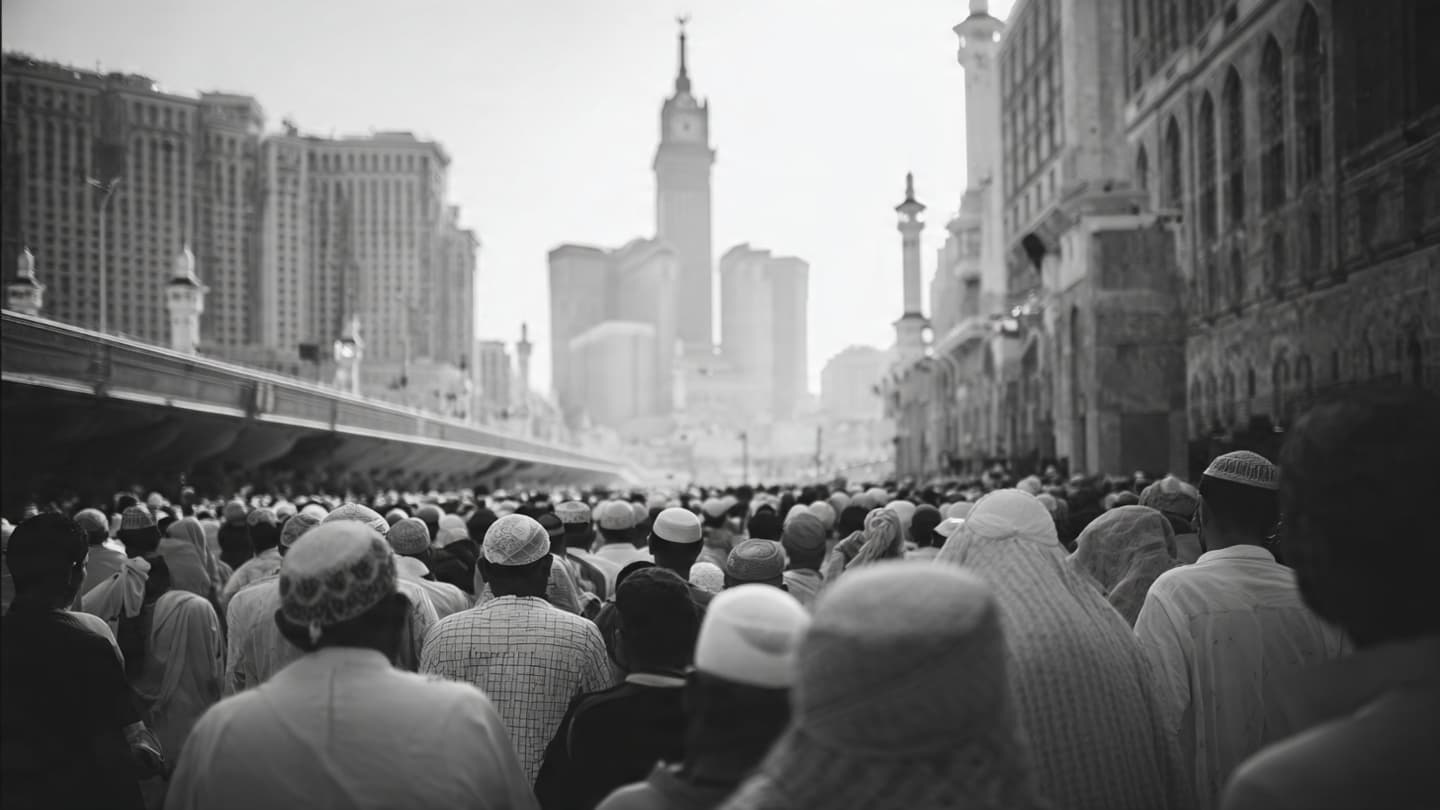
Each year, the Hajj transforms movement into something larger than travel itself. Airports fill with pilgrims dressed in white garments, roads stretch toward sacred destinations, and countless languages blend into a single shared purpose. This year, more than 1.5 million pilgrims have begun arriving in Saudi Arabia as the annual pilgrimage unfolds against a backdrop of heightened tension across the Middle East.
Saudi authorities have spent months preparing for one of the world’s largest religious gatherings. Security personnel, medical teams, transportation workers, and volunteers have been deployed across Mecca and surrounding holy sites to manage the enormous logistical demands of the pilgrimage season. Officials stated that crowd management and public safety remain central priorities.
The Hajj carries deep spiritual meaning for Muslims worldwide and represents one of the five pillars of Islam. Pilgrims travel from nearly every continent to participate in rituals that symbolize humility, equality, patience, and devotion. For many attendees, the journey reflects years of personal preparation and financial sacrifice.
This year’s pilgrimage arrives during a period of continuing uncertainty in the region. Diplomatic tensions, security concerns, and ongoing conflicts in several neighboring countries have increased international attention on the gathering. Despite these conditions, Saudi officials emphasized that pilgrimage operations continue normally under extensive coordination measures.
Transportation networks across the kingdom have been expanded to accommodate rising visitor numbers. High-speed rail systems, dedicated bus corridors, and digital crowd-monitoring technologies are being used to improve movement between religious sites. Authorities have also introduced additional heat protection measures as temperatures remain high across western Saudi Arabia.
Healthcare preparedness has become another major focus. Medical facilities near pilgrimage routes have increased staffing levels while emergency response teams remain on standby. Officials continue encouraging pilgrims to follow hydration guidelines and health advisories, particularly older visitors and those with existing medical conditions.
For pilgrims themselves, global politics often feels distant during the rituals. Conversations in prayer areas and gathering spaces frequently center instead on gratitude, family, and spiritual reflection. Many describe the experience as both physically demanding and emotionally profound, shaped by moments of collective unity rarely found elsewhere.
Religious scholars note that the Hajj has historically continued through periods of political uncertainty, economic change, and regional conflict. Across centuries, pilgrimage routes adapted to shifting empires and modern borders while preserving rituals that remain largely unchanged. The continuity itself has become part of the pilgrimage’s enduring significance.
As arrivals continue in Saudi Arabia, authorities expect millions more participants in the coming days. Despite regional tensions and logistical complexity, the Hajj once again moves forward as one of the largest recurring gatherings on Earth, defined as much by human coordination as by spiritual devotion.
AI Image Disclaimer: Certain visuals connected to this article were created with AI-generated imagery to support editorial illustration.
Sources: Reuters, Saudi Press Agency, BBC News, Al Jazeera, Associated Press
Note: This article was published on BanxChange.com and is powered by the BXE Token on the XRP Ledger. For the latest articles and news, please visit BanxChange.com