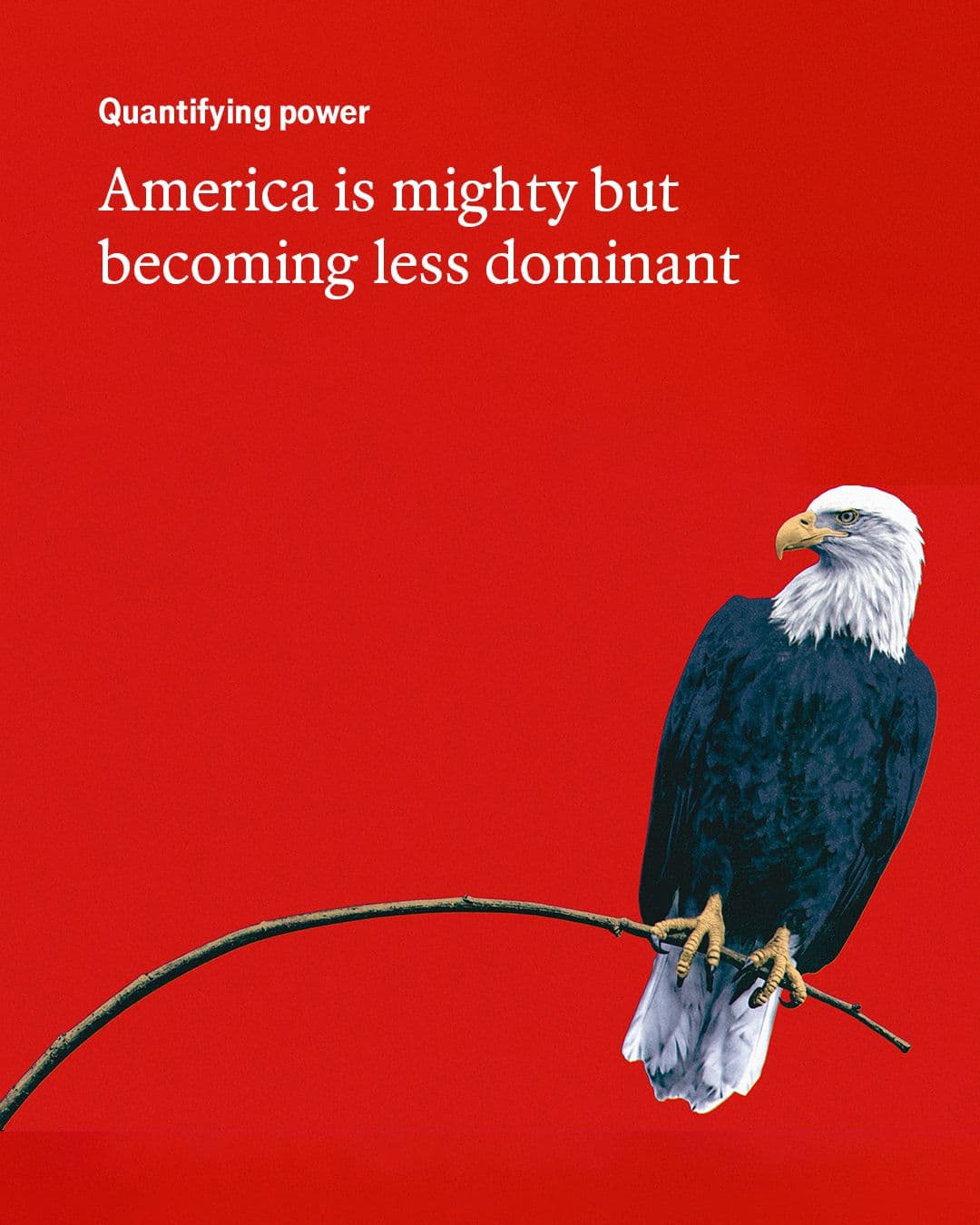
For more than two centuries, the United States has expanded its influence through industrial strength, military dominance, technological leadership, financial innovation, and the global appeal of its institutions. From the aftermath of the Second World War to the digital revolution of the 21st century, America established itself as the central pillar of the international order. Its currency became the world's reserve asset, its corporations shaped global commerce, and its military projected power across every major region. Yet growing debate is emerging over whether the era of uncontested American dominance is beginning to fade. While the United States remains the world's largest economy and most capable military power, shifts in demographics, geopolitics, manufacturing, and technology are challenging assumptions that American leadership will remain unrivaled indefinitely. One of the most significant developments is the rise of competing powers. China has transformed itself into a manufacturing and technological giant, becoming a critical player in global trade and supply chains. India is expanding rapidly as a population and economic powerhouse, while regional blocs are seeking greater independence from U.S.-led institutions. Together, these changes have created a more multipolar world in which influence is distributed among several major actors rather than concentrated in a single nation. Economic pressures also play a role. Rising national debt, political polarization, infrastructure challenges, and concerns over long-term productivity growth have raised questions about America's ability to maintain its historical pace of expansion. Critics argue that internal divisions can weaken decision-making and reduce the country's capacity to respond effectively to long-term strategic challenges. Despite these concerns, reports of American decline may be exaggerated. The United States continues to lead in advanced research, artificial intelligence, biotechnology, aerospace, finance, and higher education. Many of the world's most valuable companies remain American, and global investors still view U.S. markets as among the safest destinations for capital. The dollar continues to dominate international finance, providing Washington with significant economic influence. Military capabilities further reinforce America's position. The country maintains extensive alliances across Europe, Asia, and other regions, creating a network of partnerships unmatched by any competitor. These relationships provide strategic advantages that extend beyond raw economic measurements. The more realistic question may not be whether America is collapsing, but whether its share of global power is naturally declining as other nations grow stronger. History shows that dominant powers often experience periods in which competitors narrow the gap without necessarily replacing the leading nation altogether. As the global balance evolves, the United States faces the challenge of adapting to a world where influence must increasingly be shared. Success will depend on innovation, economic resilience, institutional stability, and the ability to maintain international partnerships. While America remains a formidable force, the coming decades may be defined less by absolute dominance and more by competition within a rapidly changing global landscape.
Published by Banx Network. This article is part of the Banx decentralized media programme, powered by the BXE token on the XRP Ledger.