
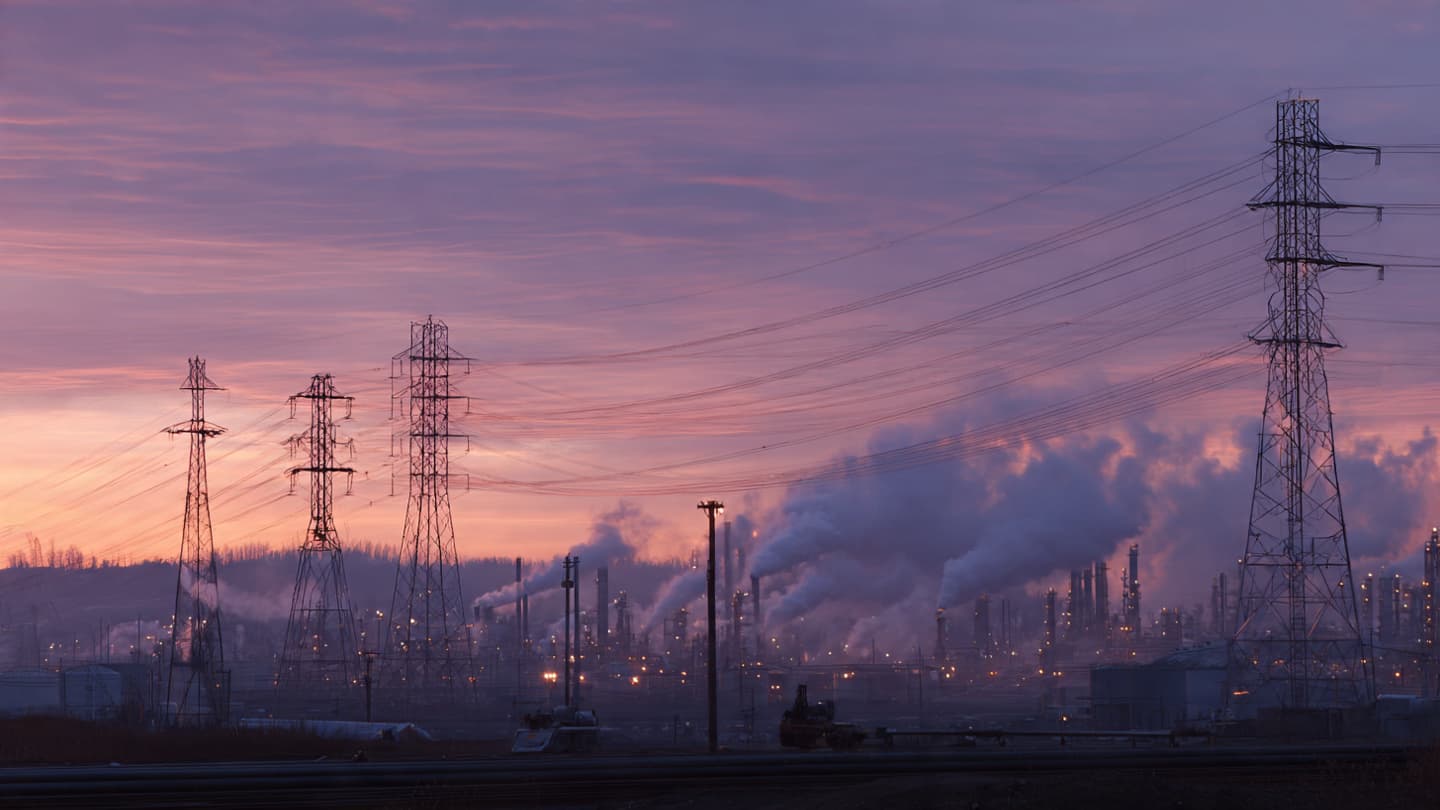
At night, industrial landscapes often resemble small cities of their own. Refineries glow against the dark with steady orange light, pipelines stretch like veins across open land, and towers release pale smoke into cold air that rarely pauses long enough to settle. These places are built for continuity — for the endless movement of fuel, machinery, and energy across vast distances. Yet in wartime, even the most routine systems begin to feel fragile.
This week, that fragility appeared again in southern Russia, where Ukrainian forces reportedly struck an oil refinery in what President Volodymyr Zelensky described as part of a widening campaign aimed at weakening the infrastructure that supports Moscow’s military operations. The attack, carried out far from the main front lines, reflected a tactic that has become increasingly central to Kyiv’s strategy: extending the geography of the war beyond trenches and contested towns, into the industrial and logistical networks that sustain Russia’s economy and armed forces.
Russian regional authorities acknowledged a strike and reported fires at the facility, while emergency crews worked through the night to contain damage. Images shared online showed flames rising above refinery structures, illuminating nearby roads with the harsh brightness of industrial fire. Though the scale of disruption remained uncertain, the symbolism was unmistakable. Oil infrastructure, once viewed mainly through the lens of economics, has become another battlefield in a conflict shaped as much by endurance as by territory.
For Ukraine, these operations appear designed to create cumulative pressure rather than singular shock. Over recent months, Kyiv has increasingly relied on long-range drones and precision strikes against fuel depots, refineries, military airfields, and transportation hubs deep inside Russian territory. Analysts describe the approach as a strategy of erosion — one aimed at complicating logistics, raising costs, and forcing Moscow to disperse defenses far beyond the front itself.
The rhythm of the war has changed with these tactics. Earlier phases of the conflict were marked by massive troop movements and rapidly shifting lines on maps. Now, the conflict often unfolds through quieter but persistent disruptions: railway interruptions, refinery shutdowns, air defense alarms in distant cities, and the steady hum of drones traveling through darkness toward industrial targets.
Inside Ukraine, officials argue that such strikes are intended to reduce Russia’s operational capacity while demonstrating that distance no longer guarantees security. Moscow, meanwhile, has accused Kyiv of targeting civilian infrastructure and has continued its own large-scale missile and drone attacks across Ukrainian cities and energy facilities. Each side increasingly seeks advantage not only through direct military confrontation, but through pressure on systems that sustain everyday national function — electricity, transport, fuel, communication.
The refinery strike came as fighting along eastern and southern fronts continued with little sign of decisive movement. Soldiers on both sides remain locked in a war of attrition where territory changes slowly, often measured in villages and tree lines rather than dramatic advances. Against that backdrop, long-range attacks have acquired greater strategic and psychological importance.
There is also a deeper transformation unfolding beneath these events: the changing nature of warfare itself. Cheap drones, satellite guidance, and dispersed attacks have altered the balance between geography and vulnerability. Places once considered safely removed from combat now live beneath the possibility of sudden interruption. Industrial facilities hundreds of miles from the battlefield have become exposed to the same uncertainty that once belonged only to border regions.
As dawn returned after the refinery strike, smoke drifted upward over metal towers and cooling pipes while emergency workers moved through the site assessing damage. Elsewhere, trains continued across the Russian steppe, fuel shipments resumed where possible, and officials on both sides prepared new statements for audiences already accustomed to years of war.
Yet beyond the official language and military calculations, the image that lingers is quieter: firelight reflecting against industrial steel in the middle of the night, and the growing sense that modern conflict no longer remains confined to front lines alone. It moves outward through infrastructure, economies, and ordinary routines, reaching places built for permanence and reminding them, too, of uncertainty.
AI Image Disclaimer Visuals are AI-generated and serve as conceptual representations of the events described.
Sources Reuters Associated Press BBC News The Guardian Al Jazeera
Published by Banx Network. This article is part of the Banx decentralized media programme, powered by the BXE token on the XRP Ledger.

.jpg&w=3840&q=75 "Russia Turns Black Sea Into World’s Deadliest Shipping Route as More Than 570 Ships Are Hit")
.jpg&w=3840&q=75 "Intelligence Agencies Suspect Russia Is Developing Anti-Satellite Weapon to Target Starlink")