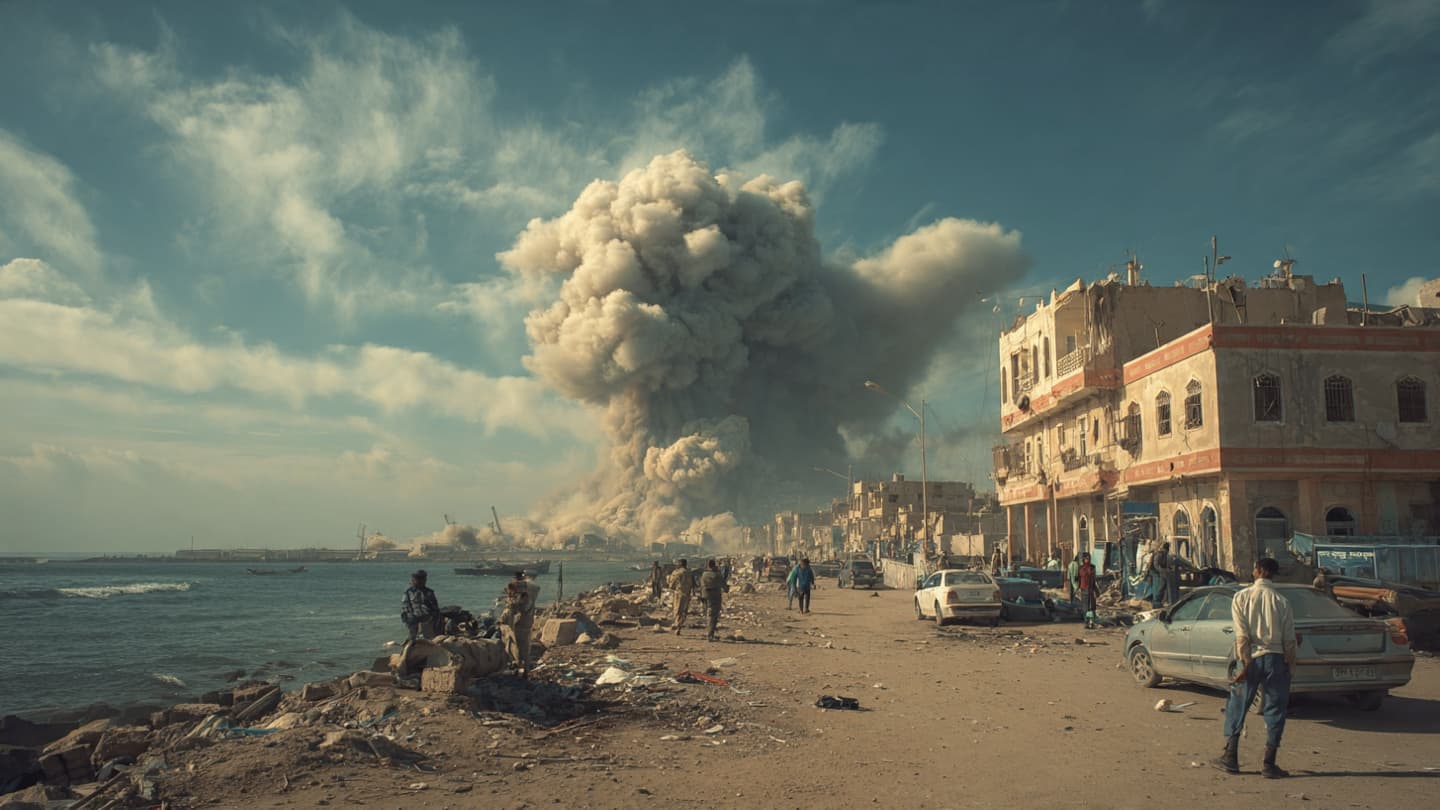
The Gulf often gives little outward sign of what is moving beneath its surface. From the shore, the water can appear bright beneath the summer sun, while currents quietly carry material across distances that are difficult to see from land. Around Qeshm Island, those unseen movements have become visible through an expanding oil slick and darkened sections of coastline.
Satellite imagery reviewed by Reuters indicates that the Qeshm slick has spread across a substantial area of water. A second slick has also been detected near Sirri Island, showing that oil pollution is affecting more than one location along Iran's Gulf coastline. (reuters.com)
The most immediate evidence is along Qeshm's beaches. Reuters verified footage of oil washing onto the island's shoreline, where the boundary between sea and land has become marked by petroleum rather than the usual movement of clear water and sand. Coastal contamination can be particularly persistent because oil may become trapped among sediments and rocks.
The suspected connection to the Minoan Pioneer adds a maritime dimension to the environmental event. The Liberia-flagged bulk carrier was damaged in the region, and Reuters reported that the resulting pollution is believed to have produced the Qeshm slick. The exact environmental footprint remains under assessment as monitoring continues. (reuters.com)
The sea itself determines much of what happens next. Currents can carry oil away from its original location, while wind and waves can alter its shape and speed. Satellite observations therefore provide an important way of following the slick as it changes, especially when direct access to affected waters is difficult.
For marine ecosystems, timing matters. Fresh oil can behave differently from weathered oil, and different coastal habitats respond differently to contamination. Shallow waters, beaches, wetlands, and rocky shores can each retain petroleum in different ways, potentially extending exposure for wildlife and marine organisms.
The environmental concern also extends to the communities that live beside the water. Qeshm Island's relationship with the Gulf includes fishing, transportation, tourism, and other coastal activities. Pollution can complicate those activities even before the full ecological effects are known.
Cleanup operations require careful coordination because removing oil from the sea and shoreline involves specialized equipment, personnel, and access. Reuters reported that efforts around the Qeshm spill have encountered delays connected to permissions for salvage and cleanup work, while independent monitoring groups have continued tracking the slick. (reuters.com)
The situation remains fluid. Oil continues to move with the Gulf's currents, while authorities and environmental specialists work to establish the extent of contamination. The clearest picture will emerge through continued satellite monitoring, shoreline inspections, and cleanup assessments. For now, Qeshm's beaches offer the most visible sign of a problem that began at sea and is gradually making itself known on land.
Image Disclaimer
All visual concepts accompanying this article were generated through AI and are intended solely to illustrate the reported environmental situation.
Sources
Reuters Associated Press SkyTruth Greenpeace
Note: This article was published on BanxChange.com and is powered by the BXE Token on the XRP Ledger. For the latest articles and news, please visit BanxChange.com