
In Havana, night often arrives before the lights do. Entire neighborhoods fall briefly into darkness, and the city’s familiar sounds begin to change shape beneath the absence of electricity. Fans stop turning in open windows. Radios fade into silence. Along the Malecón, where sea air drifts across old concrete and rusted railings, conversations continue in the glow of phones and candles while the power grid struggles once again against exhaustion.
It was against this backdrop that a shipment of rice from China arrived in Cuba, unloading quietly at a moment when the island faces deep economic strain, recurring blackouts, and renewed pressure from the United States. The cargo, while practical in its purpose, also carried symbolic weight — another reminder of how global alliances and everyday survival often intersect most visibly at the level of food, fuel, and ordinary household necessity.
For many Cuban families, rice is not merely a staple but part of the rhythm of daily life itself, appearing at tables regardless of income or circumstance. Yet in recent years, shortages and inflation have increasingly disrupted even the most familiar routines. Long lines outside stores have become common scenes in cities and provincial towns alike, shaped by limited imports, weakened domestic production, and a prolonged economic crisis compounded by fuel shortages and declining infrastructure.
The arrival of assistance from China comes during a particularly difficult period for Cuba’s energy system. Aging power plants and limited fuel supplies have produced repeated nationwide outages, some lasting for hours at a time. In the tropical heat, the blackouts alter everything from refrigeration and transportation to hospital operations and evening life inside crowded apartment buildings. Generators hum sporadically across neighborhoods while businesses adapt to uncertain schedules shaped by electricity cuts.
At the same time, tensions with Washington continue to shape the island’s economic environment. U.S. sanctions and policy threats remain central to Cuba’s financial isolation, affecting access to trade, banking systems, and foreign investment. Cuban officials have frequently argued that these restrictions deepen shortages and hinder recovery efforts, while U.S. leaders maintain pressure tied to political and human rights concerns. Between those competing narratives lies the quieter reality experienced by ordinary residents navigating scarcity one day at a time.
China has steadily expanded its presence in Cuba through trade, infrastructure cooperation, and material assistance, becoming one of the island’s most important international partners. Shipments such as food aid or industrial support are often framed diplomatically as gestures of solidarity, but they also reflect a broader geopolitical pattern in which strategic relationships emerge through practical need.
At Havana’s ports, containers moved beneath heavy coastal humidity while workers unloaded sacks of grain destined for distribution networks across the island. The scene itself was modest — cranes, warehouses, salt air — yet it touched a larger story about resilience and dependence in a country long shaped by both external pressure and internal endurance.
Cuba’s economic challenges have intensified since the pandemic years, with tourism recovery remaining uneven and inflation continuing to strain household budgets. Many younger Cubans have left the island in search of opportunity abroad, while those remaining often balance frustration with a deep familiarity born from decades of cyclical hardship. In such conditions, even the arrival of staple foods becomes national news, carrying emotional resonance far beyond the shipment’s material value.
Chinese officials confirmed the delivery as part of ongoing bilateral cooperation, while Cuban authorities emphasized the importance of international support during continuing shortages and energy instability. The shipment arrived amid warnings from the United States regarding sanctions enforcement and broader diplomatic tensions tied to Havana’s political alignment.
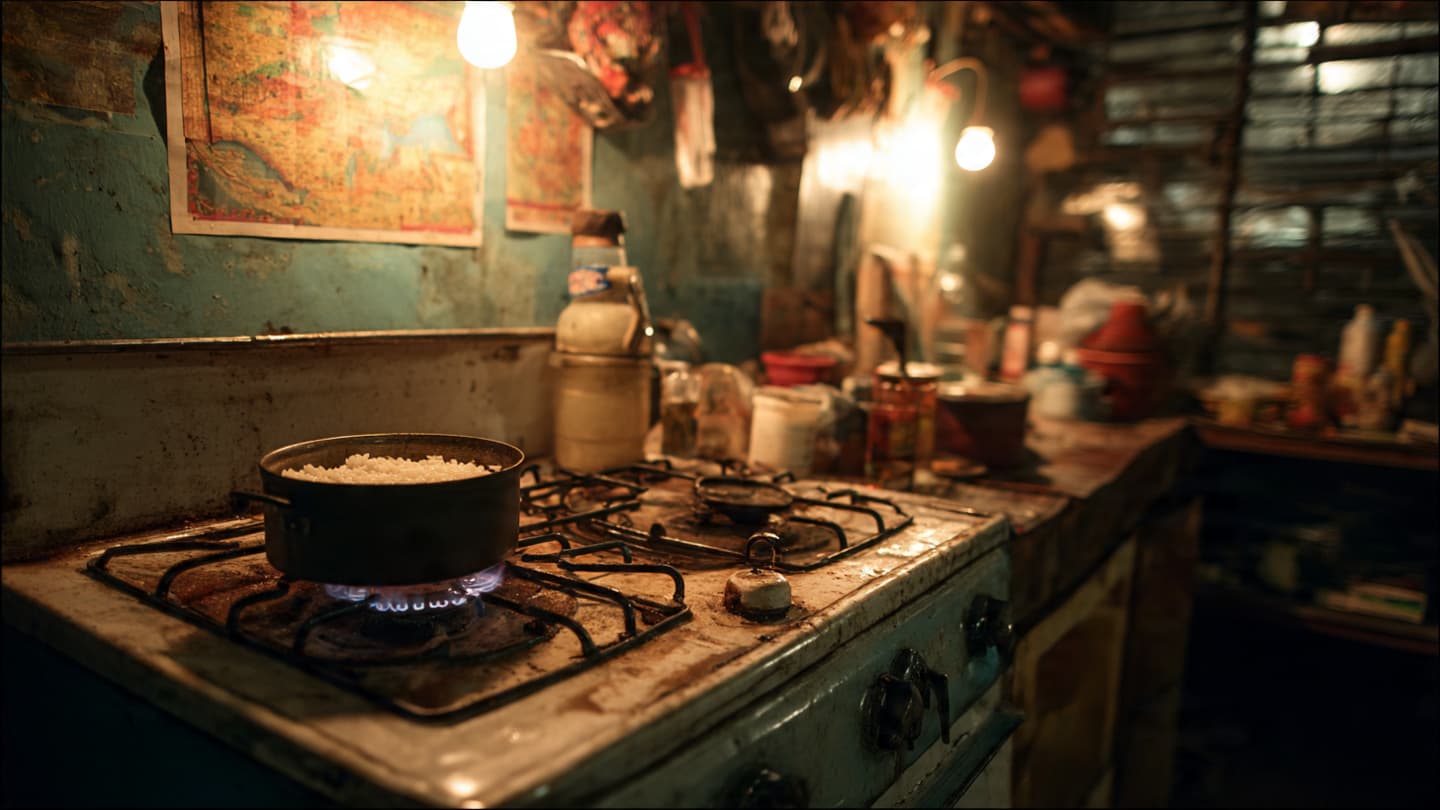
As evening settled once more across the island, apartment windows flickered unevenly back to life in some districts while others remained dark. Somewhere in the city, pots of rice simmered again over gas stoves and improvised burners. The harbor quieted beneath humid night air, cargo ships resting against the docks like patient silhouettes. And beyond the shoreline, Cuba continued its long conversation with scarcity, survival, and the distant powers that shape so much of its horizon.
AI Image Disclaimer These illustrations were produced using AI-generated imagery and are intended to visually interpret the events described.
Sources
Reuters Associated Press BBC News Al Jazeera China Daily
Note: This article was published on BanxChange.com and is powered by the BXE Token on the XRP Ledger. For the latest articles and news, please visit BanxChange.com