
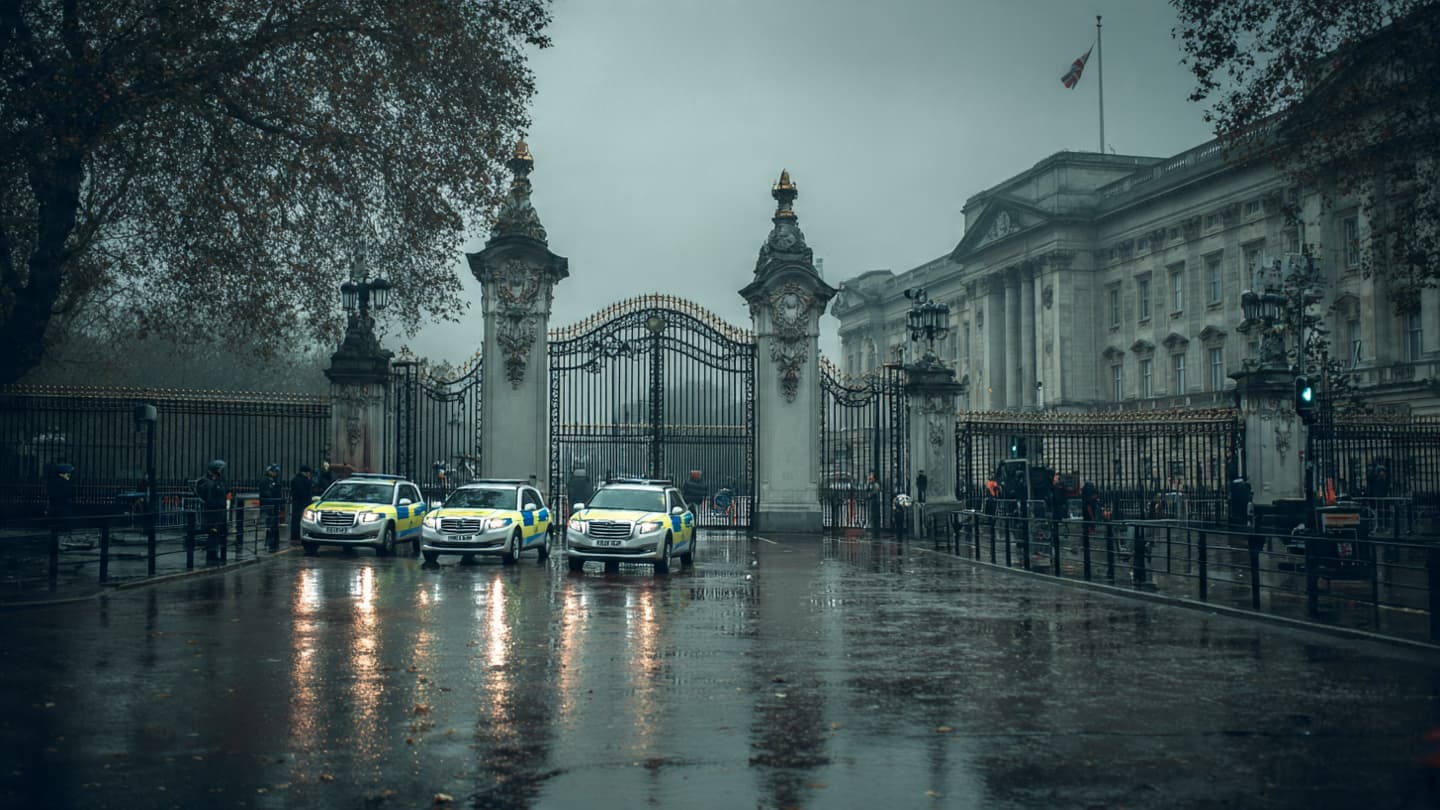
Morning rain drifted across London in thin silver lines, softening the edges of old stone buildings and black iron gates. Around Buckingham Palace and the quiet avenues surrounding it, tourists still paused for photographs while police vehicles moved through ordinary traffic, almost unnoticed beneath the city’s steady rhythm. In Britain, public institutions often appear immovable, shaped by ritual and continuity, yet even the oldest structures can find themselves shadowed by unresolved questions.
This week, renewed attention turned toward reports that police are examining allegations of sexual misconduct connected to former royal Prince Andrew. The inquiry, according to British media accounts, involves reviewing information linked to earlier allegations and testimony that have lingered around the Duke of York for years, particularly following his association with the late financier Jeffrey Epstein. Authorities have reportedly been assessing whether additional investigative steps are warranted under current legal standards.
The development arrives against the backdrop of a long and uneasy public reckoning that has reshaped both Prince Andrew’s role within the royal family and broader conversations surrounding power, privilege, and accountability. Once a prominent figure at ceremonial events and international engagements, Andrew has largely withdrawn from public duties in recent years following intense scrutiny surrounding his connections to Epstein and civil allegations brought against him in the United States.
Though no criminal charges have been announced, the continued examination of allegations keeps the story suspended between legal procedure and public memory. In cases involving prominent figures, investigations often unfold not only in courtrooms or police files, but within the wider atmosphere of national conversation — through newspaper columns, television discussions, and the quiet judgments people carry privately.
Britain’s monarchy has long depended on the careful maintenance of symbolism. Royal life, built upon ceremony and continuity, draws much of its strength from public perception. Yet perception itself can become fragile when institutions encounter allegations that challenge trust. Over recent years, the royal household has repeatedly attempted to create distance between Prince Andrew and official duties, limiting his appearances and titles while seeking to contain reputational damage to the broader institution.
Outside palace walls, however, the conversation extends far beyond monarchy alone. Cases involving sexual misconduct allegations against powerful individuals have increasingly shaped public discourse across many countries, reflecting broader demands for transparency and accountability. Movements that once began as isolated testimonies have gradually altered how institutions respond to accusations, particularly when influence and status are involved.
And yet investigations themselves often move quietly, slowly, and without dramatic resolution. Police reviews can stretch across months or years, defined by evidence thresholds, witness cooperation, and legal limitations that remain largely invisible to the public. What appears in headlines is often only the outer edge of a much longer procedural process unfolding behind closed doors.
For many Britons, the story now exists less as a moment of shock than as a lingering chapter in a wider transformation surrounding the monarchy’s place in modern public life. The royal family continues to balance tradition with adaptation, ceremonial continuity with contemporary expectations about accountability and transparency.
As evening settles again across London, the palace gates remain standing beneath dim streetlights while the city moves forward in familiar motion — buses crossing Westminster Bridge, commuters descending into Underground stations, rain collecting along pavements polished by centuries of footsteps. The investigation may yet lead nowhere definitive, or it may reopen debates that Britain has struggled for years to contain. Either way, the questions surrounding Prince Andrew continue to drift through the national atmosphere like the persistent fog over the Thames: difficult to grasp fully, yet impossible to ignore entirely.
AI Image Disclaimer: Illustrations were created with AI technology and are intended as visual representations rather than factual imagery.
Sources:
BBC News Reuters The Guardian Sky News Associated Press
Note: This article was published on BanxChange.com and is powered by the BXE Token on the XRP Ledger. For the latest articles and news, please visit BanxChange.com