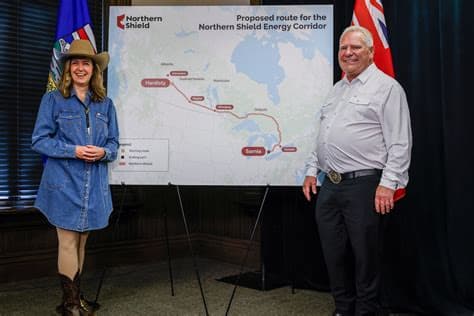
Alberta’s government says it has advanced a proposal for a world-class, Indigenous co-owned oil pipeline to the west coast of British Columbia, describing it as a way to increase global competitiveness, expand access—especially to Asian markets—and reduce reliance on U.S. outlets. Alberta says it has designed the submission around Indigenous leadership and stewardship, with Indigenous communities engaged from early planning and Indigenous opportunities centered in the project approach.
Alberta also links the initiative to what it calls a “clear and efficient approval process,” noting that the federal government has designated a priority role for pipeline development to Asian markets and is working with Alberta to streamline review under the Building Canada Act. The province adds that an Implementation Agreement finalized in May 2026 sets a framework for construction, with Alberta saying potential construction could begin as early as September 1, 2027, assuming consultation obligations and federal conditions are met.
Alberta’s proposal also describes environmental and marine-safety commitments, and says the pipeline would align with Canada’s clean-growth objectives by pairing with the Pathways carbon capture project—described as the world’s largest carbon capture and storage infrastructure effort—aimed at reducing heavy-oil emissions intensity.
For Ontario, the push is presented in the context of national energy infrastructure and “energy independence,” emphasizing improved energy reliability and supply routes for the broader Canadian economy rather than only regional benefits.
Note: This article was published on BanxChange.com and is powered by the BXE Token on the XRP Ledger. For the latest articles and news, please visit BanxChange.com