The universe often rewards persistence more than speed. Some celestial discoveries appear in brilliant flashes, while others remain hidden for years, waiting patiently behind the overwhelming glow of their parent stars. After nearly a decade of careful observation and analysis, astronomers have finally confirmed one of the faintest exoplanets ever directly detected from Earth, marking another milestone in the search for worlds beyond our solar system.
The newly identified planet, AF Lep b, orbits the young star AF Leporis, located about 88 light-years from Earth in the southern constellation Lepus. Researchers used the European Southern Observatory's Very Large Telescope (VLT) in Chile and its advanced SPHERE imaging instrument to directly capture the planet's faint light after years of observations and data processing. The findings were published in the journal Astronomy & Astrophysics.
Unlike most known exoplanets, which are discovered indirectly through the slight dimming of their host stars or the stars' subtle movements, AF Lep b was identified through direct imaging. This method is particularly challenging because planets are vastly dimmer than the stars they orbit. In this case, astronomers compared the task to spotting a tiny firefly beside an intense spotlight from an enormous distance.
Researchers estimate that AF Lep b has a mass approximately three to four times that of Jupiter and follows a wide orbit around its young parent star. Because the system is relatively young—around 20 to 30 million years old—the planet still emits residual heat from its formation, making it just bright enough to be detected using some of the world's most advanced astronomical instruments.
The decade-long search required scientists to repeatedly observe the system, separating the planet's faint signal from background stars and instrumental noise. As additional observations accumulated, researchers were able to confirm that the tiny point of light moved together with AF Leporis, demonstrating that it is a gravitationally bound companion rather than a distant background object.
Directly imaging exoplanets provides valuable scientific opportunities beyond simply confirming their existence. By analyzing the light emitted or reflected by these distant worlds, astronomers can study atmospheric composition, cloud structures, temperature, and chemical processes. Such observations help scientists better understand how giant planets form and evolve around young stars.
The discovery also demonstrates the growing capabilities of modern telescopes and imaging technology. Instruments like SPHERE use adaptive optics and sophisticated light-blocking techniques to reduce the glare of host stars, allowing researchers to detect objects that were previously beyond the reach of ground-based observatories. Future facilities, including the Extremely Large Telescope, are expected to reveal even smaller and fainter exoplanets.
As astronomers continue searching the skies, every newly discovered world expands humanity's understanding of the universe. AF Lep b may be one of the faintest planets ever directly observed from Earth, but its quiet appearance speaks to the remarkable patience and precision that define modern astronomy, reminding us that some of the universe's greatest discoveries emerge only after years of careful observation.
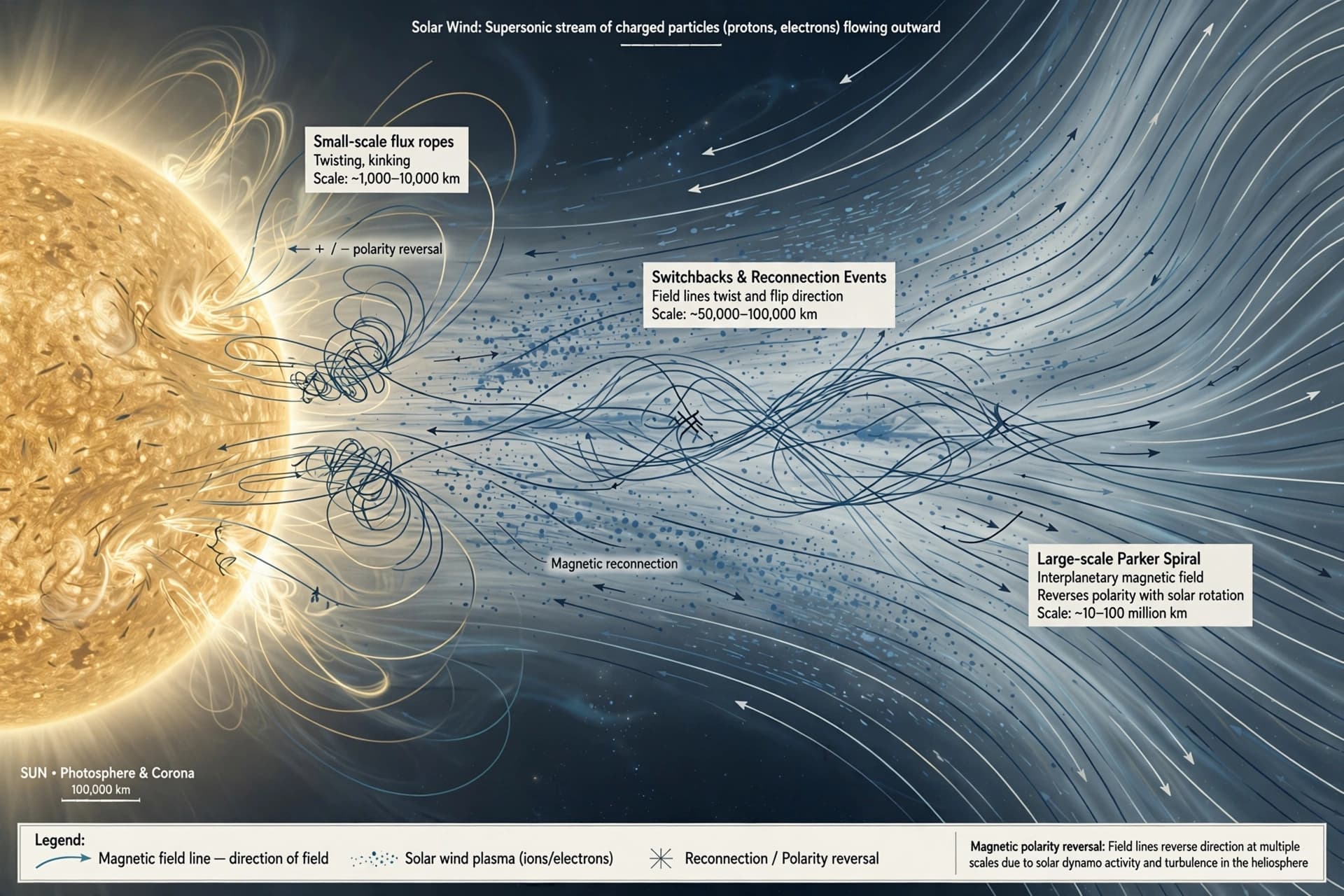
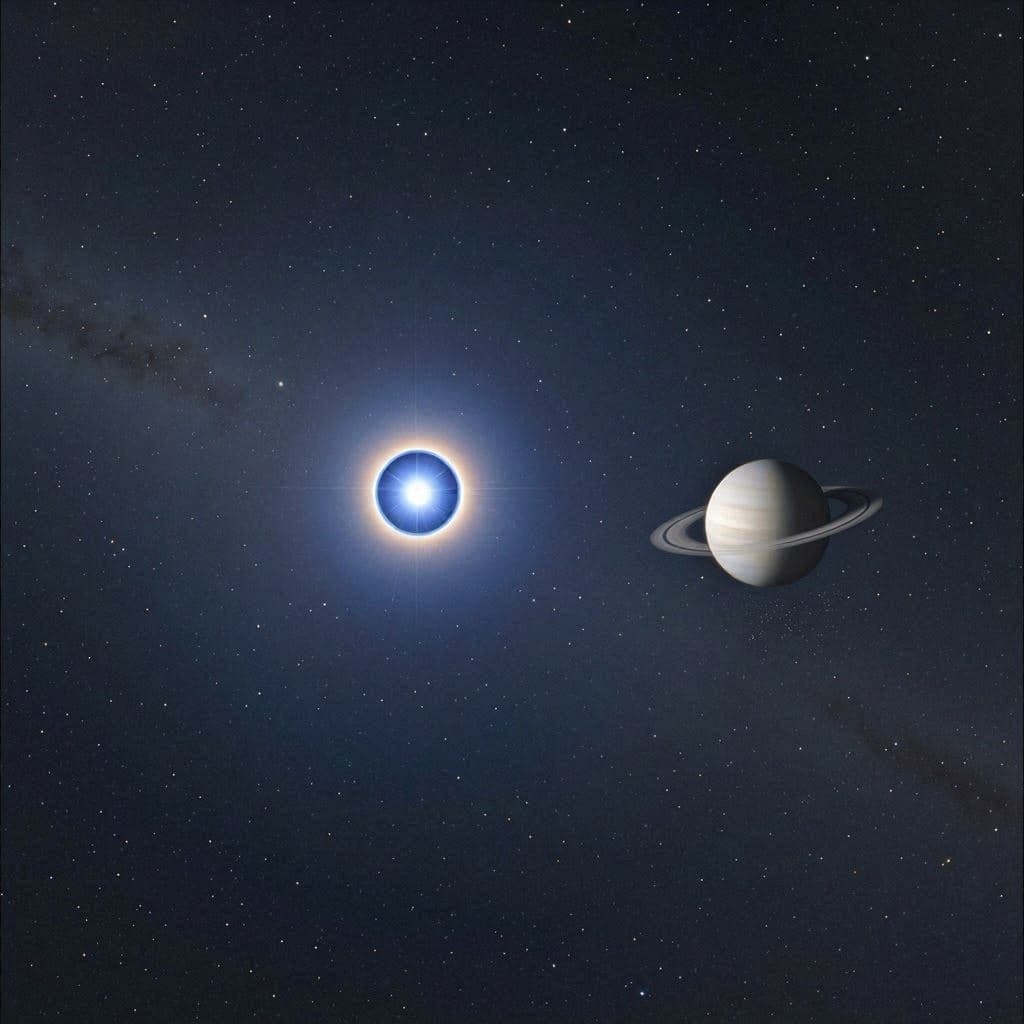
AI Image Disclaimer: The accompanying illustrations were generated using artificial intelligence to visualize the astronomical discovery and are not actual telescope images.
Sources (verified):
European Southern Observatory (ESO) Astronomy & Astrophysics Space.com Live Science
Published by Banx Network. This article is part of the Banx decentralized media programme, powered by the BXE token on the XRP Ledger.