
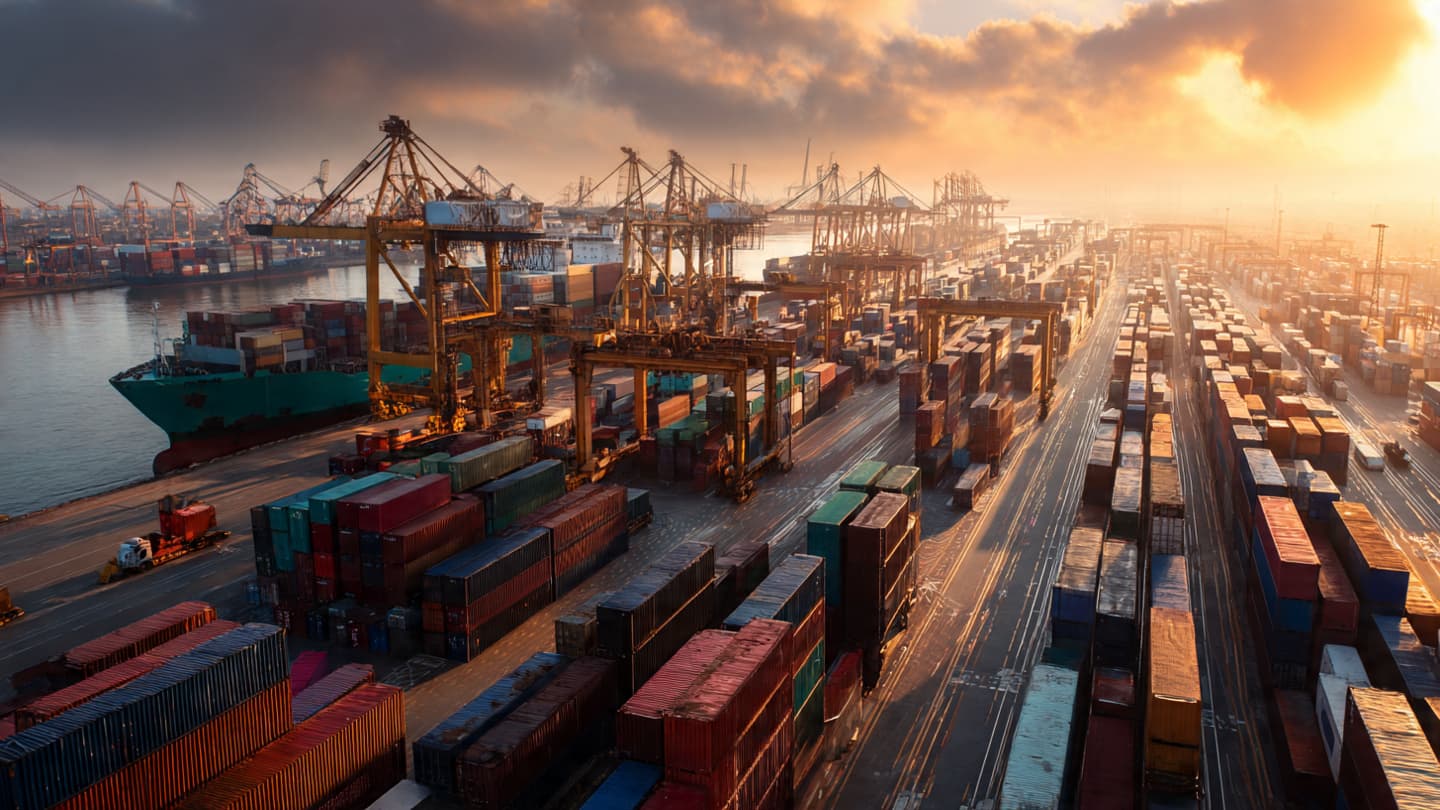
Global trade often resembles a vast network of interconnected pathways. Goods travel across oceans, through ports, warehouses, railways, and highways before reaching businesses and consumers. When disruptions occur, the effects can spread quickly across industries and borders.
Recent indicators suggest that global supply chains are showing signs of greater stability after several years marked by disruptions, delays, and logistical challenges. Businesses are beginning to experience more predictable delivery schedules and improved transportation conditions.
The improvement reflects efforts made throughout the international trading system. Companies have diversified suppliers, expanded inventory strategies, and invested in logistics technology designed to improve resilience. These measures have helped reduce vulnerability to sudden disruptions.
Shipping markets have also adapted. Port operations, freight capacity, and transportation networks have gradually adjusted to changing demand patterns. While challenges remain, many industry participants report more consistent operating conditions than in previous years.
Manufacturers stand to benefit from greater predictability. Reliable access to materials and components allows organizations to plan production more effectively and reduce costly interruptions. Such stability can support broader economic activity.
Retailers likewise gain advantages from improved logistics. Better inventory management and delivery reliability can help businesses meet customer expectations while controlling operational costs.
Technology has played an important role in this transition. Advanced tracking systems, predictive analytics, and supply chain management platforms provide greater visibility into complex global networks. Businesses increasingly rely on these tools to improve decision-making.
Despite positive developments, risks remain. Geopolitical tensions, weather events, and economic fluctuations can still affect trade routes and transportation systems. Supply chain resilience therefore remains an ongoing priority rather than a completed task.
Analysts note that the lessons learned during recent disruptions continue influencing corporate strategy. Organizations are balancing efficiency with flexibility in ways that may shape global trade for years to come.
For now, signs of stabilization offer cautious optimism. While uncertainty has not disappeared entirely, businesses around the world are finding a more predictable environment in which to plan, invest, and grow.
AI Image Disclaimer Graphics are AI-generated and intended for representation, not reality.
Sources (Source Check) Reuters Bloomberg Financial Times Wall Street Journal DHL Logistics Trend Reports
Note: This article was published on BanxChange.com and is powered by the BXE Token on the XRP Ledger. For the latest articles and news, please visit BanxChange.com