Space exploration is often measured in milestones—launches, landings, and discoveries. Yet some of its most meaningful chapters conclude quietly, after years spent patiently observing distant worlds. Such is the story of NASA's MAVEN mission, which has spent more than a decade studying the atmosphere of Mars.
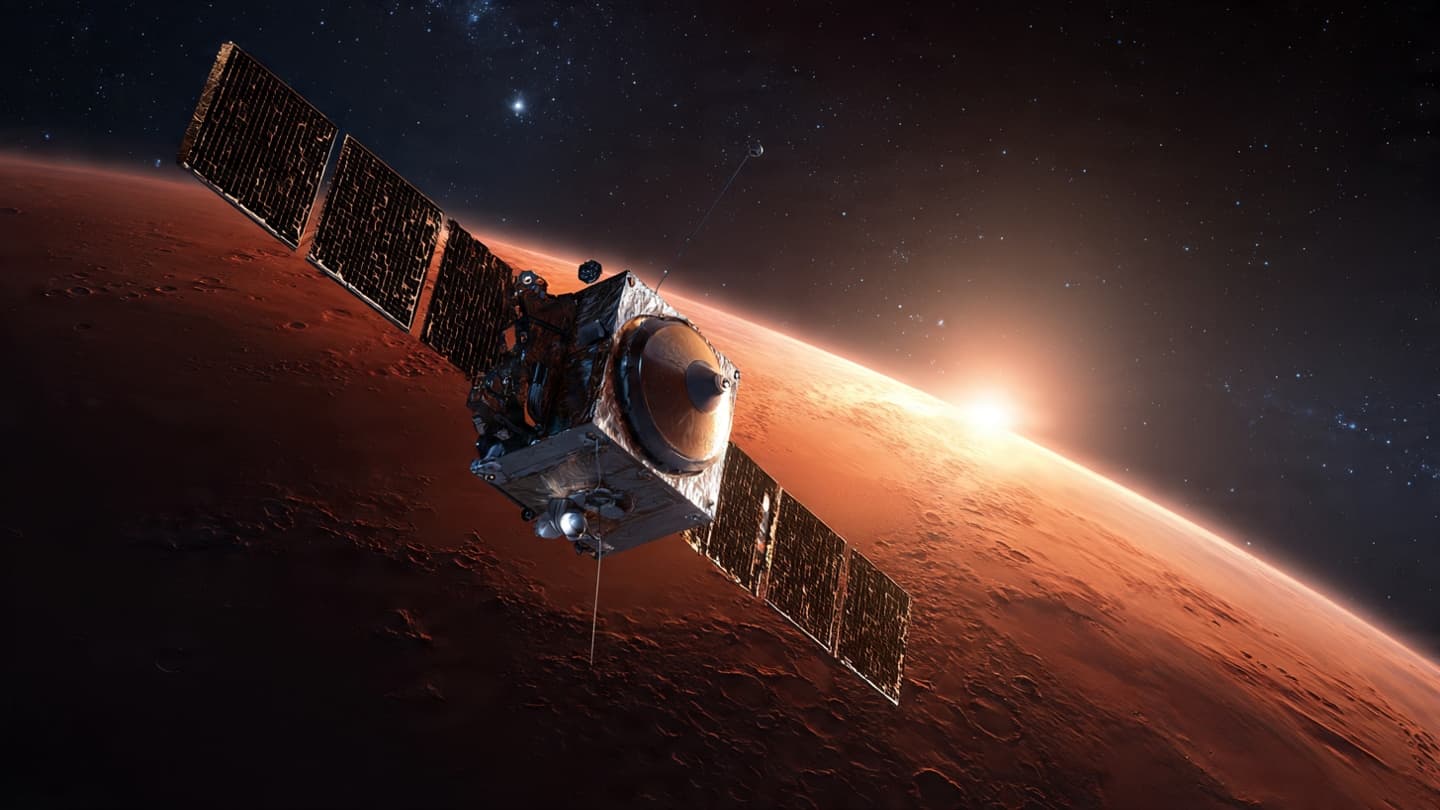
NASA has announced the conclusion of the Mars Atmosphere and Volatile Evolution mission, better known as MAVEN. Since arriving at Mars in 2014, the spacecraft has played a central role in advancing scientific understanding of the Red Planet's atmospheric history.
MAVEN was specifically designed to investigate how Mars lost much of its atmosphere over billions of years. Scientists have long sought to understand why Mars, once believed to have possessed liquid water and a thicker atmosphere, evolved into the cold and arid world observed today.
Throughout its mission, MAVEN collected extensive measurements of atmospheric composition, solar wind interactions, and the processes responsible for atmospheric escape. These observations have significantly expanded understanding of planetary evolution.
Researchers found that interactions between the solar wind and the Martian atmosphere gradually stripped away atmospheric gases over geological timescales. The findings have helped explain why Mars became increasingly inhospitable to life as conditions changed.
Data gathered by MAVEN has also supported other Mars missions by improving understanding of the planet's upper atmosphere and space environment. Such information proved valuable for both robotic exploration and future human mission planning.
NASA officials noted that while the mission itself has concluded, scientific analysis of MAVEN's extensive dataset will continue for years. Researchers expect additional discoveries to emerge from the information already collected.
The mission represents another example of how long-duration space exploration contributes to broader understanding not only of Mars, but also of planetary processes throughout the solar system.
As MAVEN's operational chapter closes, its scientific legacy will continue to inform future generations of planetary exploration.
AI Image Disclaimer: The images accompanying this article were generated using artificial intelligence for editorial illustration.
Sources Verification Check: NASA, Reuters, Science News, Jet Propulsion Laboratory
Published by Banx Network. This article is part of the Banx decentralized media programme, powered by the BXE token on the XRP Ledger.