
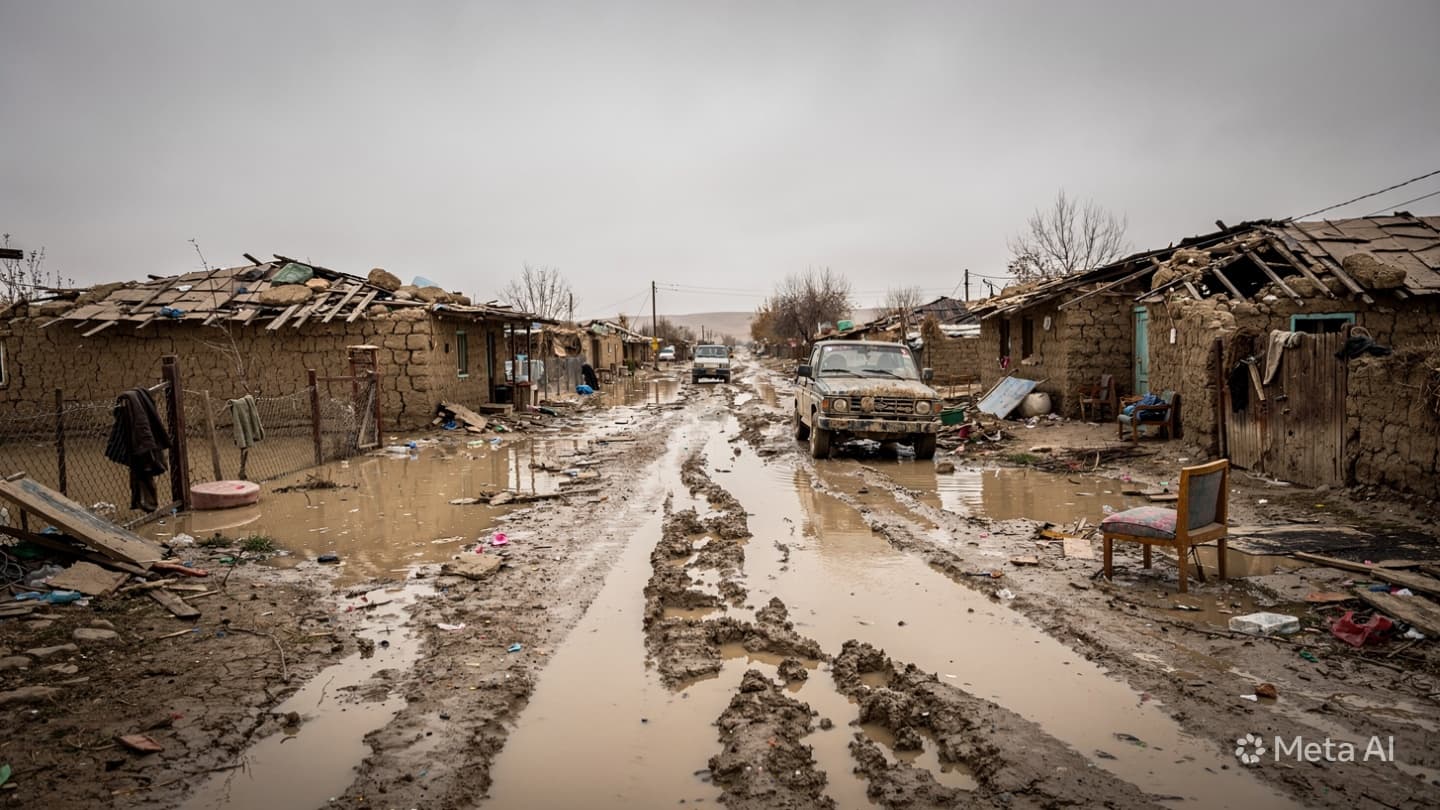
Kabul, Afghanistan—Flash floods and severe storms have claimed five lives across eight provinces over the last 24 hours. The National Disaster Management Authority reported that the heavy rainfall caused catastrophic damage to local infrastructure, including residential homes and rural transport networks.
The hardest-hit provinces include Kabul, Zabul, Kandahar, Samangan, Takhar, Nangarhar, Laghman, and Kunar. In Kunar alone, hundreds of homes were partially or completely destroyed. Residents described the water rising with terrifying speed, sweeping away walls and livelihoods within minutes.
Official statistics indicate that over 30 residential homes and 15 shops were destroyed in the initial wave. More than 80 kilometers of secondary roads were rendered impassable, severing supply lines to isolated mountain villages. Irrigation canals and bridges were also washed away by the deluge.
Agricultural losses are expected to be substantial. Over 2,000 jeribs of farmland have been inundated, destroying standing crops and displacing livestock. For many families in these rural districts, the loss of their land represents a complete collapse of their economic stability.
Emergency response teams are struggling to navigate the damaged roads to reach affected families. While some humanitarian assistance is being organized, the sheer scale of the geographical spread makes effective distribution difficult. Local officials are appealing for urgent international support to help rebuild the infrastructure.
Residents who escaped the rising waters are now sheltering in temporary conditions with little access to clean drinking water or food. The vulnerability of these communities is increasing as the climate becomes more erratic. Many flood victims reported having no warning before the water breached their homes.
The disaster authority has warned that the risk of further landslides remains high due to the saturated state of the soil. Local commanders are monitoring the situation in the mountainous eastern provinces, where the terrain remains unstable.
There is no timeline for recovery as the authorities are still assessing the full extent of the financial and structural loss. The government is attempting to prioritize the clearing of main road arteries to allow aid to reach the most desperate areas.
Note: This article was published on BanxChange.com and is powered by the BXE Token on the XRP Ledger. For the latest articles and news, please visit BanxChange.com