Along Albania’s southern coast, where mountains descend toward the Adriatic and Ionian seas and the horizon seems to stretch endlessly into blue, the landscape has long carried a sense of quiet permanence. Fishing boats move across calm waters. Pine-covered hills overlook secluded beaches. Villages and coastal towns mark the shoreline with rhythms shaped more by seasons than by headlines.
Yet even the most tranquil places can become the center of larger debates. In recent months, parts of Albania’s coastline have become the focus of growing public protests surrounding an ambitious luxury tourism and real estate development linked to businessman and investor Jared Kushner and supported by ventures associated with Ivanka Trump. What might once have been viewed simply as a development project has evolved into a broader conversation about land, identity, environment, and the future direction of one of Europe’s fastest-changing destinations.
At the center of the discussion are proposals involving the island of Sazan and coastal areas near Zvërnec, locations known for their natural beauty and ecological significance. The development plans envision luxury resorts, hospitality facilities, and tourism infrastructure intended to attract high-end international visitors. Supporters argue that such investments could generate jobs, increase tourism revenue, and elevate Albania’s profile as a Mediterranean destination.
For a country that has experienced rapid economic transformation in recent decades, the appeal of large-scale investment is easy to understand. Tourism has become an increasingly important part of Albania’s economy, drawing visitors to landscapes that remained relatively undiscovered for much of the twentieth century. New roads, hotels, and international attention have reshaped parts of the coastline, bringing both opportunity and change.
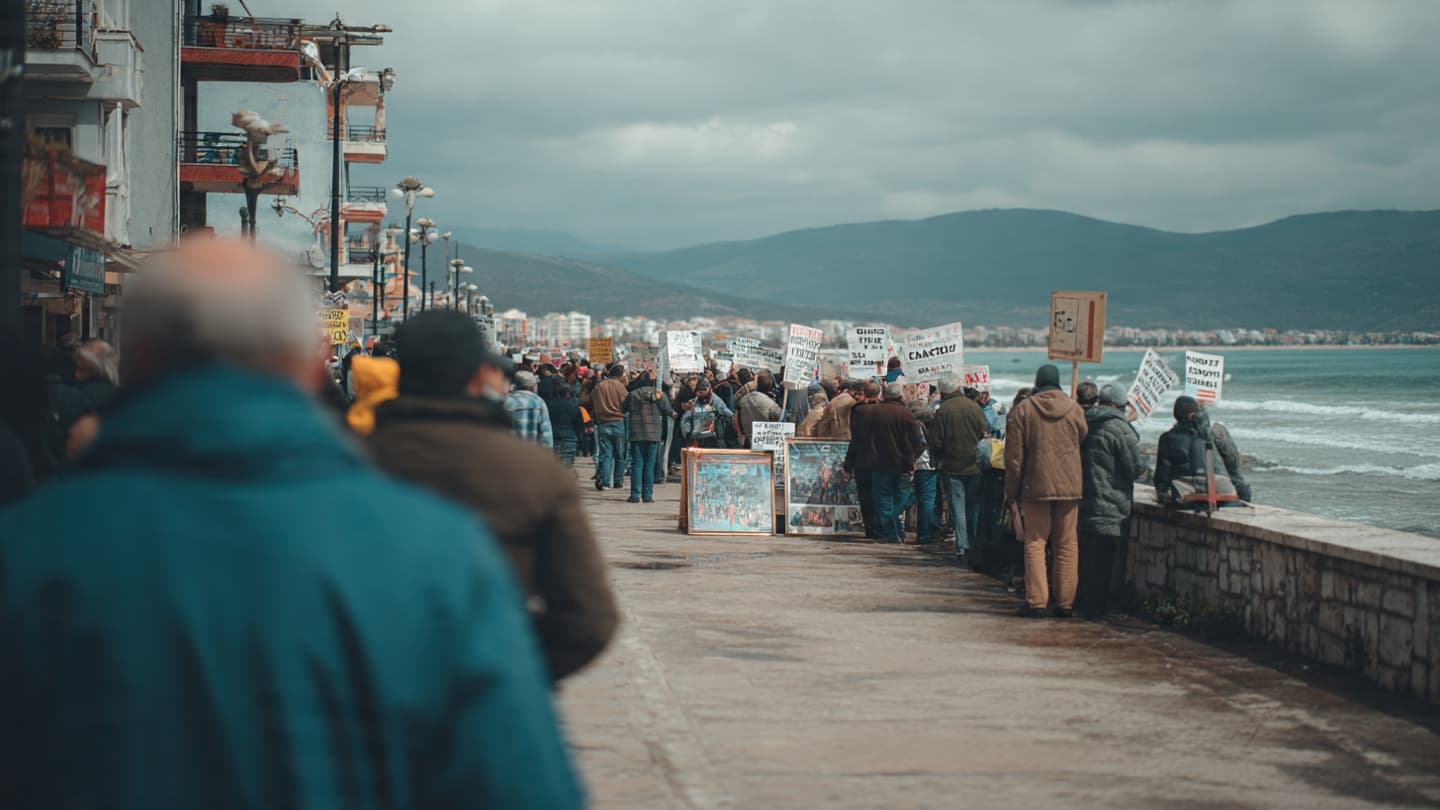
Yet the proposed project has also sparked resistance from environmental groups, local activists, and some residents who worry about what could be lost in the process. Demonstrators have gathered in public spaces and along coastal areas, expressing concern that sensitive ecosystems, protected habitats, and public access to natural landscapes could be altered by large-scale development.
For many participants, the issue extends beyond a single project. It reflects broader questions about how nations balance economic ambition with environmental stewardship. Coastlines often occupy a unique place in public imagination. They are simultaneously economic assets, cultural landmarks, and shared spaces where communities connect with geography and history. Decisions about their future can therefore carry emotional significance beyond their financial value.
The debate has unfolded against a backdrop of increasing international interest in Albania. Once considered one of Europe’s lesser-known travel destinations, the country has experienced a surge in tourism and foreign investment. Coastal regions, in particular, have attracted developers seeking opportunities in areas where natural beauty remains a central attraction. With that attention has come a growing discussion about sustainable development and the long-term consequences of rapid growth.
Representatives connected to the project have emphasized their commitment to environmental preservation and responsible tourism practices. Supporters argue that modern resort development can coexist with conservation efforts and that investment may provide resources for maintaining and protecting important landscapes. Opponents remain skeptical, contending that the scale of development could fundamentally alter places valued for their relative isolation and ecological character.
As public debate continues, Albania finds itself navigating a familiar challenge faced by many countries experiencing economic growth. The question is not simply whether development should occur, but how it should occur, where it should occur, and who should have a voice in shaping those decisions.
Along the coast, meanwhile, the sea continues its steady movement against cliffs and beaches that have witnessed centuries of change. The protests, planning meetings, and investment proposals are all part of a larger story about a nation defining its future. Whether the project proceeds as envisioned or evolves through negotiation and scrutiny, the conversation it has generated is already leaving its mark.
In the end, the dispute is about more than buildings or investors. It is about how a landscape is imagined by those who live beside it, those who visit it, and those who see potential within it. The shores of southern Albania remain as striking as ever, but they now stand at the intersection of competing visions—between preservation and transformation, memory and possibility, continuity and change.
AI Image Disclaimer The images accompanying this article were generated using AI and serve as illustrative representations of the locations and themes discussed.
Sources
Reuters Associated Press Albanian Ministry of Tourism and Environment Balkan Insight The Guardian
Published by Banx Network. This article is part of the Banx decentralized media programme, powered by the BXE token on the XRP Ledger.